

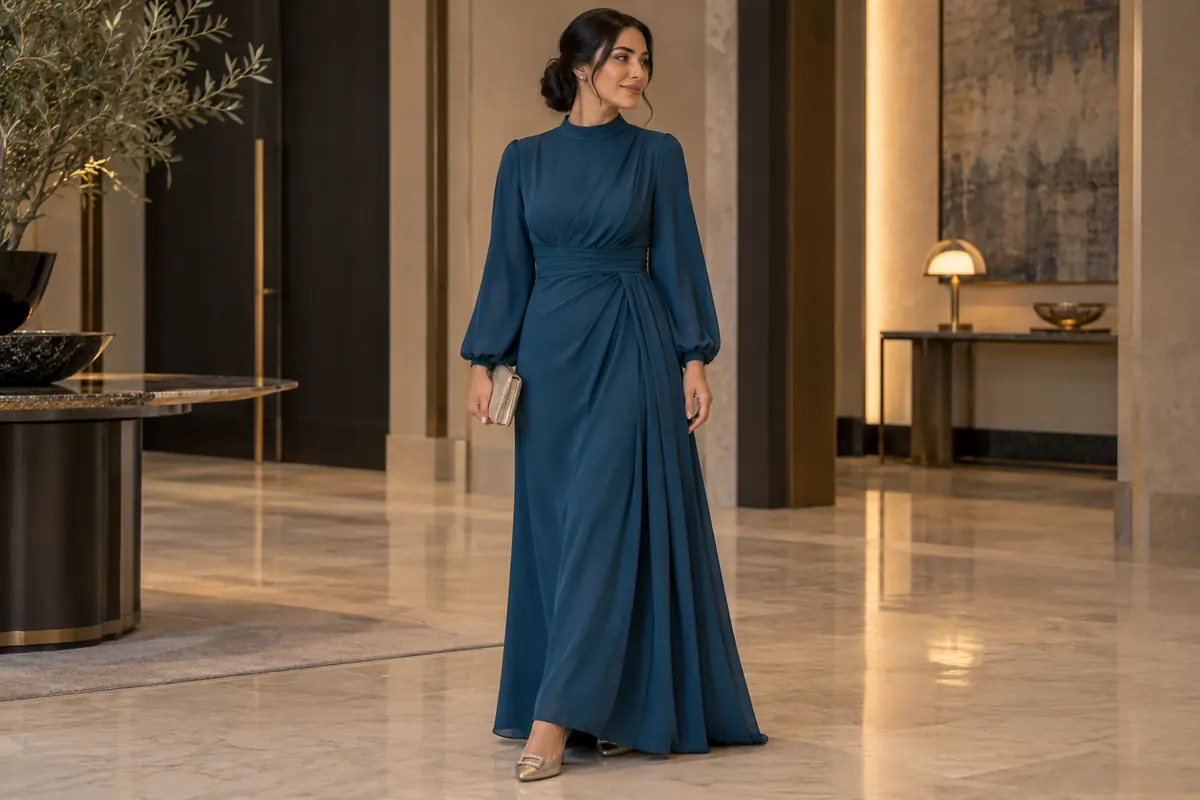
If an outfit only works standing still, locate the exact failure: hem, layer overlap or reaching room. Test that part with the real shoes before adding accessories.
Use this guide to make one complete outfit work. The Gulf style hub connects the clothing, jewellery, makeup and hair decisions. You do not need to reproduce a photograph or buy every item shown in an illustration.
Locate the failure before shopping again
| Problem | What may be happening | First check | Useful result |
|---|---|---|---|
| Hem catches only after changing shoes | The new sole changes floor clearance | Try both pairs with dress and outer layer | One outfit works with the footwear actually used |
| Sleeve pulls when greeting | Shoulder or sleeve room may be insufficient | Fasten the garment and reach normally | A specific alteration question, not just “size up” |
| Abaya front shifts when seated | Overlap, inner fabric or strap contact may change | Compare standing, sitting and bag use | Coverage arrangement that works in motion |
| Outfit feels visually crowded | Several details may compete | Remove one accessory, keeping everything else | A preference you can identify and repeat |
Do not solve a dragging hem by assuming you can tolerate unfamiliar high heels all evening.
Write a specific venue brief
Read the invitation before searching for outfits. Note time, location, requested formality, transport and any colour guidance. Ask the host: “Will any part of the event have different coverage arrangements? Is there a dress requirement I should know about?” A women's gathering does not automatically settle photography, staffing, arrival or personal coverage preferences.
Experience Abu Dhabi's packing guidance distinguishes settings with different dress expectations. Check the actual venue. A religious venue can have its own rules: the Sheikh Zayed Grand Mosque visitor code is specific to that centre, not a general wedding dress code.
Write a one-line brief: “Evening indoor reception, short outdoor arrival, long coverage preferred, sitting and dancing, bag must hold phone and scarf.” This is a better shopping filter than “Gulf glam.” If information is missing, resolve it before committing to alterations.
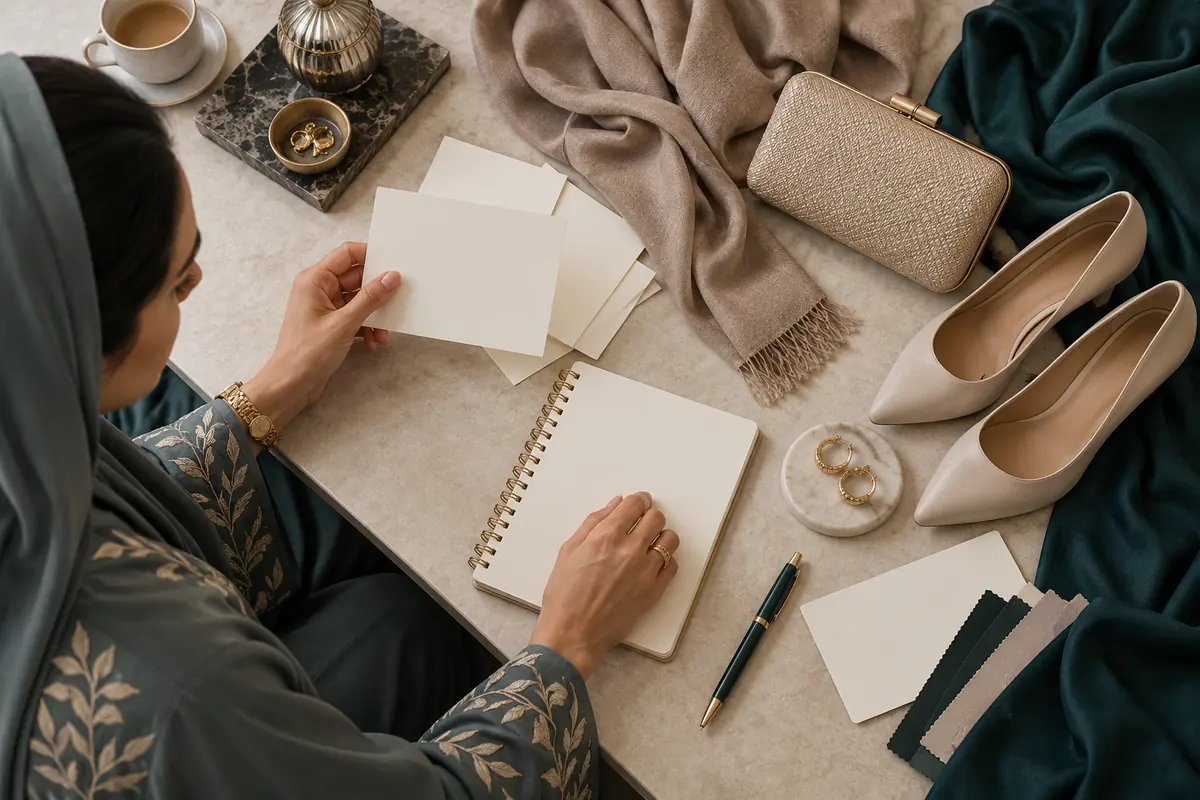
Choose one outfit anchor
Start with the dress, set or occasion abaya that answers the brief. Choose the silhouette for movement and your preferred visual effect. A fluid column can create a continuous line; a fuller skirt changes how much space you need around chairs. Neither is a requirement for a particular body type.
| Starting garment | Useful styling decision | Try-on question |
|---|---|---|
| Embellished long dress | Keep one accessory area quiet | Does the neckline already provide the focal point? |
| Plain coordinated set | Add texture or one jewellery accent | Does the top stay in place when seated? |
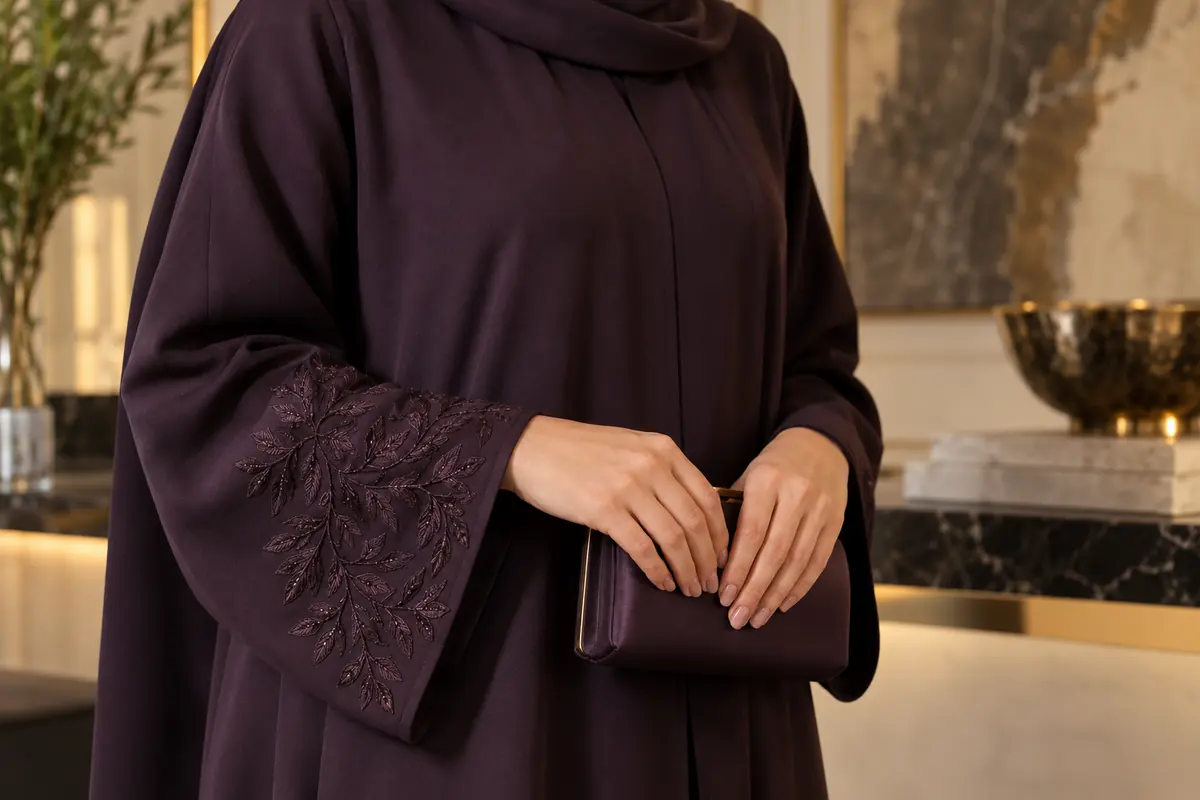
| Occasion abaya | Check the inside outfit as well | Does an open front reveal what you intend during movement? |
| Full skirt | Simplify the sleeve or bag volume | Can you walk between tables without catching fabric? |
Compare no more than two candidates at first. Photograph each with the real shoes and outer layer. A garment on a hanger cannot show how its lining, closures and hem behave on you. For reuse, follow a wedding guest outfit from your closet.
Test coverage and fit in motion
Stand in ordinary daylight, then sit on a chair for several minutes. Reach forward, raise your arms as you would greet someone, and turn sideways. Check neckline openings, sleeve gaps, lining length and an abaya's front overlap. Coverage is a choice or requirement to plan accurately, not a judgment about someone else's outfit.
Use the actual underlayer. Light fabric may look different against contrasting clothing beneath it. Check opacity with a normal mirror and ordinary photographs; phone processing is not a laboratory test. A flash photograph can reveal an issue in that lighting, but does not guarantee every lighting condition is covered.
Walk up a step with the actual shoes. If the hem catches, have it adjusted rather than deciding you will hold it all night. Check whether the bag strap pulls an embellished shoulder or moves the scarf. Abaya fit and proportions gives a more detailed fitting sequence.
Give accessories an actual job
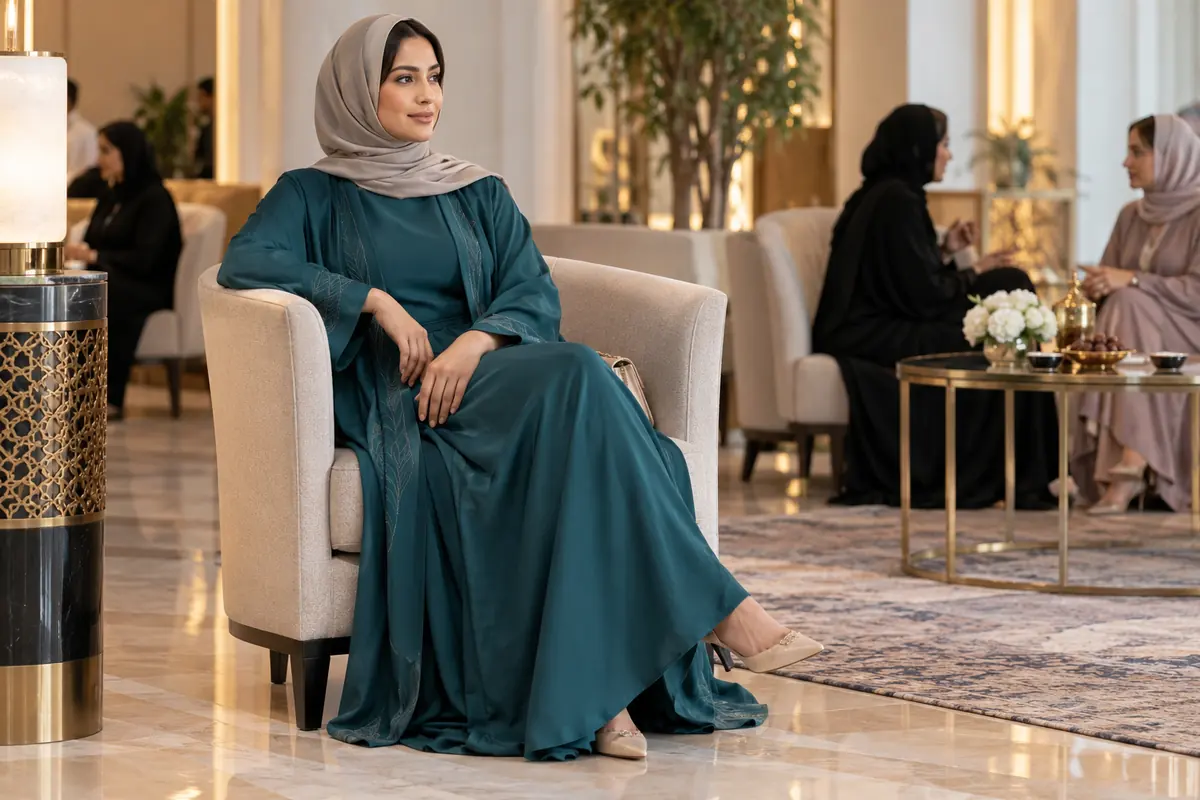
Pick the area you want to emphasize: face, neckline or hands. A heavily worked collar may need no necklace. Earrings can carry the accent when they remain visible with your chosen coverage. A bracelet works only if it does not disappear under a tight cuff or snag its embroidery.
Lay out the jewellery with the garment before putting everything on. Add one piece, look from conversational distance, and add another only if you prefer the result. “One focal point” is a comparison tool, not a rule against wearing a full traditional set. Use gold jewellery with an abaya to test scale and fastening.
The bag must close with your essentials inside. Check that you can open it with your rings on and carry it while greeting people. Shoes should work with the route from the car, the floor and the time you expect to stand. A spare practical shoe is useful only if you have somewhere appropriate to change and store the pair.
If the hem or layer changes during the event
Test the shoe change before the fitting is final
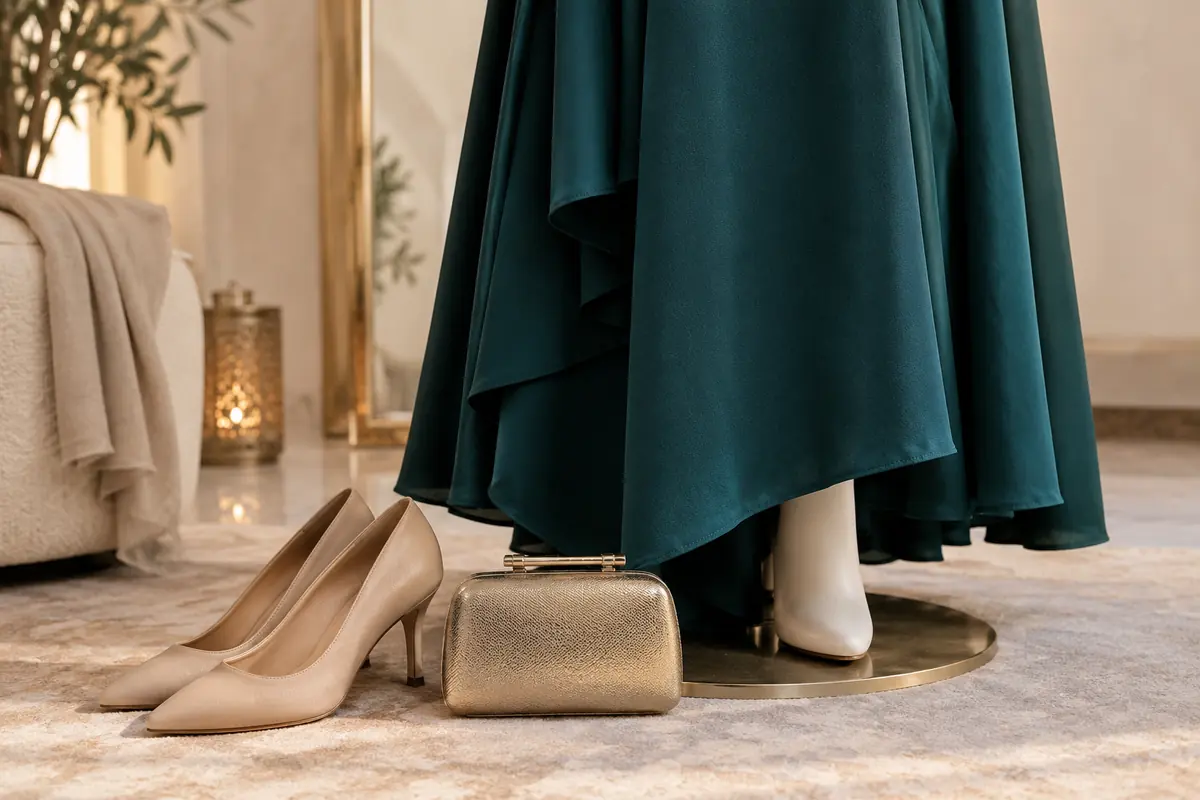
Bring both planned shoe pairs. Wear each with the base garment, lining and outer layer; a dress that clears can still sit beneath a longer outer hem. Walk a short route and turn beside a chair. Stop at catching rather than rehearsing how to lift fabric constantly.
Tell the tailor what actually catches and which shoes you expect to wear longest. There is no universal clearance in centimetres for every fabric and silhouette. Recheck after alteration with the same setup.
Make the arrival version complete
If coverage differs between spaces, record which layer stays on during travel, where it can be removed privately and where it is stored. Confirm arrangements with the host. Test putting it back on with the bag and jewellery already in place.
If the front shifts only when carrying the bag, compare the carrying position before buying a new garment. If it opens or pulls in normal movement despite that change, choose another cut or ask for a fitting adjustment. A photograph cannot verify overlap through an evening.
Use a realistic preparation schedule
One week ahead, confirm details and choose the base garment. Several days ahead, complete alterations and repeat the full try-on. The day before, check closures, shoe condition, bag capacity and accessories. These are planning suggestions, not deadlines that require a purchase.
On the day, allow a small buffer for dressing and travel rather than filling every minute with extra beauty steps. Keep the final outfit photograph in your own notes: front, side, outer layer and accessories. Include the exact shoes so a last-minute substitution does not alter the hem.
Book hair around the neckline and any coverage changes using occasion hair and necklines. Plan repairs with event makeup touch-ups, rather than assuming a heavier first application will solve every wear issue.
Mistakes that make the evening harder
Buying jewellery before settling the collar can leave you with two competing focal areas. Altering a hem in flat shoes and attending in heels can change the balance. A too-small bag encourages loose belongings. A brand-new shoe that looks elegant for thirty seconds may be unhelpful for the journey.
Do not interpret a “women-only” description as permission to photograph everyone. Ask about the hosts' photography arrangements and respect people's preferences. Outfit planning includes privacy and practical comfort, not just an attractive image.
Avoid rigid advice about which colours “Gulf women wear.” Choose from the event brief and what you enjoy. Outfit colour combinations offers controlled comparisons without assigning a skin tone or national identity a compulsory palette.
A hypothetical example: one dress, two useful versions
Imagine Hessa has a deep green dress with a detailed neckline and a plain outer layer. The reception is indoors, but she wants coverage during arrival. She confirms arrangements with the host, tests the layered version and discovers the dress hem catches under the outer layer when she climbs a step.
She adjusts the length, chooses earrings rather than a necklace, and keeps a small jewellery pouch in a bag that closes properly. Her indoor version uses the same dress and shoes. This is an illustrative scenario, not a report about a real guest or a claim that green is the correct wedding colour.
Her final brief is simple: “Comfortable long dress; detailed neckline stays visible indoors; arrival coverage works without assistance; shoes and hem tested.” The successful outcome is an outfit she can wear through the evening with fewer adjustments.
Frequently asked
How do I fix a long guest dress that catches after I change shoes?
Test both planned pairs with the dress, lining and outer layer. Identify which hem catches and bring all those pieces to the fitting. Do not assume taller unfamiliar heels or holding fabric all night is the only solution.
Why does my abaya open or shift when I sit?
Front overlap, underlayer movement or a bag strap can change the arrangement. Repeat sitting and reaching with the real outfit, then compare one contact or fit change. A standing photo cannot verify the overlap.
What if the sleeves look fine but pull when I greet people?
Test normal reaching with closures fastened. Name the pulling point, shoulder, upper sleeve or cuff, when asking about alteration. Recheck after a change rather than assuming a larger size solves every part.
Is there one correct outfit for all Gulf weddings?
No. Confirm the particular venue, host's requirements and your coverage preferences. Families and events vary; a dress, coordinated set or occasion abaya can each suit different briefs.
Should I buy a whole new outfit?
First test a garment you own against the actual problem. A fit adjustment, different practical layer or simpler accessory arrangement may be enough. Leave time for a full retest.