Choose the day's tasks before choosing the outfit. Write down whether you will type, walk between locations, attend meetings or travel seated for a long time. Check the actual workplace and venue expectations. Then test the garments you already own against those tasks.
Gulf workwear varies across countries, industries, roles and personal choices. An abaya can be part of your formula; another outer layer or outfit may suit your preferences and workplace. This guide does not impose one uniform or claim that a photograph proves professional suitability.
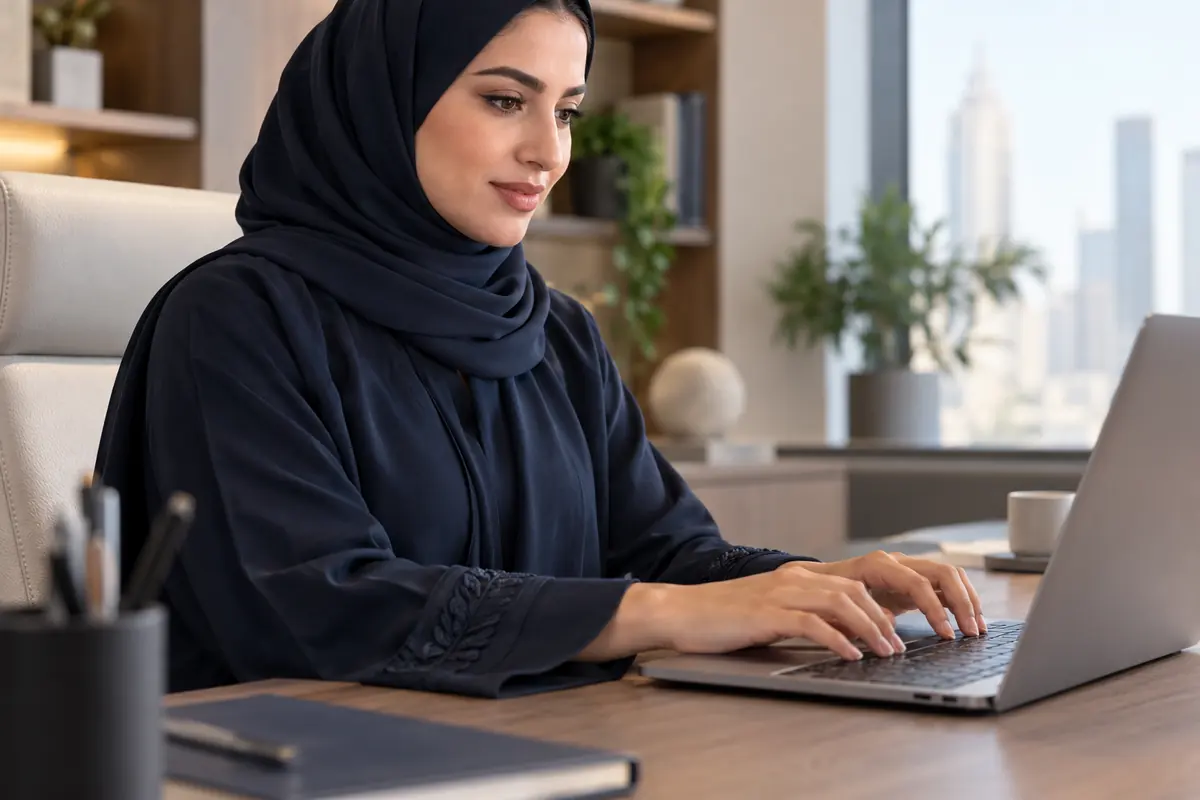
Keep the hands usable at the keyboard
Put on the planned top or abaya and sit at a desk. Type, write a short note and reach for a nearby object. Observe whether the sleeve slides over your hand, catches on the edge or pulls at the upper back.
A controlled cuff, a suitable sleeve length or a different cut may be useful. Do not solve every issue by taking a smaller size; that can change comfortable areas. Show a tailor the exact movement if an alteration is needed.
If you wear bracelets or decorative cuffs, test them during the task. An accessory that knocks against the keyboard or catches the cloth can move to a different day. The question is practical contact, not whether workplace style must always be plain.
Cuff covers the keyboard: length, opening or upper-arm restriction?
Try: sit at the actual desk in the planned layers. Place the cuff comfortably where it belongs, type a sentence and reach for a document. Observe which part fails first rather than repeatedly pushing the whole sleeve up.
| What happens | Check one variable | Useful request or change |
|---|---|---|
| Cuff starts too low and covers fingers | Intended sleeve length with the arm relaxed | Ask for a length check before narrowing the sleeve |
| Cuff begins well but slips down | Opening and cuff arrangement | Test a more controlled finish while keeping comfortable arm room |
| Cuff stays clear but reaching pulls the upper arm or back | Underlayer alone, then outer layer | Show the reach to a tailor rather than tightening the entire sleeve |
| Jewelry catches the sleeve or desk | Repeat without that optional accessory | Use it elsewhere if the task improves |
Record the starting cuff position, task and result in plain words. If a tailor or seller needs measurements, ask whether they want body or finished-garment measurements and use their stated start and end points. A size number from another brand is not that record.
Rolling or cinching a sleeve may change your chosen coverage or slide during the task. If it needs constant readjusting, compare another existing garment or a suitable alteration. For specialist work, follow the role's actual clothing requirements before this ordinary office styling exercise.
Check the base and outer layer seated
Try the whole outfit rather than the outer garment alone. Sit naturally, stand and reach. Check the front opening, neckline, fastening line and the layer on your lap against the coverage you want.
With an open abaya or other open layer, the base garment does much of the coverage work. Examine it near a window and in room light. Dark color alone does not establish opacity; a thin or stretched area can look different from the garment on a hanger.
Choose a base that remains comfortable beneath the outer layer. If the fabrics catch or bunch, change one layer and repeat. Do not automatically add another garment to solve a problem that may be caused by the existing overlap.
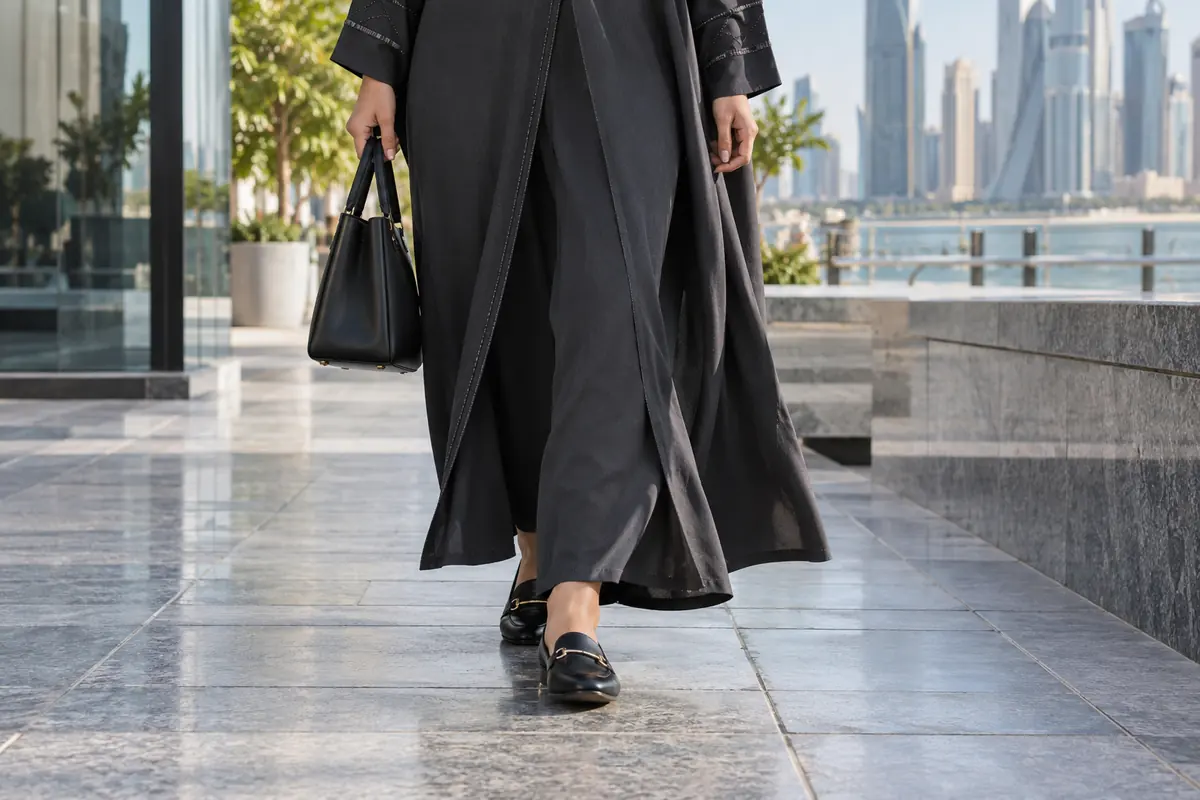
Set the formula around your commute shoes
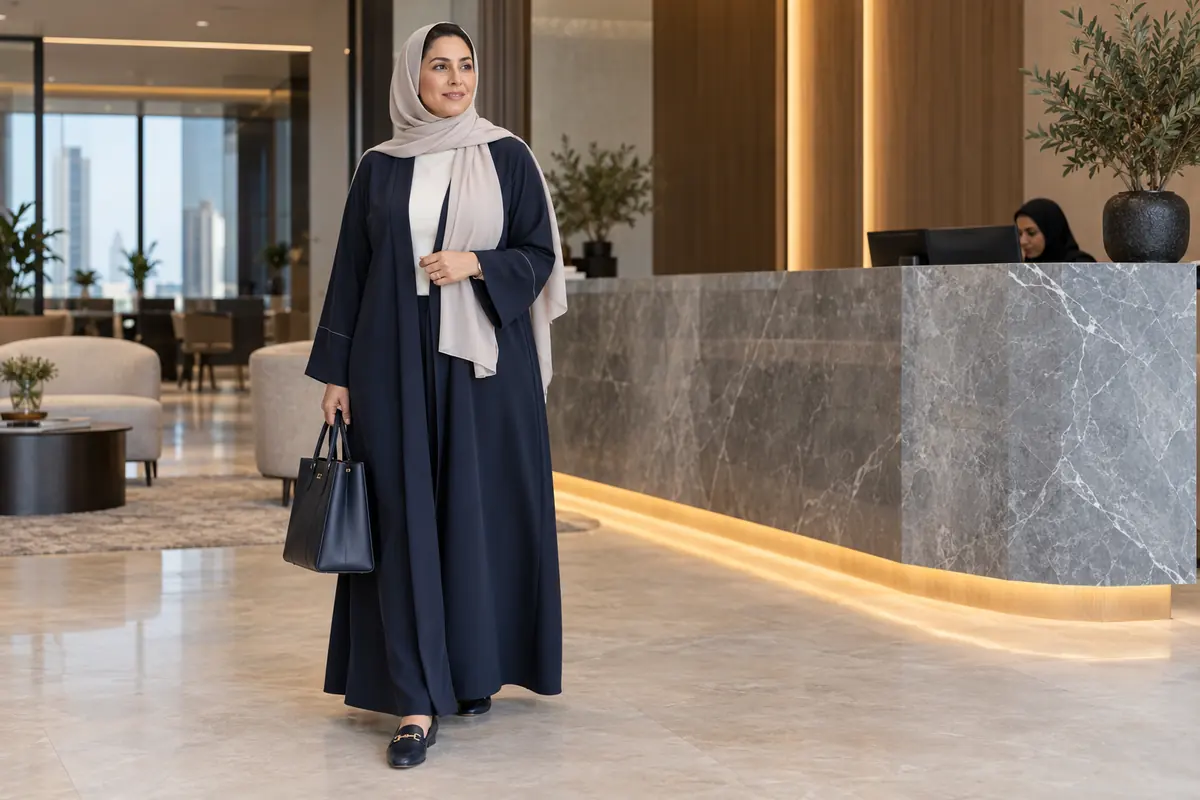
Wear the shoes intended for the journey, then walk, turn and test a low stable step when appropriate. Check the hem in front and behind, scarf tails if used and the bag strap. Use a clear fitting space and support if needed.
If you change shoes at work, try both pairs with the same hem. A length fitted for heels may drag with flats. Decide which height the garment can serve safely and comfortably rather than keeping a change that creates another problem.
Pack the realistic load in the bag. A beautiful empty bag says little about how it carries a laptop, documents or your daily kit. Observe whether its strap shifts the neckline or outer layer. Keep access to keys or a pass workable without repeatedly disturbing the outfit.
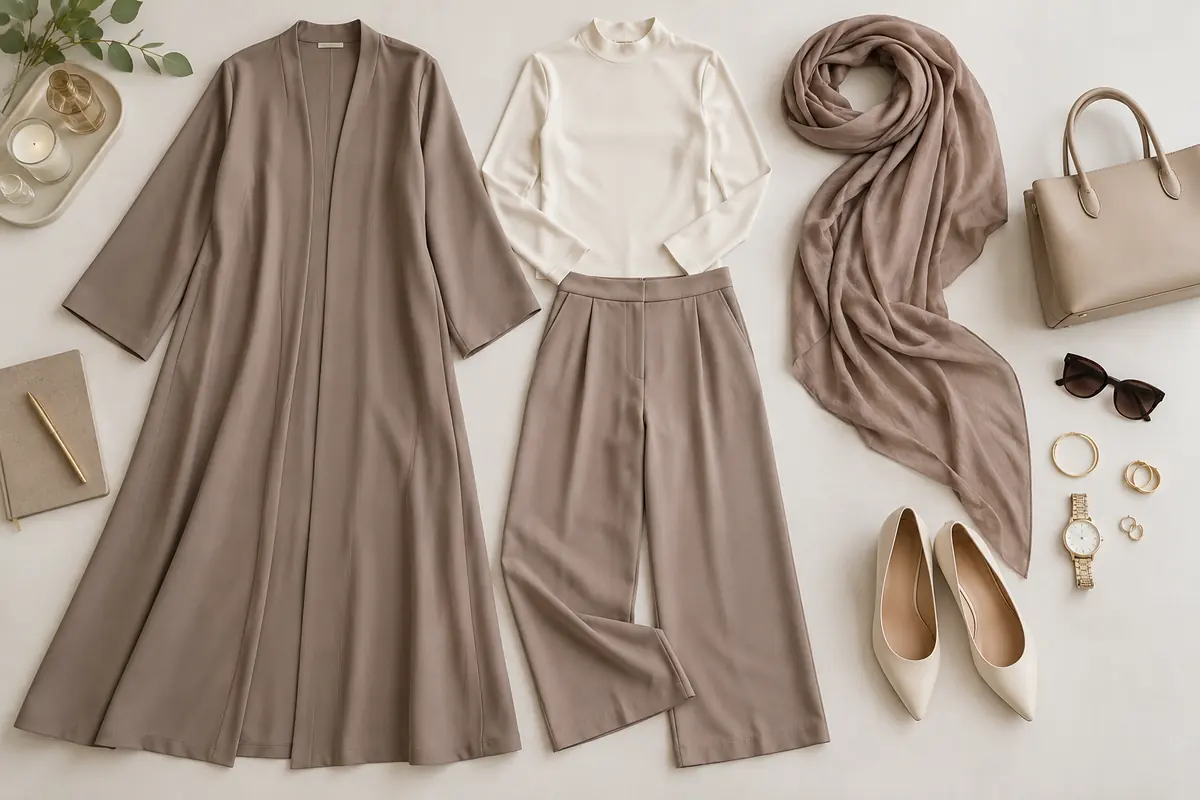
Build a small rail of tested combinations
Choose two base outfits and two compatible outer layers, if these are pieces you already use. Add one or two scarf options where relevant and the shoes and bag that work. You do not need a fixed number of garments to have a useful capsule.
Try the combinations instead of multiplying them only on paper. Two tops and two outer layers may produce four theoretical pairings, but some can catch, feel bulky or fail your preferred coverage. Save the ones that survive the seated and movement checks.
Give each saved outfit a clear name: “desk day with flats” or “meeting with walking commute.” Keep a short unfiltered photo and note the actual pieces. This makes the rail useful on a busy morning without pretending that repeat dressing is a failure of style.
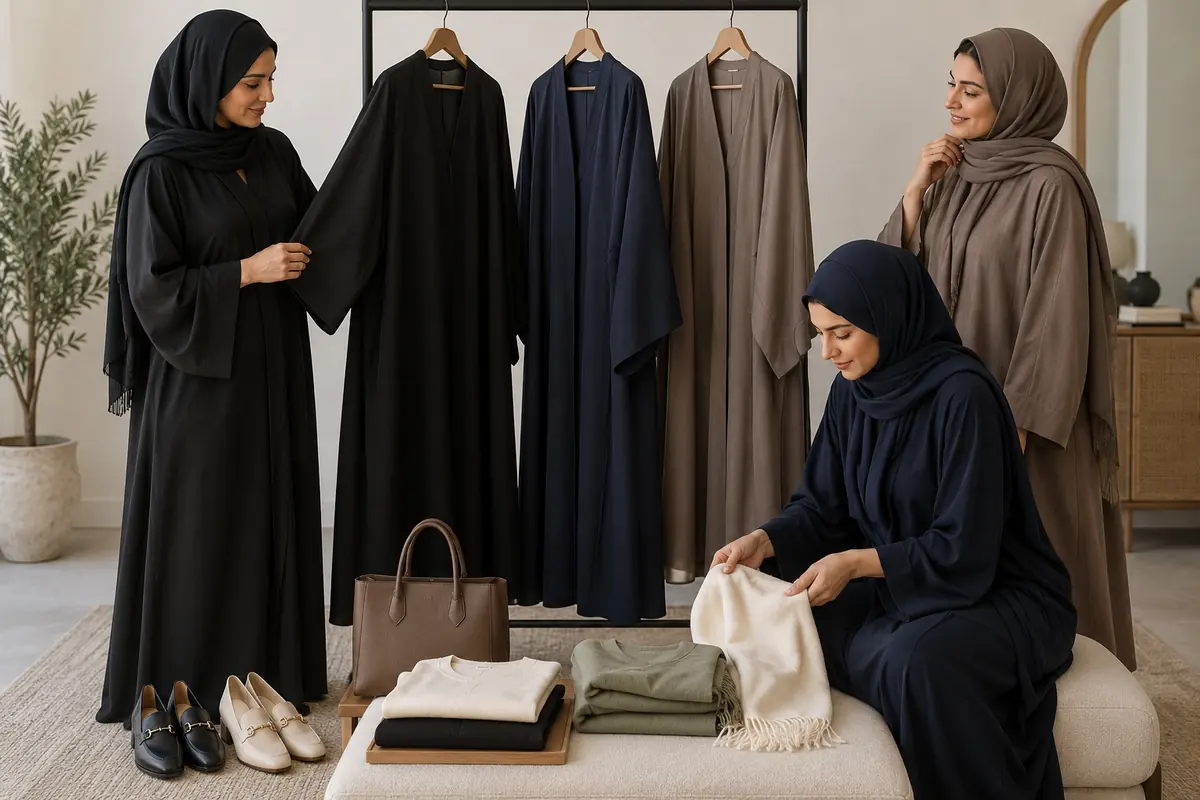
Match the formula to the activity
| Main activity | Starting formula | Check before relying on it |
|---|---|---|
| Desk work | Usable sleeves + comfortable base + chosen outer layer | Keyboard, reach and seated front |
| Walking commute | Movement-tested hem + actual shoes + practical bag | Turns, steps and strap contact |
| Client meeting | Workplace-compatible base + one deliberate detail | Greeting, notes and seating |
| Mixed indoor and outdoor day | Useful base + optional manageable layer | Actual route and indoor comfort |
| Work followed by a gathering | Tested work base + one planned change | Shoes, hem and evening lighting |
“Suitable” comes from the actual setting and your job, not a generic list of colors. If requirements are unclear, ask the workplace contact who can answer them rather than guessing from another office's photographs.
Try three concrete outfit formulas
Abaya desk formula: a movement-tested abaya with sleeves clear of the hands, a comfortable base with the coverage you choose, usable shoes and the bag containing the work kit. Let texture or a scarf be the visual detail if you like.
Separate-piece formula: a top and trousers or skirt that remain comfortable seated, an optional outer layer and practical shoes. Check waist and closures without deciding that one silhouette is correct for every body or every Gulf office.
Meeting-to-gathering formula: keep the base that worked during the day, then try a scarf or small accessory change. If a smaller evening bag cannot hold the necessary items, plan where the work kit stays before relying on the switch. Do not leave the logistics out of the styling exercise.
Prepare the night before with a short task list
Lay out the complete outfit, including the footwear and bag. Confirm the garments are ready to wear and check any fastening or loose detail. Read the label before care: GINETEX reference.
Put the actual kit in the bag, then perform the one movement most likely to matter tomorrow. For a desk day, sit and reach. For a walking route, check the hem with the shoes. For a meeting, sit, greet and hold the items you need.
Write a one-line reminder only if it helps: “use the shorter tail with this bag” is actionable. “Look polished” does not explain what to do. This preparation can be brief because the tested formula already exists.
A hypothetical workday fix
Hypothetical example: Amal moves from a seated morning to an afternoon meeting across a large site. Her first outfit works at the keyboard, but the abaya hem touches the ground in her walking shoes. She tests another abaya already fitted for that height and keeps the comfortable base.
She carries the actual work bag and checks the scarf tail against its strap. Her final choice is not a universal office look; it is a combination that serves those particular tasks and her preferences.
Avoid purchases that do not answer the problem
Do not buy a larger bag solely because it looks like workwear. Measure the actual kit against the interior and test carrying it if possible. Do not buy several “neutral essentials” before checking whether they work with your existing clothes.
Do not redesign every outfit because one day felt awkward. Identify the point that failed: sleeve, hem, base, scarf or bag. Change that part and repeat the task. A useful formula makes the next decision smaller and clearer.
Continue with the detail that needs adjusting
Use abaya fit and movement, black textures, sheila and necklines and abaya colour palettes. Review what to wear to work and a capsule from your closet. The Gulf style hub connects the formula to the next specific check.
Frequently asked
Is an abaya required for every Gulf office?
No single rule applies to every woman or workplace across the Gulf. Check the actual employer, role and venue requirements; use the layer and coverage you choose within those requirements.
Can I make work outfits from clothes I already own?
Yes. Start with usable base pieces and outer layers, then test shoes, sleeves and bags against your real tasks. Save combinations that work before identifying any missing item.
How do I fix an abaya cuff that interferes with typing?
Check whether the cuff begins too low, slides down from a good position, or stays clear while the upper arm pulls. These are different observations. Show the actual typing and reaching to a tailor, preserving comfortable arm room; narrowing the whole sleeve is not an automatic fix.
Do all work bags need to be large?
No. Choose a bag that fits the actual kit, is comfortable to carry and does not pull the garment out of place. Size and appearance alone do not show whether it works.
How can I change from work to a gathering?
Keep a useful base and test one planned scarf, bag or accessory change. If you change shoes, verify the hem still works. A transition should be checked in motion, not only in a flatlay.