

First action: loosen the hairstyle, put down the hot tool, and describe what has changed. If you have a new bald patch, sudden loss, scalp pain or inflamed skin, arrange medical assessment now. You can use gentle care while waiting; a two-week beauty experiment should not postpone that appointment.
A pile in the brush answers only one question: hair collected there. It does not tell you whether strands snapped, whole hairs shed, your washing interval changed, or several processes happened together. The useful goal is a clearer description and less avoidable damage, not a home diagnosis.
Separate the shaft from the scalp
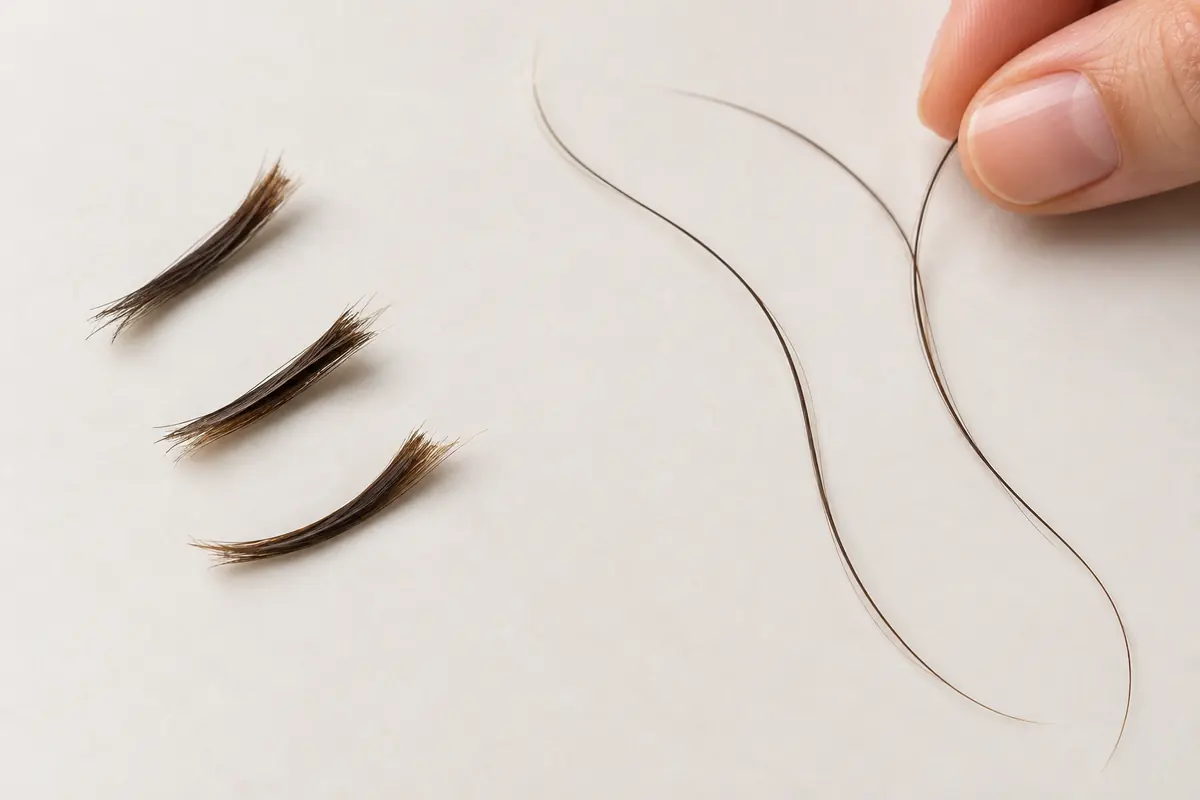
Breakage concerns a strand that snaps somewhere along its length. Shedding concerns a hair leaving the scalp. A short piece is an observation; the reason it became short needs context. Baby hairs, a layered haircut and previous breakage can all complicate what you see. A pale end on a loose hair is also not a reliable disease test.
Excess shedding can follow illness, childbirth or other stressors after a delay; hair loss has other possible causes. Some people have more than one issue, and dermatologists can distinguish them. This is why a recent stressful month is useful history, not permission to assume every loss is temporary. AAD: shedding and hair loss.
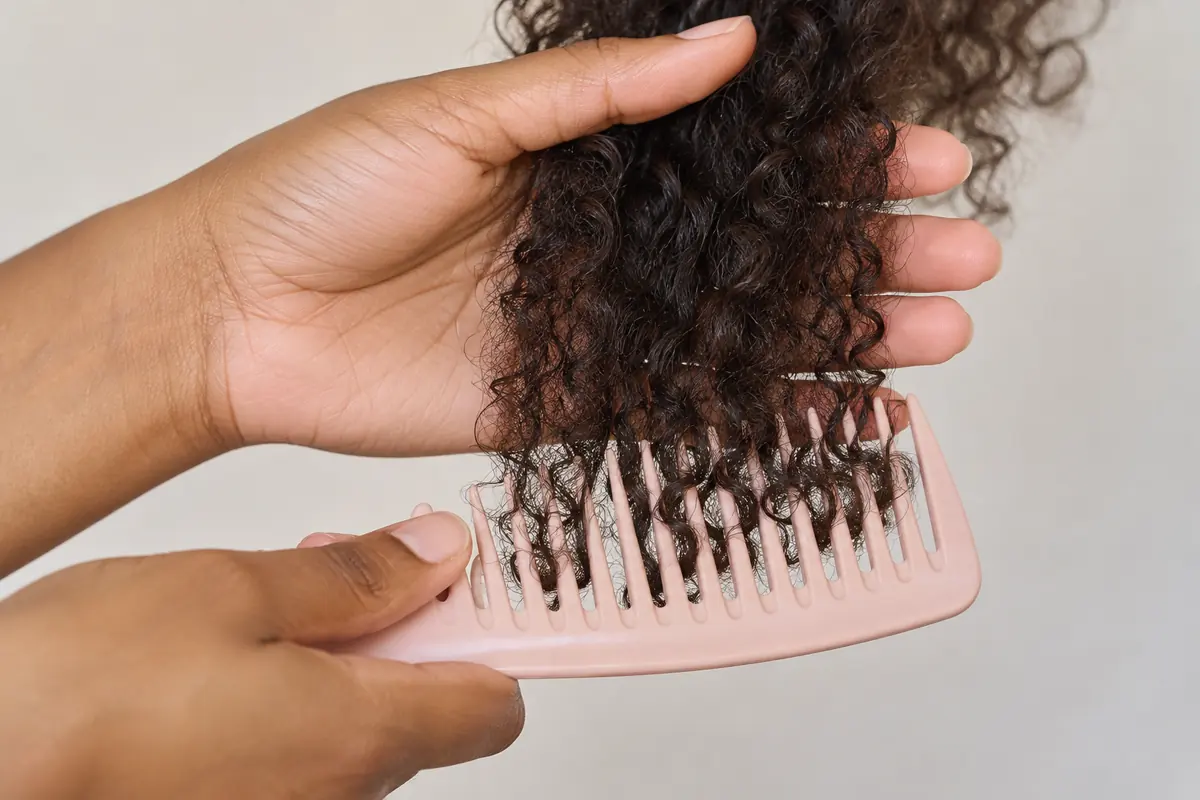
Conditioner coats existing strands and can reduce friction during handling and the risk of breakage; it does not tell you why a hair left the scalp. AAD: conditioning fragile hair. Think of detangling as reducing the load on a fiber, while a density change raises a separate scalp question. A product that makes brushing easier can be useful even while the shedding cause still needs assessment.
Do not pull out hairs to inspect them. Do not repeatedly tug a section to see how many release. Those experiments add manipulation and produce data you cannot interpret reliably at home.
Choose your next step from the whole picture
| What you notice | What it tells you | Useful next step |
|---|---|---|
| Small fragments on clothing after styling, uneven lengths around the same friction point | Snapping is plausible; its cause is still uncertain | Remove that friction or tension and show the area to a stylist |
| More whole hairs than your usual pattern | Shedding may have changed | Note onset and washing interval; seek clinical advice if concerned |
| A wider part, changing hairline or thinner patch | Density needs assessment, regardless of loose-hair length | Arrange a clinician appointment |
| Flakes plus itching, soreness or redness | There is a scalp issue as well as a hair observation | Use the flaking guide and seek care for significant symptoms |
| Snapping and apparent thinning together | One explanation may not cover both | Gentle care plus clinical assessment; avoid another chemical service |
This table sorts actions, not diagnoses. A photograph can show where a concern is located, but cannot reliably establish the cause. A reassuring-looking brush does not overrule a changing scalp.
Build an observation log that can be used
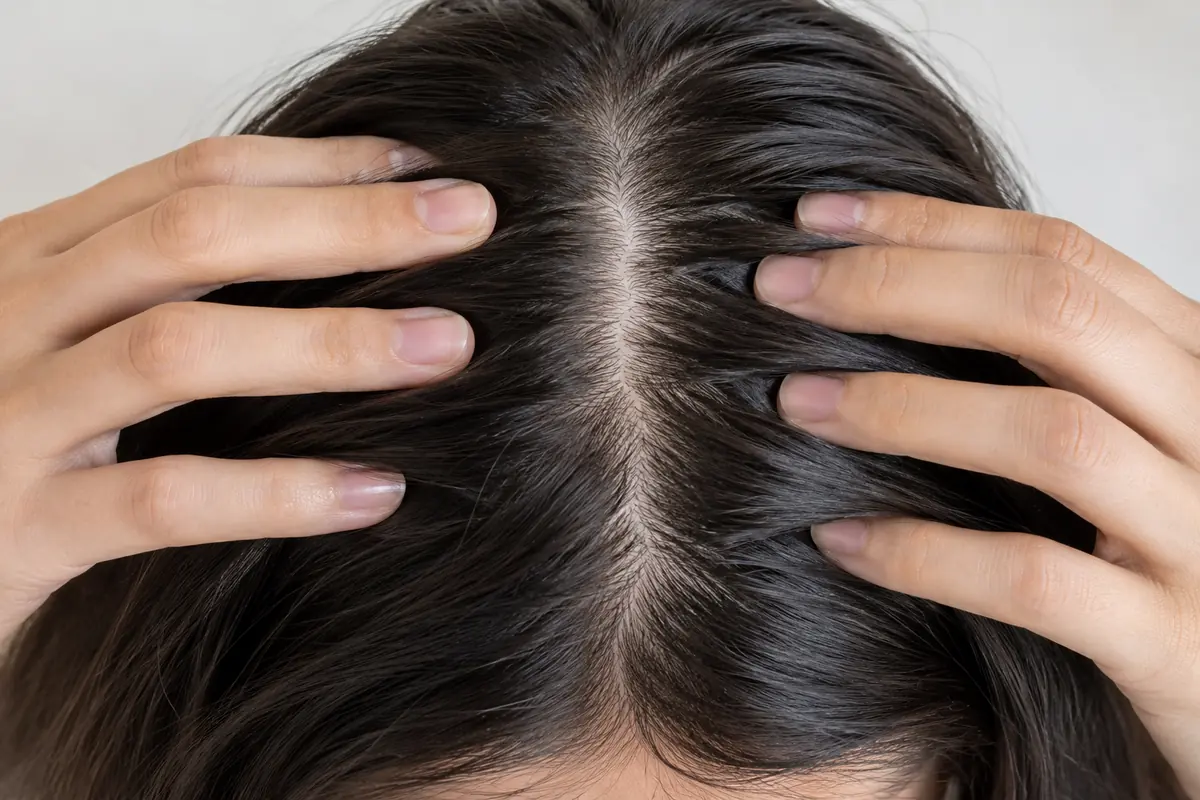
Keep entries brief. Comparing two similar wash days is more useful than comparing a week without washing with a daily-wash routine. Record your usual part and the same location in similar lighting if you choose photographs. You do not need to count every hair or collect a bag of them.
| Date or event | Record | Why it helps the conversation |
|---|---|---|
| First noticed | Approximate onset; sudden or gradual | Establishes the change |
| Wash day | Time since last wash and detangle | Gives context to what collected |
| Styling | Tool use, tight style, extensions, brushing resistance | Locates possible avoidable stress |
| Scalp | Pain, itch, flakes, redness, patches | Keeps skin symptoms from being hidden by a cosmetic label |
| Recent history | Illness, pregnancy/postpartum, medicines, chemical services | Gives the clinician or stylist relevant history |
Hypothetical example, not a patient result: “Monday: three days since washing; many loose hairs in the shower, some short pieces after straightening; no attempt to count. Nape catches under the same clip. Thursday: same wash interval, clip removed, still concerned about a widening part.” This example does not prove that the clip caused the problem. It tells the stylist where catching occurs and the clinician why density needs checking.
Do not stop medicines because their names appear in a hair-loss search. Discuss the timing with the prescriber. The NHS hair-loss guide recommends establishing the cause with a GP before considering a commercial hair clinic.

A gentle routine while the cause is being clarified
- Remove the obvious load. Loosen a tight bun or ponytail, and pause additional bleaching, relaxing or repeated hot-tool passes. If a style hurts, take the tension seriously. You do not need to decide the final haircut today.
- Clean the scalp gently. Use a shampoo suitable for you without scrubbing the lengths together. Keep the familiar product if tolerated, so the observation log is not obscured by five simultaneous changes.
- Condition and separate knots. Work in sections that you can handle easily. Start with the ends, support the section above a knot, and stop when you are tempted to yank. Adjust wet detangling to texture rather than applying one rule to every head.
- Dry without rubbing. Blot or wrap, then choose the lowest practical heat if you need a dryer. Avoid chasing a perfectly smooth finish with more and more passes.
- Keep the style comfortable. A loose shape that stays in place is more useful than a “protective” label on something that pulls. Note where clips or ties catch.
Conditioner, less heat and less tension are measures to reduce damage; they are not a diagnosis or a guaranteed growth treatment. AAD: managing fragile hair.
Set up the routine so it fits your day. Put a detangling tool beside the conditioner rather than leaving it with the hot tools. Choose a clip you can remove without catching the same nape section. If rushing is the main trigger, shorten the styling sequence instead of promising yourself an elaborate treatment you will not use.
What improvement should mean
For a shaft-care problem, useful early observations include less catching during detangling, fewer fragments after a similar styling session, and a routine that does not require force. These are practical comparison points, not validated tests of follicle health. Softness after conditioner is a cosmetic benefit; it does not prove structural recovery or explain shedding.
Already snapped strands cannot be reattached by a mask. A trim changes the visible length, not the biology at the scalp. Density and growth are different questions from manageability. Your clinician can discuss what is realistic once the cause is understood; avoid using a calendar promise from a product ad as your recovery deadline.
Review the log after comparable routine sessions. If the routine still pulls, change the handling step. If density changes, loss is sudden or patchy, or concern persists, seek assessment rather than extending the experiment. You can bring notes even when you are unsure what they mean.
Stop these common failed fixes
- Buying several growth products at once: it makes tolerance and outcome harder to interpret and can delay finding the cause.
- Taking supplements “just in case”: a clinician should guide whether a deficiency needs investigation; extra nutrients are not a universal solution. AAD supplement caution.
- Avoiding every wash: the next collection may look bigger, which can increase worry without answering the cause.
- Slicking short pieces down with a tighter style: that manages appearance while adding tension.
- Heat testing fragile strands every day: a strand surviving one pass does not make the next pass safe.
- Treating a trim as a medical intervention: remove damaged length if helpful, but keep the assessment appointment.
Ask the right professional a specific question
Tell a stylist: “These sections snag and break. Here is my chemical-service history. What length or technique can reduce daily handling, and what should we pause?” A stylist can inspect cosmetic damage, adjust a cut and discuss chemical-service feasibility. They should not diagnose a deficiency or prescribe a scalp treatment.
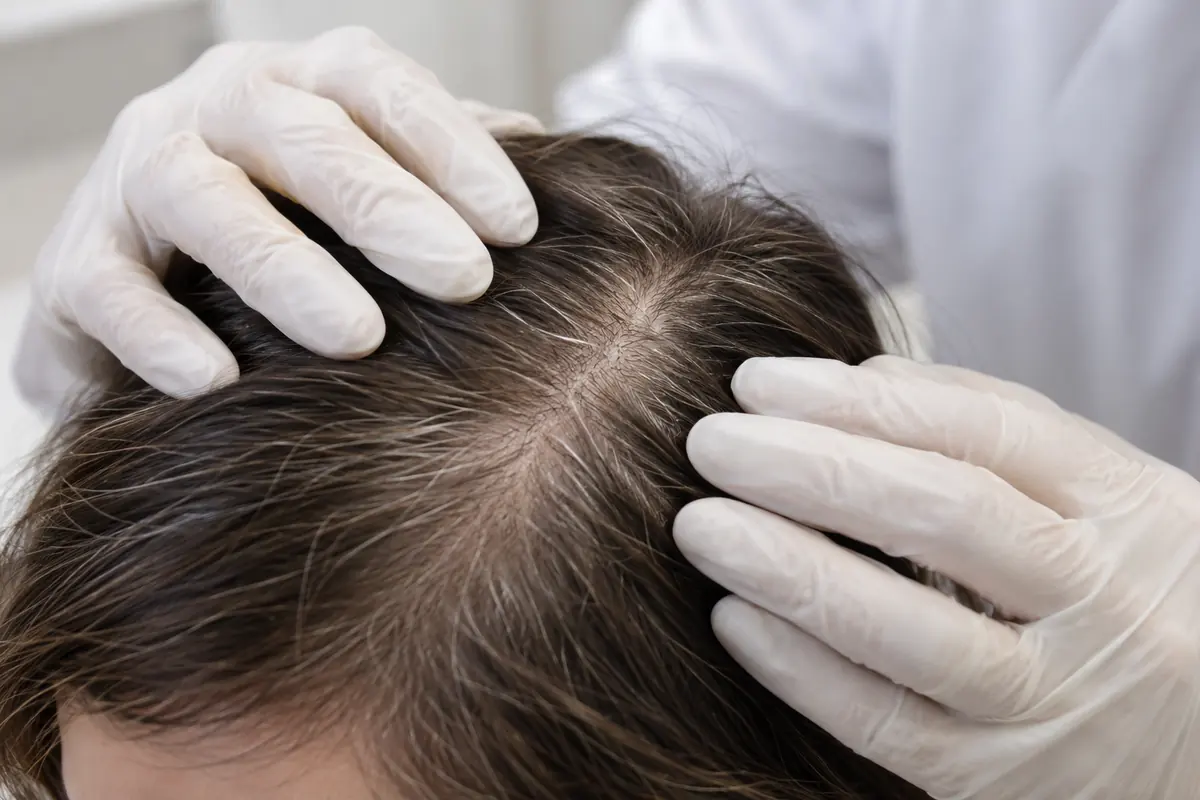
Tell a clinician: “This began around this date. My part or hairline has changed, and these are the scalp symptoms and medicines.” Do not wait for an arbitrary hair count to qualify for help. Sudden or patchy loss and painful or inflamed skin deserve prompt attention.
For the next decision, use bleached hair breakage, split-end prevention, oily scalp with dry ends, your hair type and talking to your stylist. The hair-care hub groups these problem guides by the action you need.
Save or copy the checklist here to bring to an appointment. Mademoizelle is in early access: its style-planning direction can support a future consultation plan, but it does not diagnose loss, evaluate follicles from a selfie or replace healthcare.
Frequently asked
How can I tell hair breakage from shedding?
Short fragments and uneven lengths can suggest snapping, while whole hairs can suggest shedding. Neither length nor a visible end alone establishes a diagnosis. Both problems can occur together, and a clinician can assess thinning or worrying changes.
Does a white bulb mean my hair follicle fell out?
A visible pale end on a loose hair is not proof that you have lost the follicle or a particular disease. Avoid diagnosing yourself from one hair; record the wider change and ask a clinician if loss concerns you.
Should I stop washing if more hair appears in the shower?
Do not treat shower totals as a daily diagnostic test. The interval between washes and detangling affects what collects at once. Keep cleansing gentle and seek assessment if the amount or your density is changing.
Will a haircut stop shedding?
A trim can remove damaged lengths and simplify detangling. It does not identify or treat a cause of hairs leaving the scalp. A stylist and a clinician have different roles.
Should I buy hair vitamins or a growth treatment?
Discuss concerning loss with a clinician before self-prescribing treatments or supplements. More nutrients are not always beneficial, and excess amounts of some nutrients can worsen hair loss. Do not stop a prescribed medicine on your own.