
Find the actual eyeliner problem before widening the line: hidden colour, wet transfer and a wing crossing a fold need different trials.
“Kohl-style” here describes a defined cosmetic look. It does not mean using a traditional powder. Eye makeup among Gulf women is varied; there is no requirement to create one supposed national eye shape. Use the Gulf style hub to coordinate the look with your outfit and personal preferences.
Start with the mark you can actually see
| Visible problem | A possibility to test, not a diagnosis | First change | Check |
|---|---|---|---|
| Line disappears with the eye open | Colour sits in hidden lid space | Map a narrow line and short endpoint with eyes relaxed | Does the endpoint stay visible? |
| A second line stamps higher up after blinking | Product may still be wet where surfaces meet | Use less on a settled external lid; follow setting directions | Does an ordinary blink leave a mark? |
| Smudge appears much later | Wear, contact or amount may matter | Record time and location; change one factor next trial | Does the same point move again? |
| Wing breaks at a fold | Its drawn path changes as the lid relaxes | Shorten or redirect only the outside edge | Is it continuous in your normal position? |
Do not change formula, width and eye position together. You would not know which helped.
Check the product before the shape
FDA's traditional-kohl warning describes lead risks from traditional powders. Avoid unregulated powders and homemade mixtures. A modern pencil marketed as kohl needs its own ingredient and intended-use check; its name alone proves nothing.
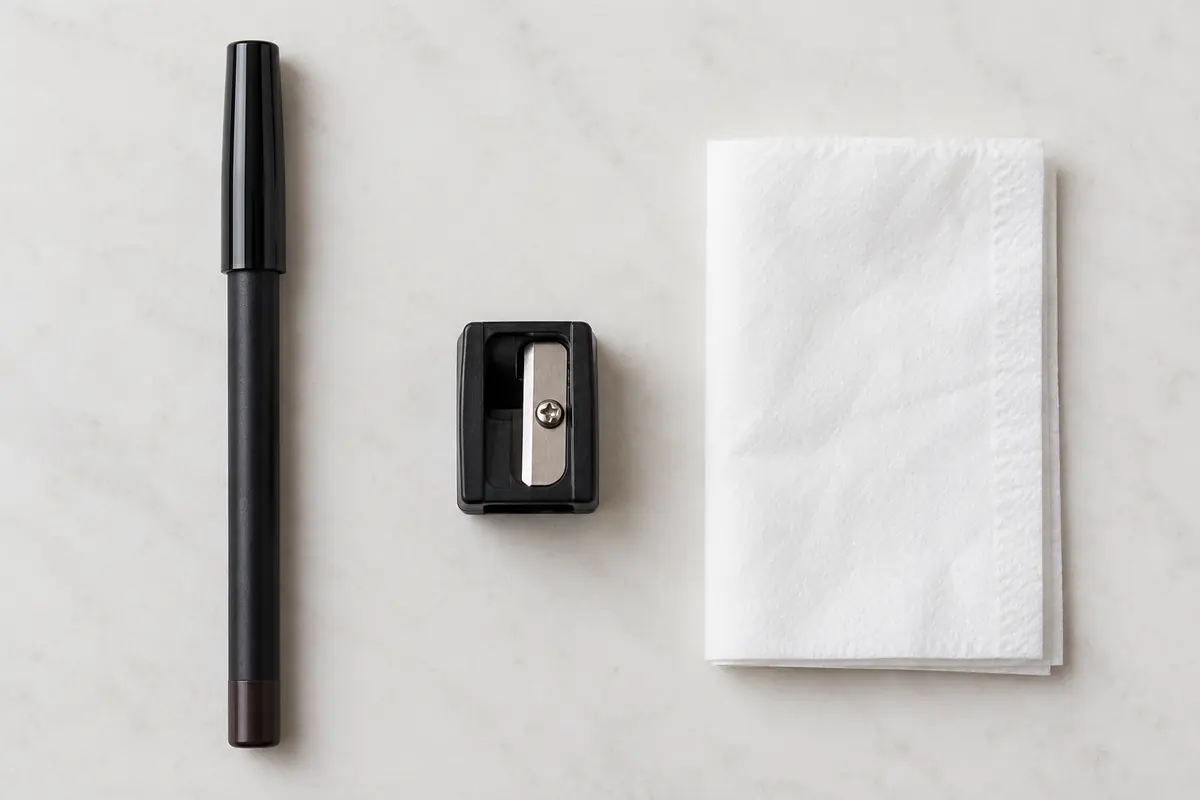
Choose a suitable labelled eye cosmetic and follow its instructions. FDA eye-cosmetic guidance advises clean hands and tools, no sharing, and stopping use if irritation occurs. Work seated and still, not while travelling in a moving car.
Keep the first trial simple: one familiar product, your own clean tool and ordinary lighting. You do not need glitter, adhesive, a new lash system and a new pencil in the same experiment. If your eye area is already uncomfortable, postpone the cosmetic test rather than trying to disguise it.
Choose placement from the visible lid
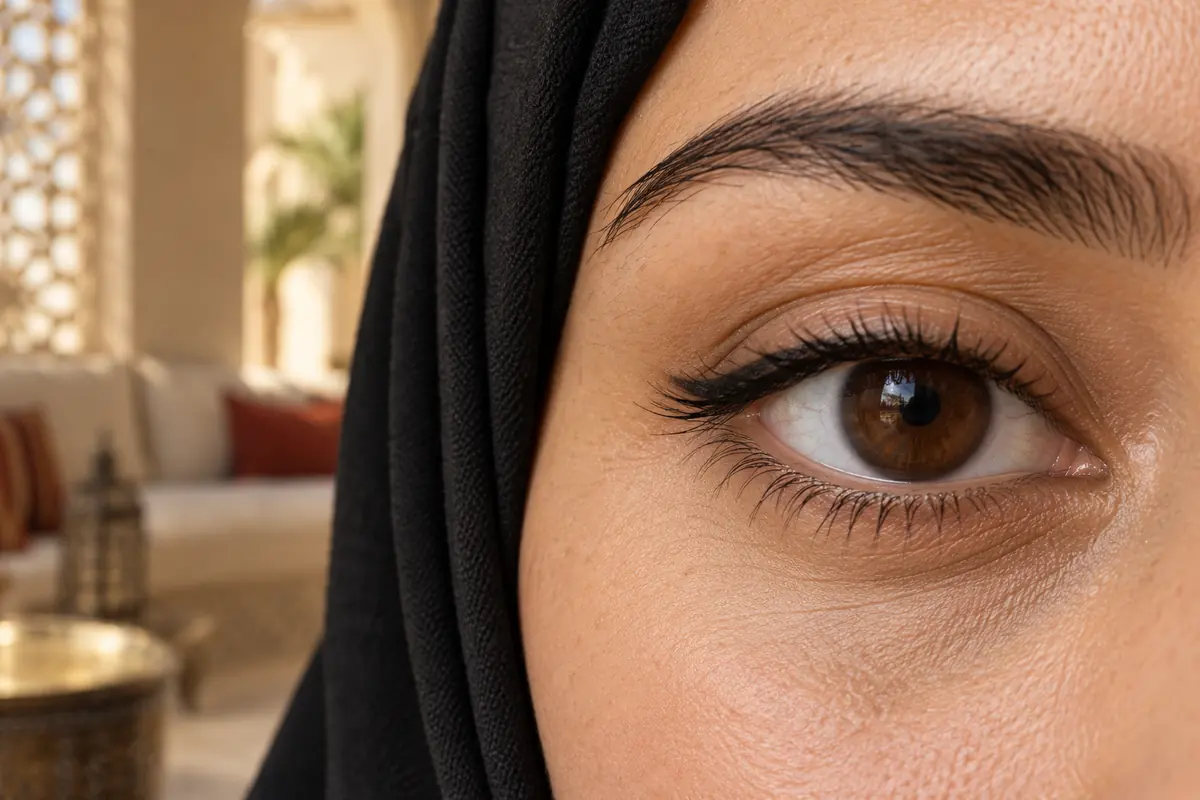
Place the mirror near eye level and look straight ahead without raising the brows. Notice the lid space you can actually see. Look down briefly for application, then reopen the eye to judge the result. Do not use a stretched lid as the final shape reference.
Start on the outer skin immediately above the upper lashes. Use short light strokes instead of forcing one continuous line. Keep the inner section thin and decide how far inward you want visible colour. This guide does not ask you to fill the waterline or push pigment between lashes from inside the eye.
| Effect you want | Starting placement | Useful check |
|---|---|---|
| Quiet definition | Narrow upper line | Can you see the lid above it when the eye is open? |
| More horizontal emphasis | Short outer extension | Does its endpoint remain visible without pulling skin? |
| Softer evening edge | Diffused outer third | Is the lash-adjacent line still clear? |
| Less time to get ready | Upper line without a wing | Can you repeat it comfortably with your normal tools? |
These are cosmetic comparisons, not diagnoses of eye anatomy. Makeup by face shape can supply broader placement experiments without turning proportions into compulsory rules.
Build a short wing from the outside inward
Choose a short endpoint outside the outer corner with your eye open. Mark it lightly. Connect it to the existing upper line with small strokes, then reopen the eye before filling anything. Work toward a shape you can see in the relaxed position, not a triangle that exists only when your lid is stretched.
If the extension crosses a fold and forms a break, shorten it or change the direction. Do not automatically keep thickening the whole lid to hide the problem. A wing of a few visible millimetres can be the complete look; length is a preference, not an achievement score.
Compare both eyes from a normal distance. Their lids and outer corners may differ, so identical drawing instructions may not create identical visible edges. Aim for a balance you enjoy. A clean correction of one endpoint is usually more informative than adding width to both eyes.
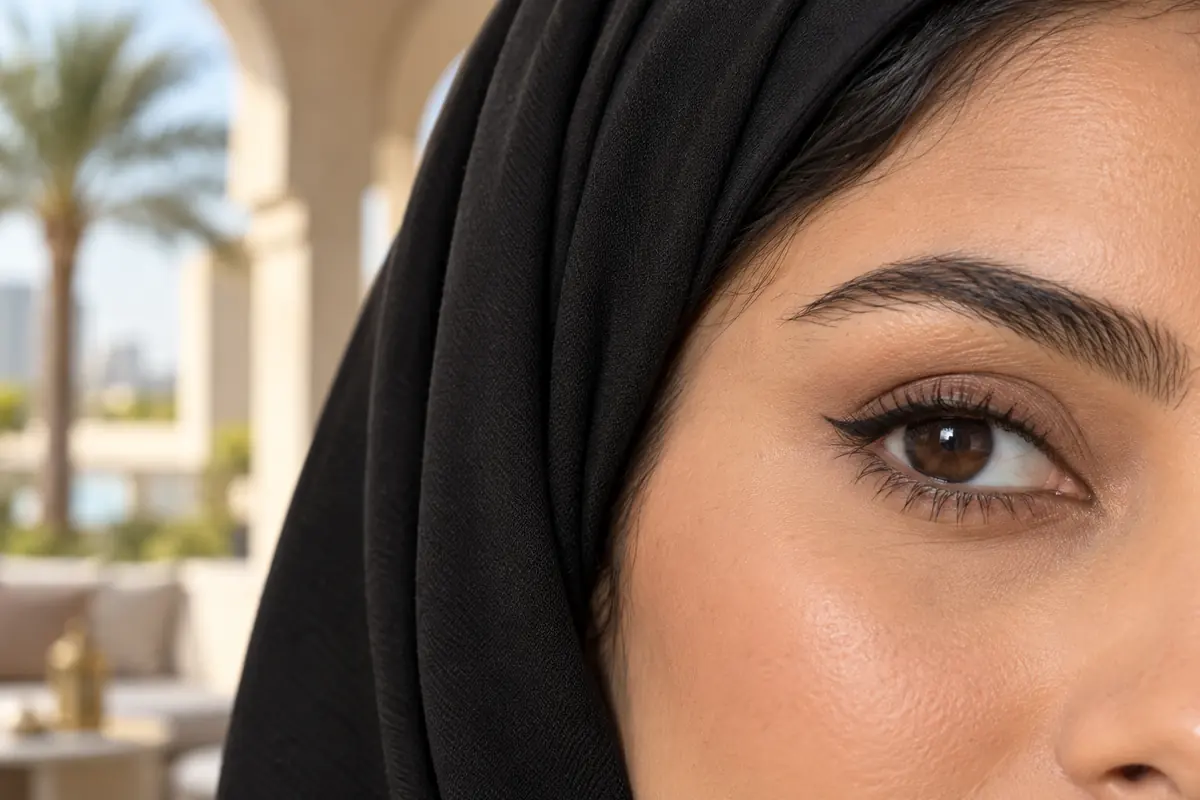
Soften the edge without losing its shape
For a diffused version, choose an eye pencil that allows blending according to its instructions. Apply a little more colour on the outer upper third. With a clean small brush, soften the outside edge on the lid while leaving the line next to the lashes distinct.
Use short controlled movements and stop to look. The goal is a transition at the edge, not spreading pigment across every available area. If the colour becomes a broad patch, remove and retry a smaller area rather than layering more to disguise it.
Compare the sharp and softened versions in the same light. A softer edge may fit a textured outfit or a quieter overall look; a clearer wing may provide the detail you want beside plain fabric. Neither choice is more correctly “Arab.” Soft glam versus full glam helps decide how much contrast to keep elsewhere.
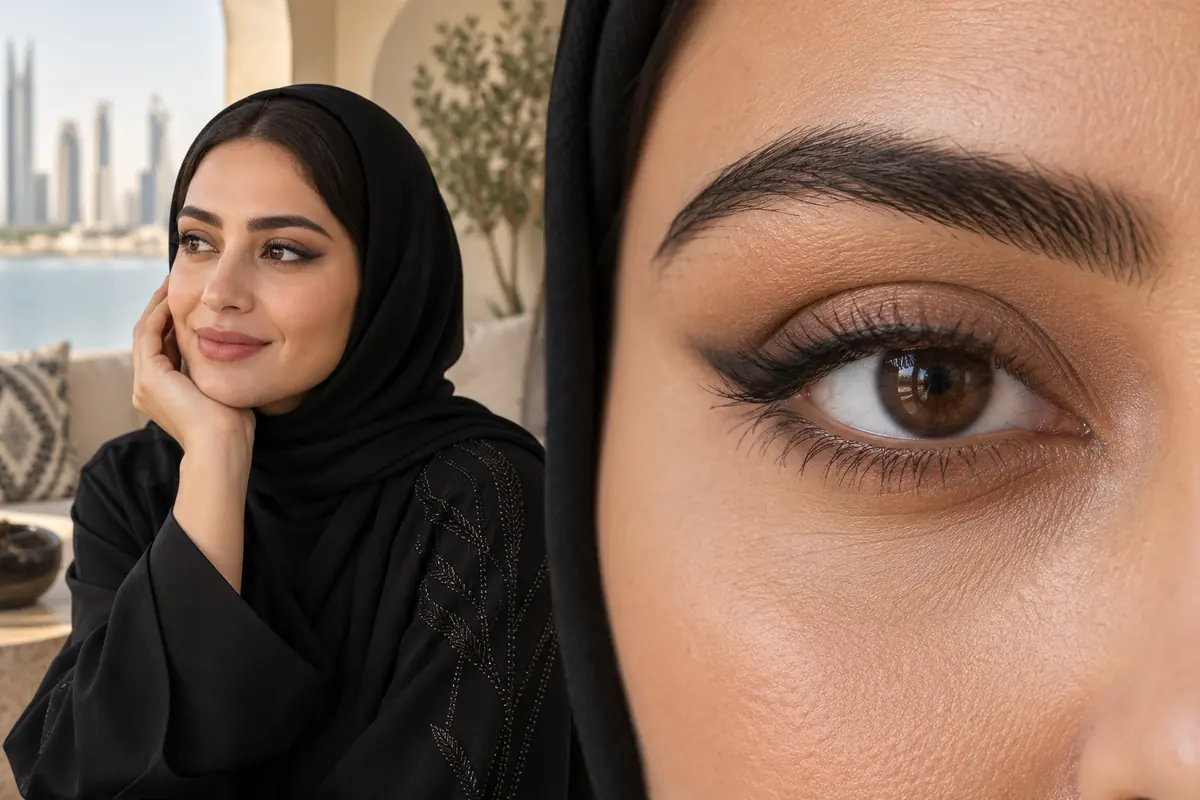
If the line keeps transferring: one controlled trial
Separate immediate stamping from later smudging
Before the occasion, use the same familiar product and narrow shape. Avoid a freshly slippery cosmetic layer on the external line area, while keeping care appropriate for you. Apply little and follow setting directions; every formula does not have the same drying time.
Blink normally with brows relaxed. An immediate stamp differs from a mark after an hour. Compare less product or a placement that does not meet the fold before adding anything. Do not bury the issue under repeated liner and powder layers.
Correct the edge, not the whole eye
For a small outside mark, use a fresh suitable tool and minimal appropriate remover away from the eye itself. Leave an intact original line alone. Stop for irritation. If transfer repeats despite a thin, set line, trial one suitable alternative in a separate session. Waterproof wording is not a guarantee for your exact placement.
Record product, upper-line width, visible endpoint, when the mark appeared and the single change tested. Black versus brown and sharp versus diffused remain preferences; neither automatically resolves an unobserved transfer problem.
For colour choices after placement is settled, compare eyeshadow for your eye colour and lipstick for your skin tone as separate experiments.
Test wear before the event
Give yourself a short practice session several days before the occasion. Apply the chosen shape, observe it after ordinary activities and note any smudging. A label such as long wear cannot predict your exact result. Do not begin an event day with a complicated technique you have never repeated.
If colour transfers to a fold, compare a smaller application area before trying another product. If it moves outward when you touch your face, change that habit and the amount applied. If it causes discomfort, stop; placement experiments are not a way to test repeated irritation.
Use event makeup touch-ups to plan a small, targeted correction kit. The aim is not to redo both eyes every time you check a mirror.
Know when the issue is not a makeup shape
For ongoing irritation, ask a healthcare professional rather than trying more products. NHS eye-symptom guidance identifies pain, vision changes and very red eyes as reasons for urgent assessment. Follow your local healthcare route.
Do not interpret watering or redness as evidence that you simply need a different wing. A photograph and a style selector cannot explain the cause. You can still plan the outfit, jewellery and hairstyle while leaving eye makeup out.
A hypothetical example: a smaller line made the difference
Imagine Aisha likes a broad wing in a reference picture. In her first trial, most of the upper lid is covered when she opens her eyes. She keeps the same pencil and light, narrows the upper line, and places a short endpoint where it remains visible with her gaze relaxed.
She compares a clear edge with a softly blended outer third, then records the version she prefers. This is an illustrative styling example, not a real-person transformation or a promise about every lid shape.
For the occasion, she chooses earrings through gold jewellery with an abaya and keeps the eye plan specific: product, upper placement, width and outer edge. A helpful result is a look she can reproduce comfortably without guessing what a “secret” technique means.
Frequently asked
Why does eyeliner disappear on hooded eyes?
Colour entirely within a hidden lid area may disappear when your gaze relaxes. Check open-eye placement, keep the upper line narrow and trial a short visible endpoint. This is a placement observation, not a diagnosis.
Why does eyeliner transfer onto my upper eyelid?
Wet product touching a fold, a slippery layer beneath it and later wear can look similar. Note when the mark appears. Compare less product on a settled external lid and follow setting directions before blinking normally.
How do I fix a wing that breaks at the crease?
Check your relaxed eye and shorten or redirect only the outer edge. Do not cover the mobile lid to hide one break. The shape may look different closed and still be balanced open.
Is traditional kohl powder safe because it is natural?
No. FDA warns that traditional kohl and related powders can contain lead. Avoid unregulated powders and homemade mixtures. A modern kohl-marketed pencil still needs its own ingredient and intended-use check.
Can I borrow eyeliner for a touch-up?
Do not share eye cosmetics. Bring your own suitable product and clean tools. Stop for irritation; a different shape or a fresh layer does not resolve it.