

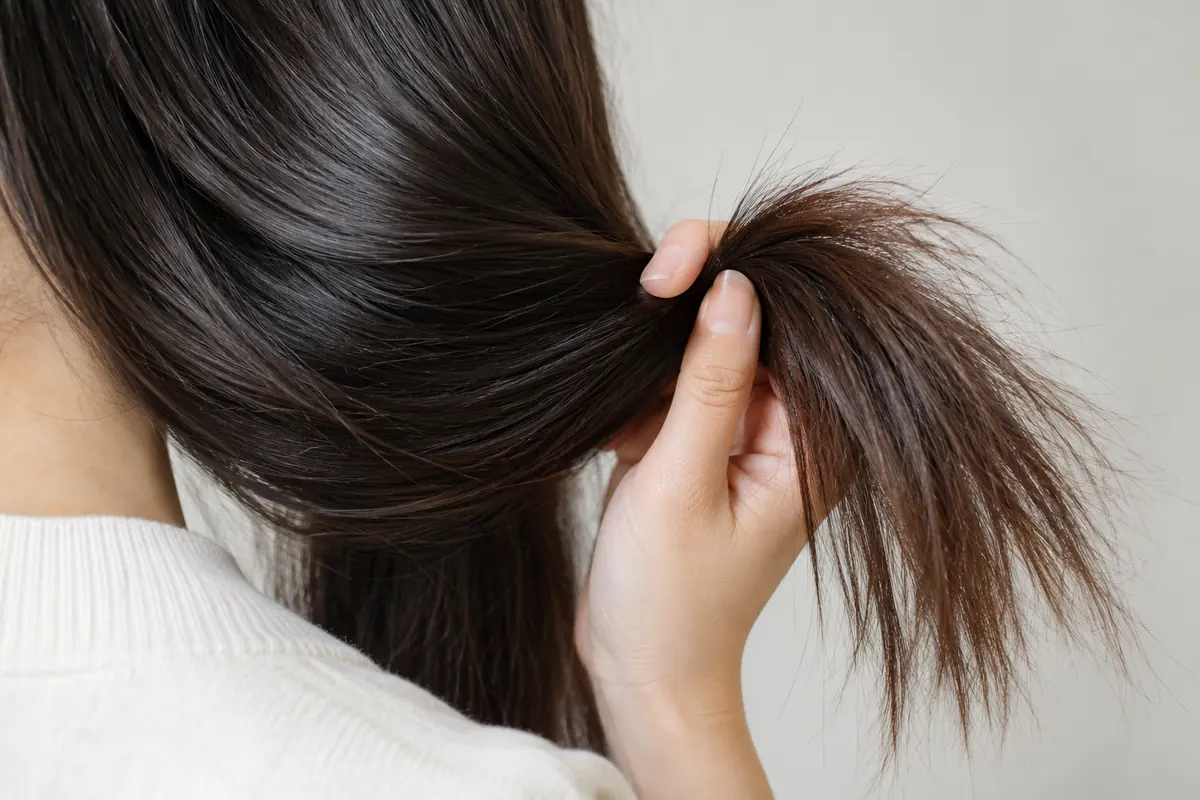
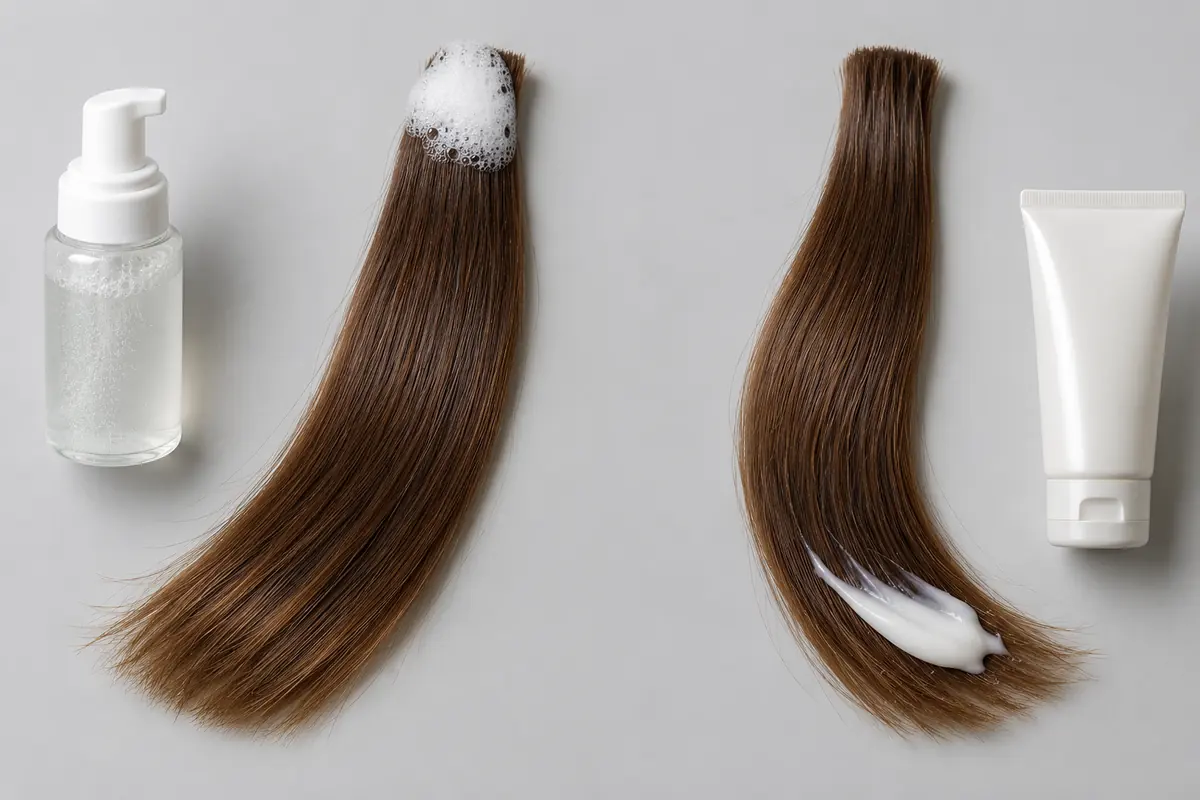
First action: move the products before buying more. On the next comfortable wash day, place shampoo mainly on the scalp and conditioner where the lengths need it. Do not scrub the dry ends together to make the roots feel cleaner. If the skin is painful, inflamed, persistently itchy or has sores, seek professional advice rather than treating it as an ordinary oil-management problem.
A two-zone routine gives the scalp and the lengths different jobs. You may need to remove root oil while reducing friction through an older, processed or easily tangled section. This does not make your hair contradictory, and you do not have to choose between greasy roots and tangled ends.
Understand the two separate observations
“Oily” often means the root area looks shiny, lies flat or feels coated between washes. “Dry” may mean the ends feel rough, catch during detangling or lack the finish you want. These are descriptions; they do not identify a hormone issue, nutrient deficiency or microscopic damage on their own.
Ask what changed first. Did roots begin feeling coated after a rich conditioner moved closer to the scalp? Did ends become difficult after lightening? Is there itch or flaking as well as oiliness? The sequence helps choose the next question without claiming a diagnosis.
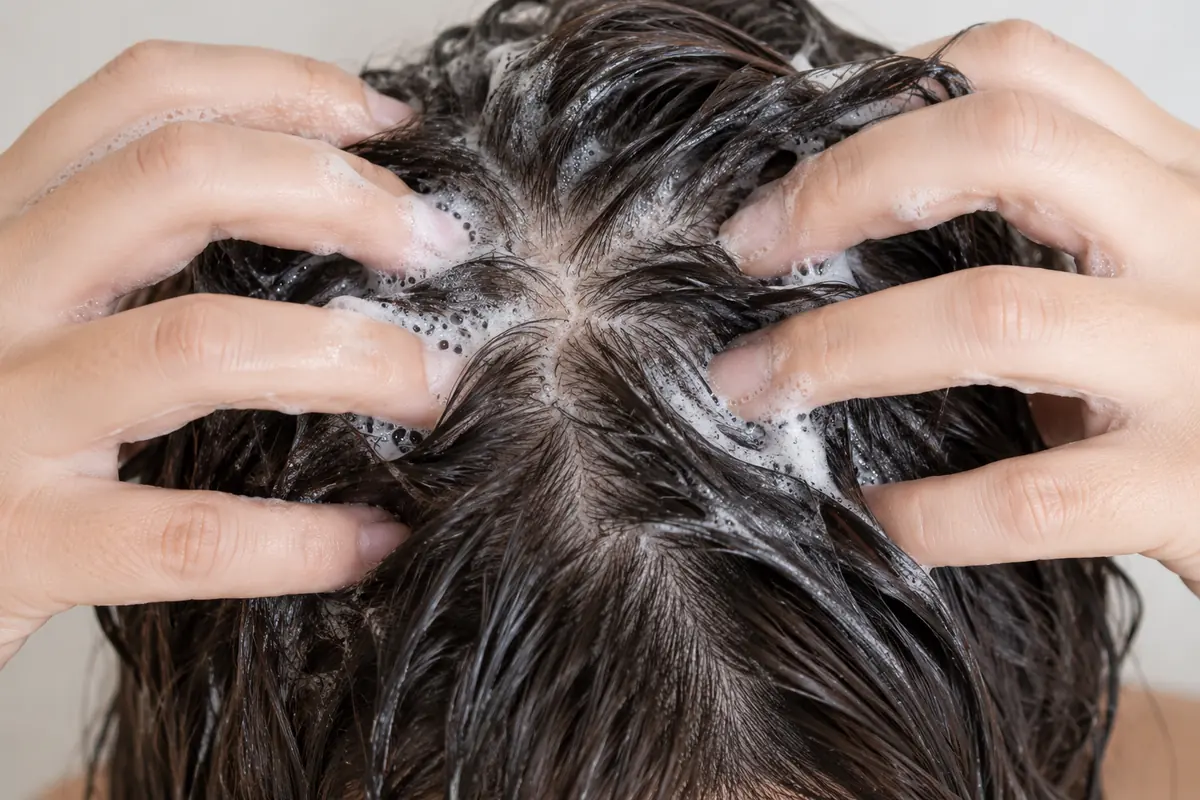
AAD recommends shampoo on the scalp and conditioning coverage adapted to texture: ends for fine or straight hair, broader lengths when dry or curly. AAD: healthy hair care. That is the starting distinction, not a guarantee that one placement solves every person's symptoms.
Match the next change to the observation
| Observation | First practical adjustment | When to change course |
|---|---|---|
| Roots feel coated after rich products | Keep optional oils and rich conditioner away from roots; rinse well | Seek advice if skin is uncomfortable or inflamed |
| Ends catch but scalp is comfortable | Condition and support the lengths during detangling | Ask a stylist if visible damage or persistent snagging remains |
| Roots are oily and scalp flakes or itches | Ask about appropriate scalp care | Use dandruff versus dry scalp; do not diagnose from grease |
| A wash is postponed with repeated dry-shampoo layers | Return to shampoo and water | Stop the optional product if irritating |
| Snapping, new patches or reduced density | Separate fiber and scalp questions | Use breakage versus shedding and seek assessment |
The table is not a prescription for the strongest cleanser. It helps you choose one change instead of redesigning your entire routine after a single difficult morning.
Prepare a wash that reaches the scalp
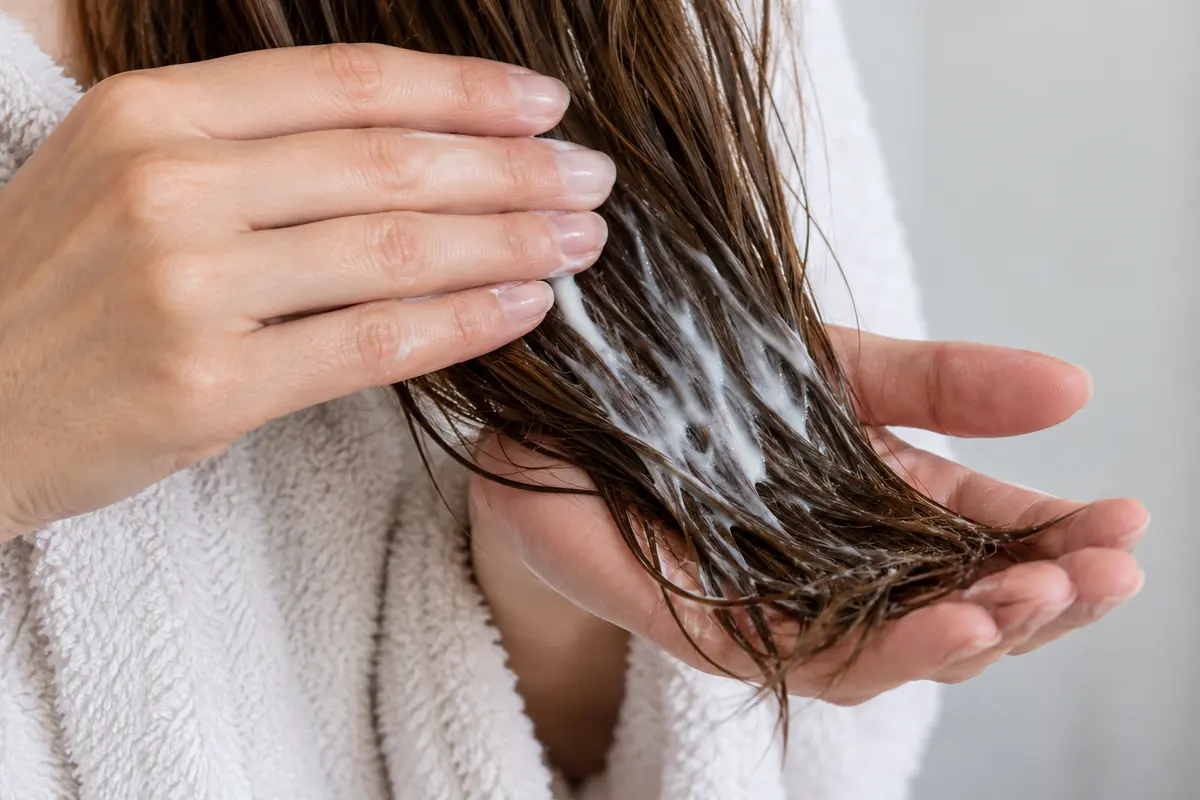
Remove accessories and note any section that already catches. If your hair is dense, sectioning can help you reach the scalp rather than spreading all the cleanser across the outer lengths. Keep sections manageable; you should not need to rake nails over the skin.
Use a shampoo you tolerate and follow its directions. Work gently at the scalp, including the places you often miss. Avoid piling all the hair on top of your head and twisting it into knots. Rinse thoroughly, then assess the next step rather than automatically shampooing repeatedly to chase a squeaky feeling.
Rough rubbing and pulling are avoidable sources of damage. AAD: stopping damaging habits. The aim is comfortable cleansing and manageable hair, not a stripped texture that proves nothing about long-term oil production.
If one wash leaves a coated feel, ask practical questions first: did the product reach the scalp, was it rinsed, and did an optional rich product remain at the roots? Do not conclude that your follicles require a detox because one application was incomplete.
Condition the zone that needs it
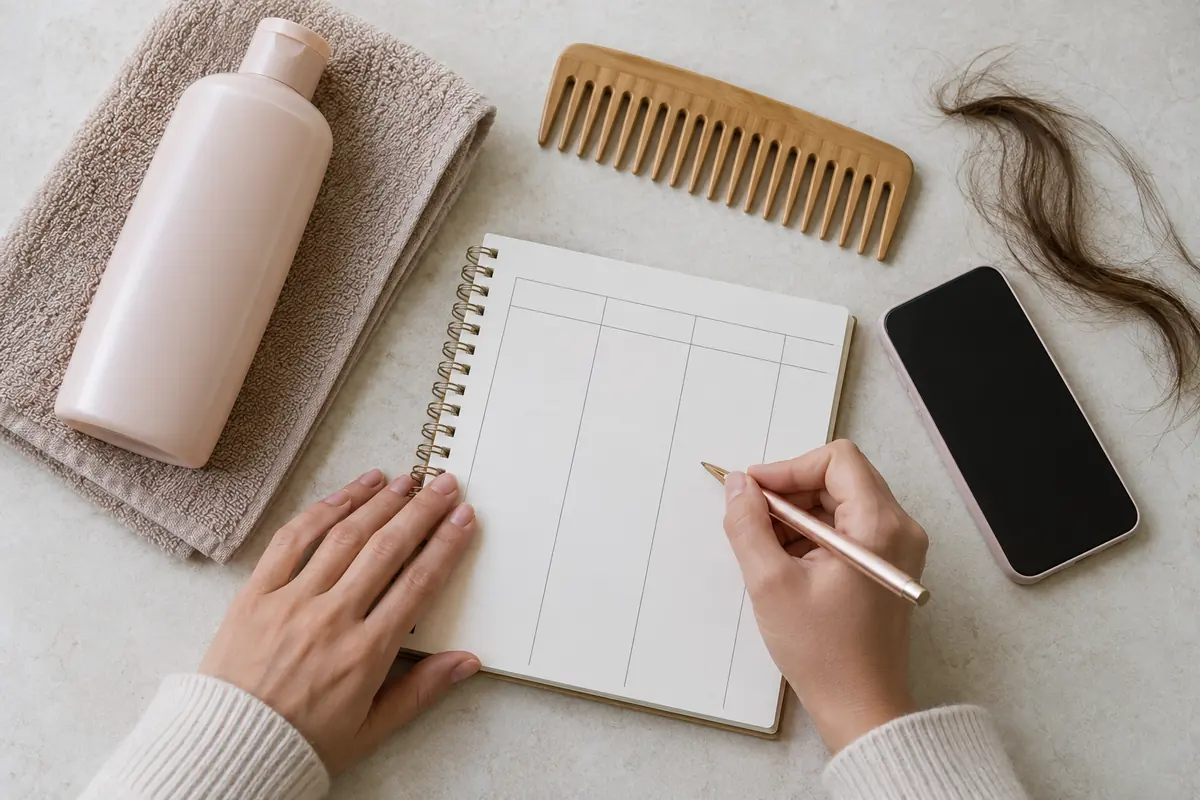
For fine or straight hair, start with the ends and avoid depositing a heavy product at the root area. For dry, curly or coily lengths, you may need wider coverage for comfortable detangling. “Only the bottom two centimeters” is not a universal rule; use your actual length and texture.
Follow the label and distribute without force. Support a section above a knot and detangle from the ends upward. If straight hair is delicate while fully wet, allow some drying before combing; if curls are easier with conditioner, use that stage. Do not apply a texture rule from someone else's video when it makes you pull harder.
Rinse according to the product's instructions. A rinse-out conditioner is not automatically a leave-in because the ends feel rough. If a leave-in is useful, choose one for that purpose and begin with a manageable application. Optional oil or serum on lengths is a cosmetic choice, not a scalp treatment.
Finish by blotting rather than rough towel rubbing. Choose comfortable attachments and reduce repeated hot-tool passes. If your ends are consistently snagging despite gentle conditioning, split-end prevention can help prepare a trim conversation.
Adjust wash timing without a universal schedule
Base the next wash on oil, dirt, comfort and texture. A fine straight-haired person with oily roots may choose a different interval from someone with dry, dense curls. You do not have to tolerate an uncomfortable scalp to pass an online challenge about “training” hair.
Instead of fixing a calendar first, observe how your scalp and ends behave under a routine you can maintain. If washing dries the lengths, improve placement and conditioning rather than assuming all cleansing must stop. If itch or inflammation persists, move to professional assessment instead of extending the interval indefinitely.
Take work, exercise and styling time into account. A short cleansing-and-conditioning routine you can use is more practical than a complicated ritual that repeatedly gets postponed. This is a scheduling decision, not a claim that sweat or a head covering is the cause of your symptoms.
Use dry shampoo for its actual job
Dry shampoo absorbs oil; it does not cleanse the scalp in the way shampoo and water do. AAD: dry-shampoo guidance. It can be a cosmetic bridge for a busy morning, not a replacement routine.
Follow its label, apply only where needed and avoid repeatedly adding layers to the same area instead of washing. Stop if it causes itching, burning or other irritation and ask for advice if symptoms persist or worsen. Do not treat the disappearance of shine as proof that the skin is clean or any flaking cause is treated.
Homemade powders and a new scalp scrub are not required to make this plan work. More products create more variables. Begin with correct placement, rinse and timing before deciding another purchase solves a problem you have not described.
Record one useful comparison
| Field | What to record |
|---|---|
| Start | Root feel, end snagging, itch or flakes before washing |
| Wash | Interval, shampoo placement and rinsing |
| Condition | Product placement and whether detangling required force |
| Styling | Optional root products, dry shampoo, heat, attachments |
| Review | Similar day after washing: comfort, coating and end handling |
Hypothetical example: “Roots look coated the morning after washing; conditioner went close to the scalp. Ends catch at the front, which was previously lightened. Next wash I will keep rich conditioner on the lengths, rinse carefully and detangle in supported sections. I will not add three new products.” This is a testable plan, not an invented success story.
Compare similar wash intervals and styling. Less coating at the roots or easier end handling can be useful outcomes. They do not demonstrate that oil glands have been retrained, that old damage healed or that a medical scalp problem is excluded. If something stays uncomfortable, note it instead of repeatedly intensifying the cleanser.
Stop the common failed fixes
- Skipping all conditioner because the roots are oily.
- Scrubbing the ends to remove oil that is mainly at the scalp.
- Stretching washes through discomfort to “reset” oil production.
- Replacing cleansing with repeated dry-shampoo layers.
- Adding scalp oil automatically because the ends feel dry.
- Using harsh exfoliation or kitchen remedies to pursue a detox.
- Diagnosing dandruff, a deficiency or hair loss from a greasy-root photo.
Choose the right follow-up
A stylist can help adjust product placement, a cut and handling for your texture. Ask: “How can I keep the roots comfortable without stripping or pulling these lengths?” If damage began after color processing, bring the service history and use bleached hair breakage.
A pharmacist or clinician can advise on persistent flaking or skin symptoms. Pain, inflammation, sores or sudden or patchy loss deserve healthcare attention; a stylist's assessment of smoothness does not resolve them.
Continue with your hair type, talking to your stylist and the hair-care hub. Copy the checklist here to use at the next wash or appointment. Mademoizelle is in early access: a future saved style plan may help communication, while these practical steps work on this page and do not require an app to diagnose your scalp.
Frequently asked
Why are my roots oily but my ends dry?
The scalp and existing lengths have different care needs. Root oiliness does not prove the ends need harsh cleansing, and rough ends do not prove a dry scalp. Product placement and past heat or chemical handling are useful observations, not a diagnosis.
How often should I wash oily roots?
Base timing on oil, dirt, comfort and hair texture rather than a universal schedule. If the scalp is uncomfortable or symptoms persist, seek guidance. Stretching washes to train oil production is not the goal of this routine.
Should I skip conditioner because my roots are greasy?
Not automatically. Try placing it mainly on the ends for fine or straight hair and adjusting through dry or curly lengths. Follow the product label and keep scalp treatment separate from conditioning the hair.
Does dry shampoo clean my scalp?
No. It can absorb oil and improve the appearance between washes, but does not replace regular shampoo and water. Stop it if it irritates and avoid building repeated layers instead of cleansing.
Do I need a scalp detox or oil-training routine?
This plan does not require either. Start with targeted cleansing and conditioning, review comparable wash days and seek assessment for symptoms. A marketing label is not evidence that your scalp needs aggressive exfoliation.