

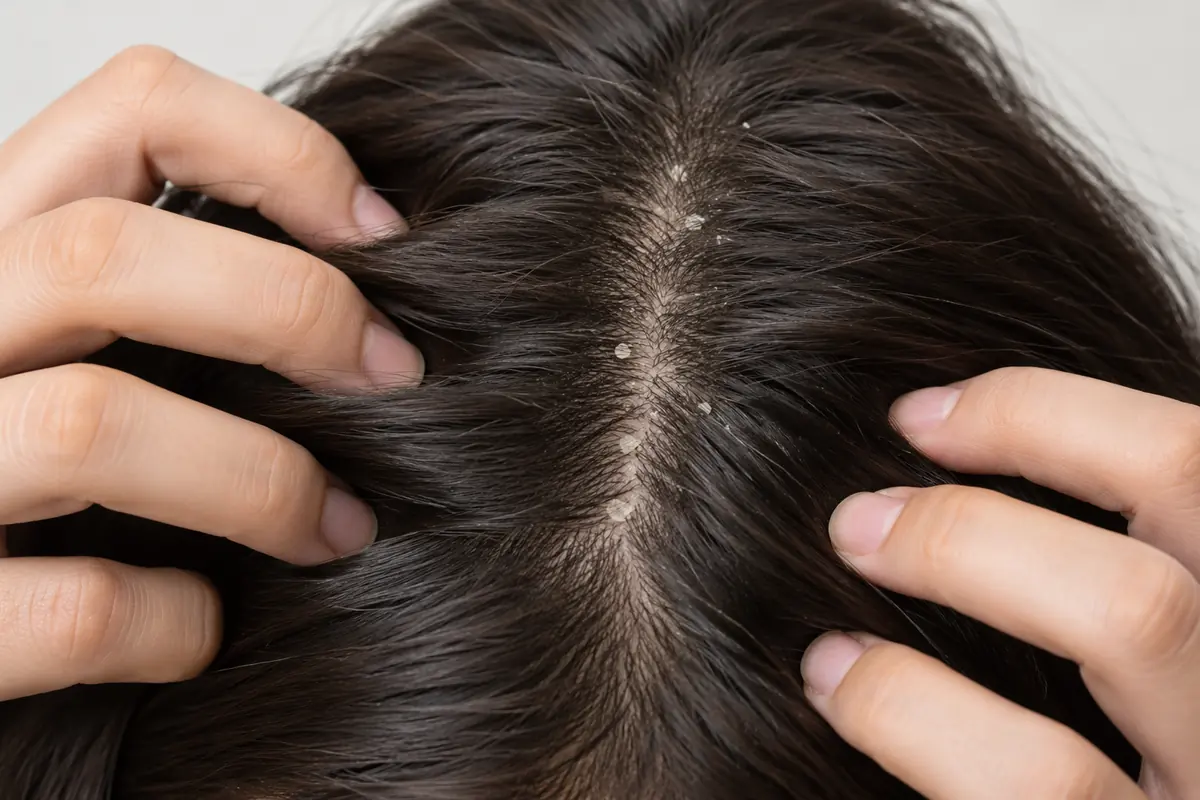
First action: look beyond the flakes. Write down whether your scalp feels oily, tight, itchy or painful, whether skin looks inflamed, and whether the problem began after a new product. If there is pain, marked redness or swelling, sores, severe itch or new hair-loss patches, seek clinical advice rather than starting a long series of home trials.
If symptoms are mild, a pharmacist can help you choose an appropriate dandruff product and interpret the label. You do not have to diagnose your scalp first to ask for help. This guide explains how to make that conversation useful and how to avoid damaging the lengths while caring for the scalp.
Why flakes do not prove dryness
Dandruff and dry scalp can both itch and flake. Oiliness does not rule out dandruff, and feeling tight does not prove a single diagnosis. Cleveland Clinic discusses this overlap and the possibility of skin conditions behind dryness. Cleveland Clinic: dry scalp.
“My scalp is dry” may describe an uncomfortable sensation, not an established cause. Similarly, “product buildup” describes a possibility, not a diagnosis you can confirm by scraping skin. Some conditions resemble an ordinary flaky scalp; AAD explains why a dermatologist's assessment may be needed. AAD: dry-scalp lookalikes.
This distinction matters because a moisturizer, a shampoo intended for dandruff and a medical treatment for another condition are not interchangeable. The safest useful outcome is an appropriate next action, not a confident label based on an illustration.
What is happening underneath the flakes?
Dry skin can result from water loss; a cleanser may contribute to dryness or irritation. AAD: scalp dryness. In seborrhoeic dermatitis, naturally occurring Malassezia yeast and individual skin responses are among the factors involved; the cause is not fully understood. DermNet: seborrhoeic dermatitis. You cannot infer that process from a flake. This explains why simply adding moisture and treating a dandruff-related process are different goals.
Read the active ingredient, not just “soothing”
| Label example | Main distinction to discuss with a pharmacist |
|---|---|
| Ketoconazole | An antifungal ingredient, rather than merely a cosmetic moisturizer |
| Selenium sulfide | Another ingredient used in dandruff products; suitability depends on the specific product |
| Salicylic acid | Can loosen scale; that is a different function from an antifungal |
AAD lists these ingredients in dandruff shampoos; DermNet distinguishes antifungal and scale-loosening approaches. AAD product guidance, DermNet treatment explanation. Availability, age restrictions and instructions vary locally. These examples help you read a label and ask questions, not select a medicine or combine treatments yourself. A moisturizing shampoo may improve cleansing comfort without providing the same active function.
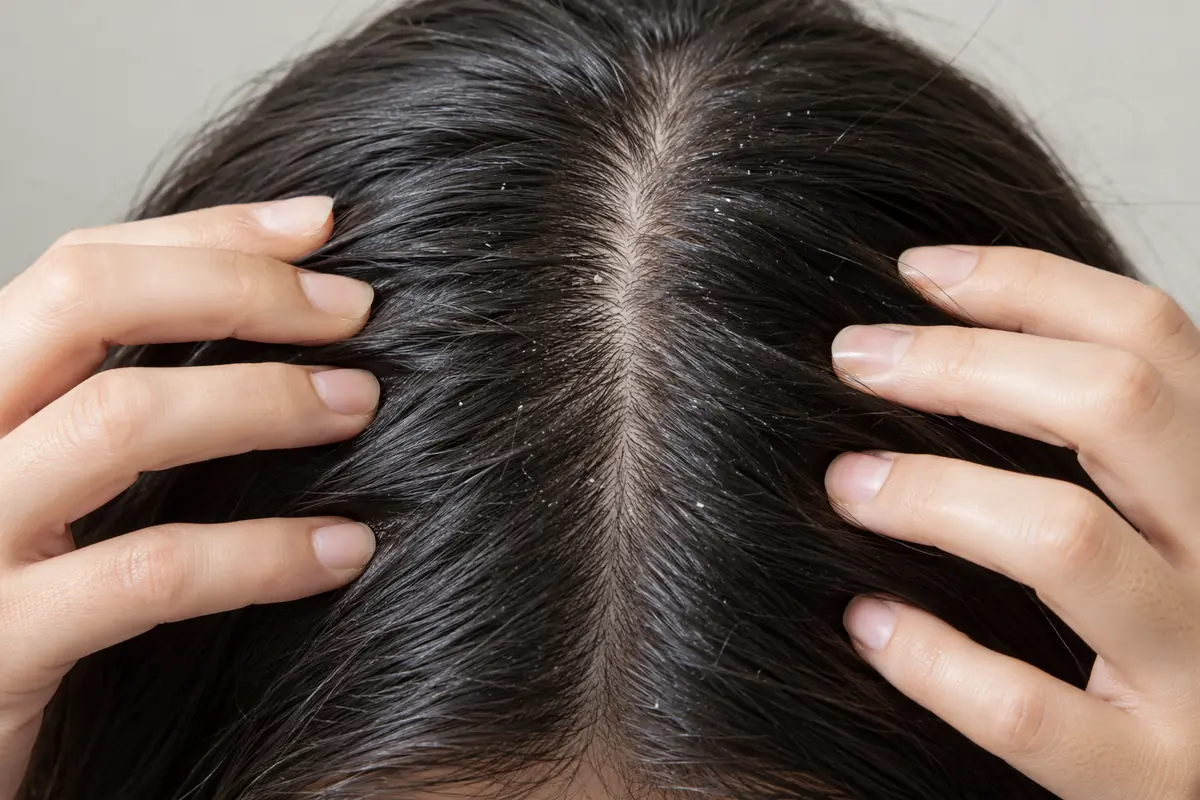
Use symptoms to choose the next action
| What you notice | Do now | What to avoid |
|---|---|---|
| Mild flakes and itch, skin otherwise comfortable | Ask a pharmacist about suitable label-led dandruff care | A cocktail of medicated shampoos chosen from comments |
| Tightness after a new cleanser or styling product | Pause the optional suspected product and note timing | Reapplying it to prove the reaction |
| Oily roots with flakes | Keep cleansing appropriate to your hair and seek scalp-care guidance | Assuming oiliness makes dandruff impossible |
| Red or swollen skin, substantial pain or severe itch | Seek clinical advice | Scraping scales, abrasive brushing or prolonged home experiments |
| Patches of loss, broken hairs with inflamed patches, or symptoms elsewhere | Arrange medical assessment | Diagnosing an infection, eczema or psoriasis from a picture |
The table routes decisions; it does not classify a rash. A stylist can help with cosmetic handling, but skin diagnosis belongs with a clinician. A pharmacy conversation is useful for mild symptoms; it is not a substitute for assessment of warning signs.
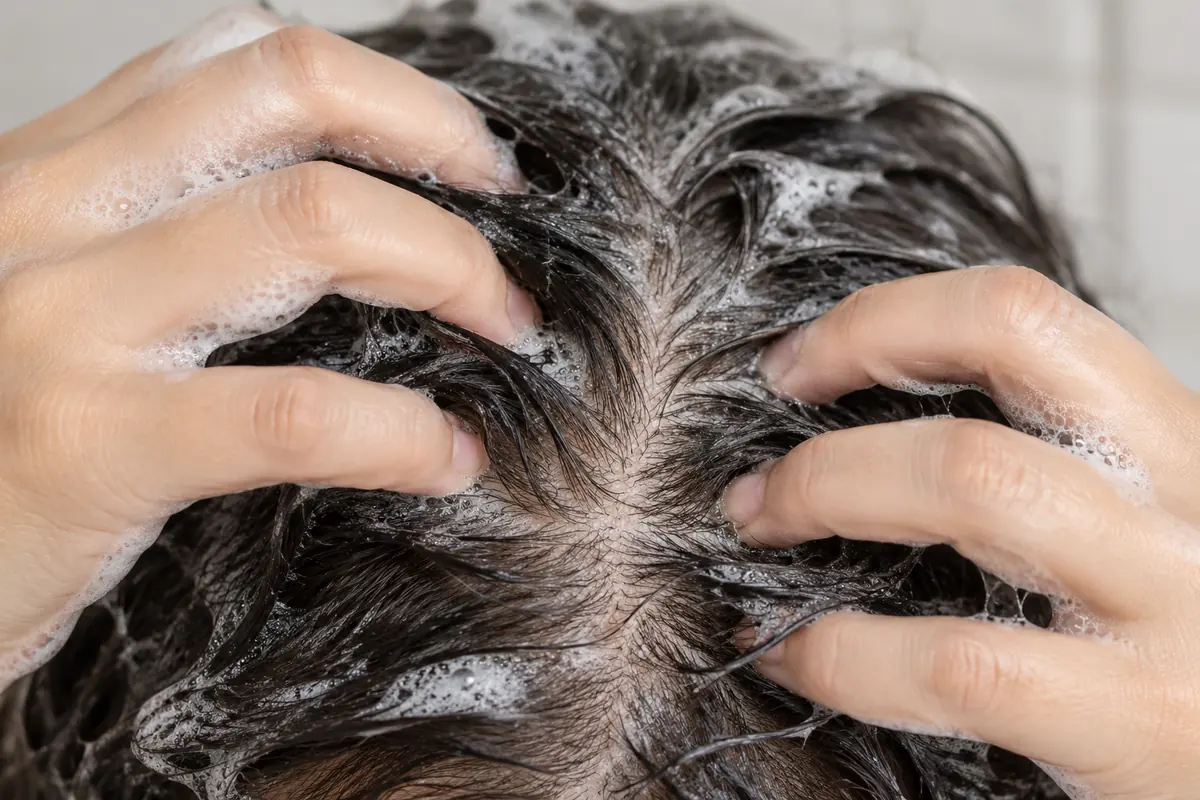
Observe without irritating the skin
Use fingertips to part the hair gently if you want to show the area. Do not use nails, a fine comb or a scalp scraper to lift scales for a closer view. Note where symptoms are located: crown, hairline, behind ears or another area. Tell the clinician if similar patches exist away from the scalp.
Keep the product timeline. A new fragrance, dye, oil, gel or cleanser may be relevant even if sold as natural. Record its name, first use, and when discomfort began. A timing connection is useful evidence for the conversation; it is not proof of allergy. Do not deliberately challenge a suspected reaction at home.
| Log field | Useful entry |
|---|---|
| Onset and location | Approximate start and where flakes or discomfort occur |
| Symptoms | Itch, pain, tightness, redness, swelling; effect on sleep or daily comfort |
| Cleansing | Product, wash interval, application and rinsing |
| New exposures | Styling products, color services or home remedies introduced |
| Wider changes | Patches of loss or skin symptoms elsewhere |
| Review | Better, unchanged or worse under comparable use; side effects |
Hypothetical example: “Flakes and itch became noticeable after changing shampoo. Roots feel oily the next day; ends are dry. I will stop the new optional scalp serum, ask the pharmacist about a suitable product, follow its instructions and arrange care sooner if the skin becomes sore.” This does not establish the cause or invent improvement.
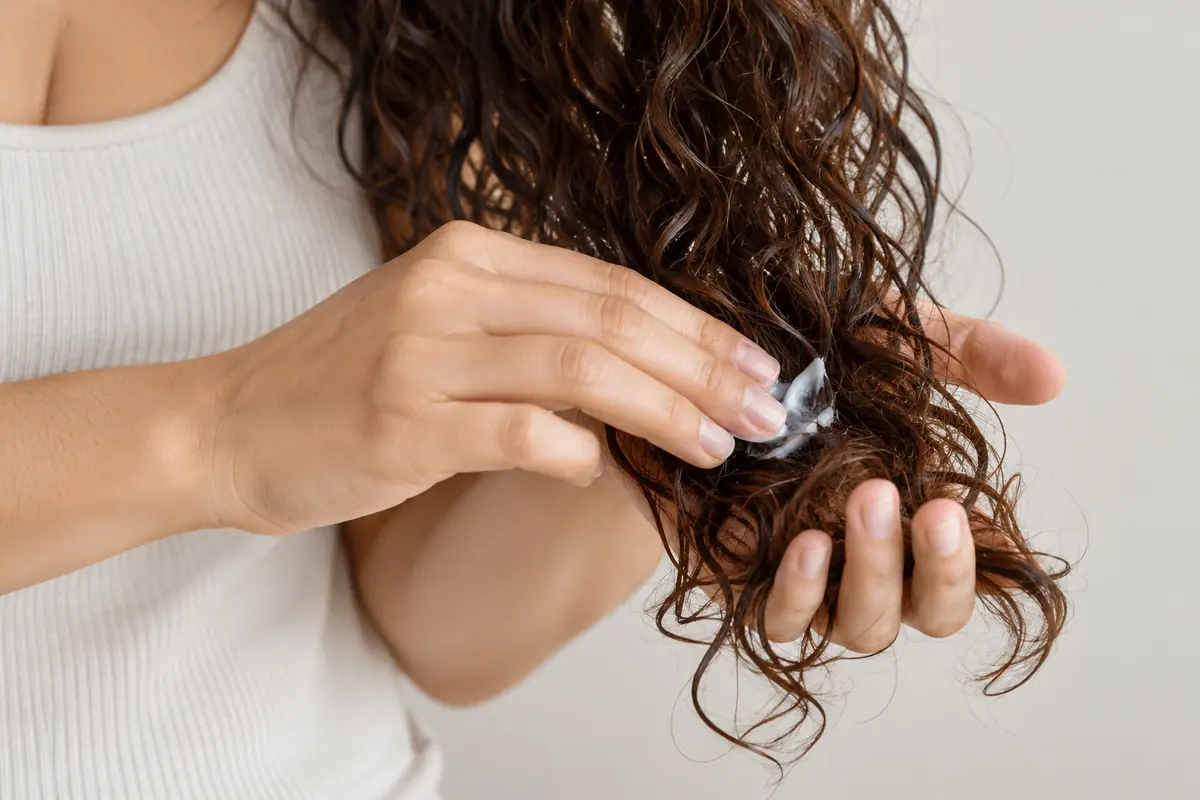
A label-led routine for mild symptoms
- Choose one informed next step. Tell the pharmacist your symptoms, age where relevant, hair texture and any scalp treatments already used. Ask if a product is suitable rather than requesting the strongest option.
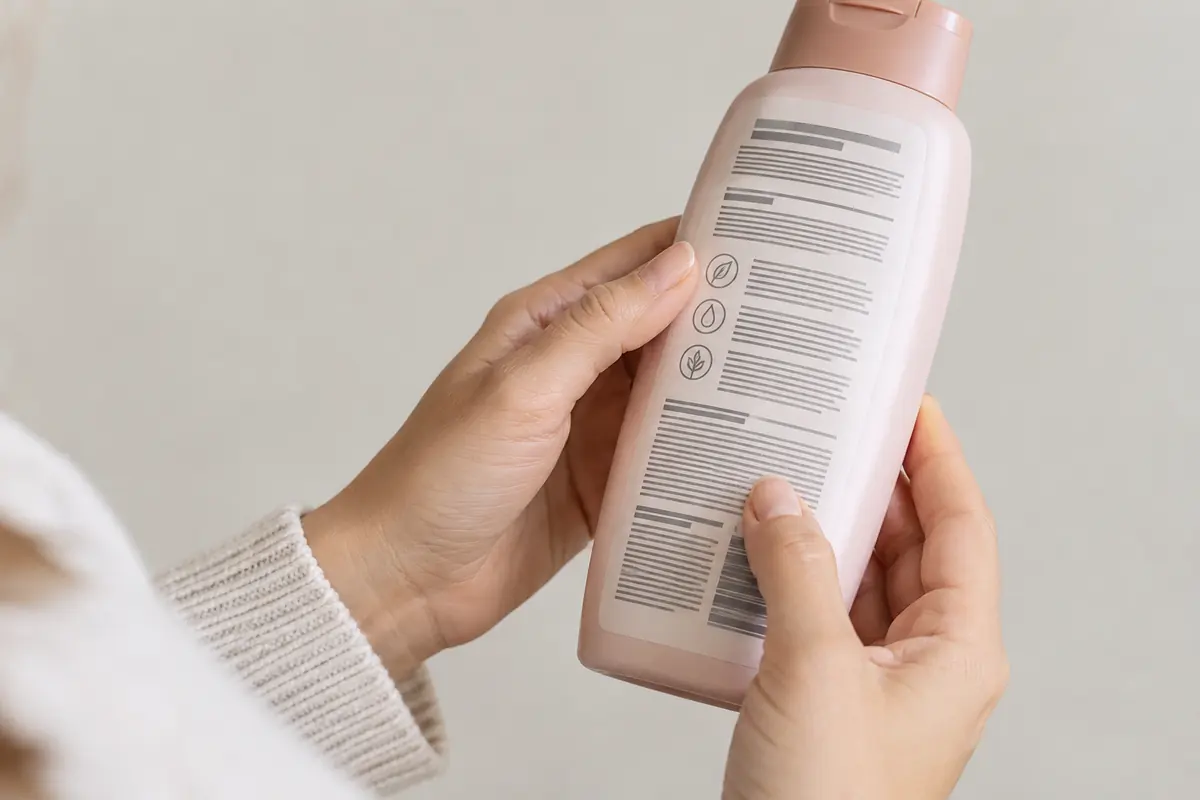
- Read the complete directions. Confirm where to apply it, whether a contact time is specified, how often it is used, restrictions and what to do if irritation occurs. Instructions vary; this page does not prescribe antifungal dosing.
- Apply gently to the scalp. Separate sections if that helps you reach the skin without rubbing the entire hair length. Do not scratch in the product.
- Use the stated time, then rinse. More time is not automatically more effective. Do not mix products or extend use because flakes remain after a single wash.
- Care for the lengths separately. Conditioner can support dry ends. For curly or coily hair, avoid dragging scalp treatment through lengths unnecessarily; AAD specifically notes the potential drying effect there. AAD: treating dandruff.
- Record tolerance and follow-up. If skin becomes more irritated, stop the optional product and seek advice. If a clinician has prescribed a plan, ask them how to handle adverse effects instead of rewriting it yourself.
An appropriate washing routine depends on texture, oiliness and tolerance. This is not a universal daily-wash or once-weekly schedule. You can ask how the scalp product fits around your ordinary shampoo and conditioning without choosing between scalp comfort and manageable ends.
Why common remedies fail to answer the question
Adding oil to every flaky scalp assumes moisture shortage is the cause. That assumption can obscure what you need assessed. Lemon, baking soda, essential oils and kitchen mixtures are not substitutes for a product with instructions or a clinical plan; do not use them to burn, scrub or “disinfect” the scalp.
Aggressively lifting scales changes the appearance temporarily while adding manipulation. Using several shampoos together makes it harder to distinguish tolerance and outcome. Stopping all cleansing because the ends feel dry does not solve how to care for two different zones.
“Detox” and “balancing” are marketing words unless translated into a specific action and observable goal. Ask what the product does, where it goes and how its use will be reviewed. A promise to clean follicles from a photograph is not a medical assessment.
Define a realistic review and the point to seek care
For mild flaking under an appropriate label-led plan, look for the pattern over comparable uses: itch comfort, visible flaking and whether the product is tolerated. An immediately clean-looking part is not proof that an underlying cause is resolved. Dandruff may recur; needing ongoing guidance does not mean you failed at hygiene.
NHS advises medical assessment when symptoms persist after at least four weeks of anti-dandruff shampoo, and sooner for severe itch, red or swollen scalp or symptoms elsewhere. NHS: dandruff referral guidance. Four weeks is a review point for suitable mild self-care, not a required waiting period for painful or inflamed skin.
Seek assessment promptly if a new patch of loss appears or shedding or density changes concern you. Do not classify it as dandruff-related based on the timing alone. Bring the log and packaging rather than asking the clinician to interpret a list of guessed diagnoses.
Prepare a useful professional question
For the pharmacist: “These are my symptoms and products. Which option fits mild flaking, how do I use its label, and what should make me stop or consult?” For a clinician: “This began then, appears here, affects my comfort this way and changed after these exposures. Could another skin condition be involved?”
For a stylist: “I am following a scalp plan; how can we condition and detangle the lengths without extra pulling?” Avoid chemical services on irritated skin until safety has been clarified. Cosmetic comfort and clinical treatment can be coordinated while keeping their roles clear.
Use oily scalp with dry ends, breakage versus shedding, fragility after bleach, split ends and texture-specific care for the next distinct question. The hair-care hub gathers these actions. Copy the care checklist here; Mademoizelle is in early access and does not diagnose a scalp condition from photos or replace medical care.
Frequently asked
Can I have dandruff with an oily scalp?
Yes. A scalp can feel oily and still flake; flakes do not automatically mean it needs oil. Symptoms overlap with dryness and other skin conditions, so appearance alone does not identify the cause.
Do small white flakes prove dry scalp?
No. Flake size and color can help describe the issue, but they do not reliably distinguish dandruff, irritation or another condition. Include itch, redness, timing and new products in your notes.
Should I oil an itchy, flaky scalp?
Do not automatically add oil to treat unexplained flaking. Seek pharmacist or clinician guidance on the likely next step, especially if skin is inflamed. Oils and masks for hair lengths are a different decision from treating the scalp.
How long should a dandruff shampoo stay on?
Follow the particular product's directions or your clinician's advice. Products have different contact times and frequencies; leaving one on longer or combining several does not automatically improve the result.
When should I see a doctor for dandruff?
Seek advice sooner for pain, red or swollen skin, severe itch, sores or hair-loss patches. For mild symptoms, the NHS advises assessment if appropriate anti-dandruff shampoo has not helped after at least four weeks. This is not a reason to delay care when warning signs appear.