

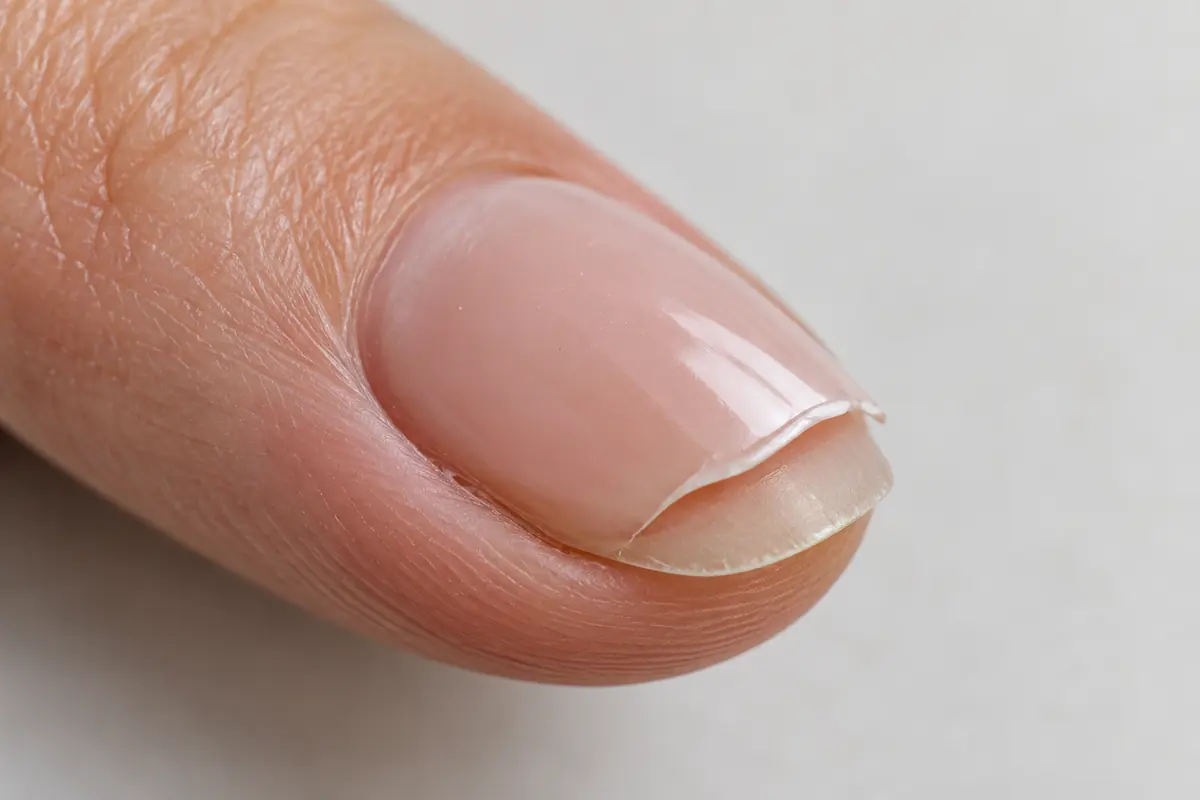
When gel starts lifting, do not pick it, glue it down or paint over the gap. Contact the salon and first establish whether the coating is lifting from the surface or the natural nail is separating from the finger. Those are different problems, and a fresh set is not an answer to both.
If the nail is painful, itchy, blistered, swollen or newly discoloured, seek healthcare advice before another service. If you cannot identify what is lifting without probing underneath, leave it alone and ask for assessment. The nail-care hub can help organize the observation without pretending to diagnose it.
Describe where the lifting is happening
Note the date of the manicure, when you first noticed the change, the affected finger and the location: free edge, side or near the base. Did it catch on clothing? Did several nails change together? Did you notice a reaction after the appointment? Write what happened rather than deciding immediately that the technician or your nail “must be the problem.”
Take an ordinary daylight photograph if it helps the conversation. Do not lift the loose section farther to make the photograph clearer. Do not push a file, stick or sharp tool under the nail. The information you need is already enough to start an appointment discussion; a home exploration can add damage.
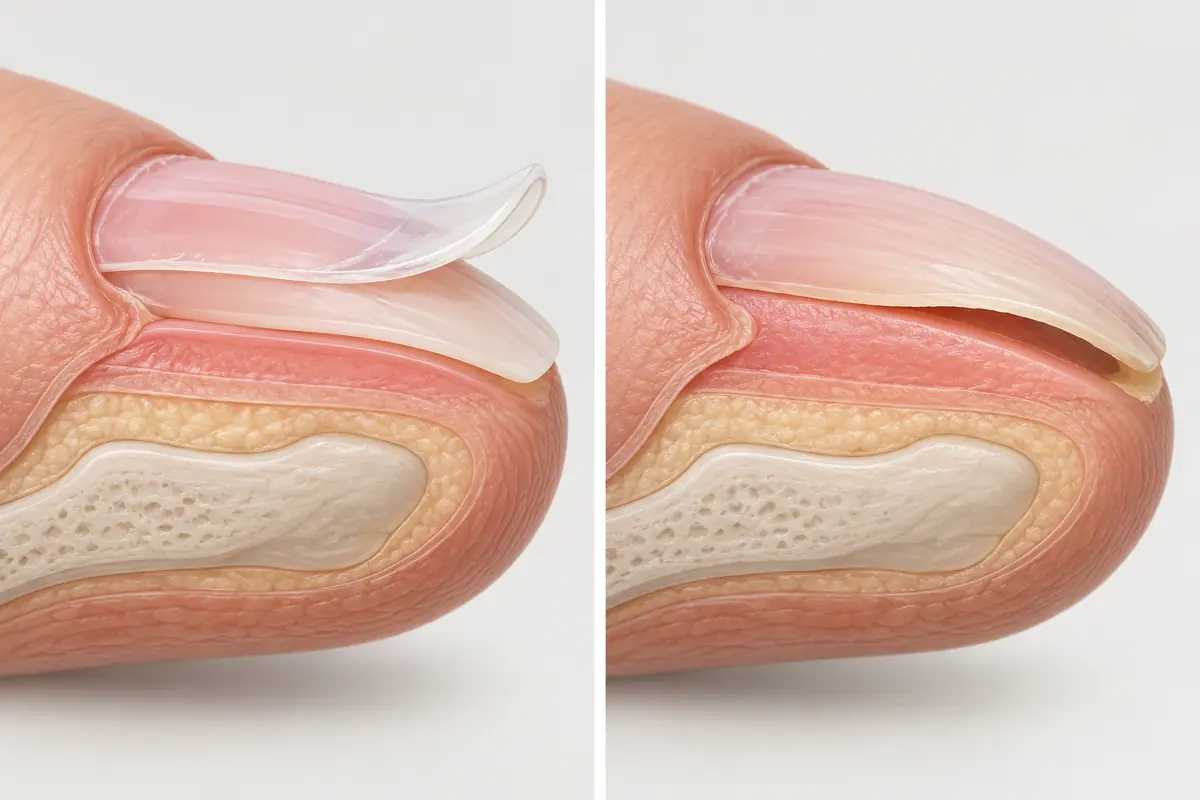
Separate product lifting from natural nail separation
Onycholysis means the natural nail plate separates from the nail bed; it can have several causes. DermNet explanation of onycholysis. It is not simply another word for gel chipping.
| What you can observe | Next action | Do not do this |
|---|---|---|
| Coating lifts at an edge; nail otherwise comfortable | Ask the salon for product review and appropriate correction or removal | Peel the whole coating away |
| White or opaque area appears beneath the natural nail | Ask for healthcare assessment if separation is suspected | Dig underneath to test attachment |
| Itching, blisters or swollen nail folds | Pause nail-product exposure and seek advice | Try a different gel as an allergy test |
| New green, dark or otherwise unexplained discoloration | Arrange medical assessment | Cover it and assume it is only trapped pigment |
| You cannot tell which layer is lifting | Request assessment before another application | Glue the area closed and wait for the next refill |
If roughness remains after proper removal, follow nails after gel removal. If the natural free edge repeatedly peels without a coating, brittle and peeling nails fits the daily-care problem better.
What to do before you can get an appointment
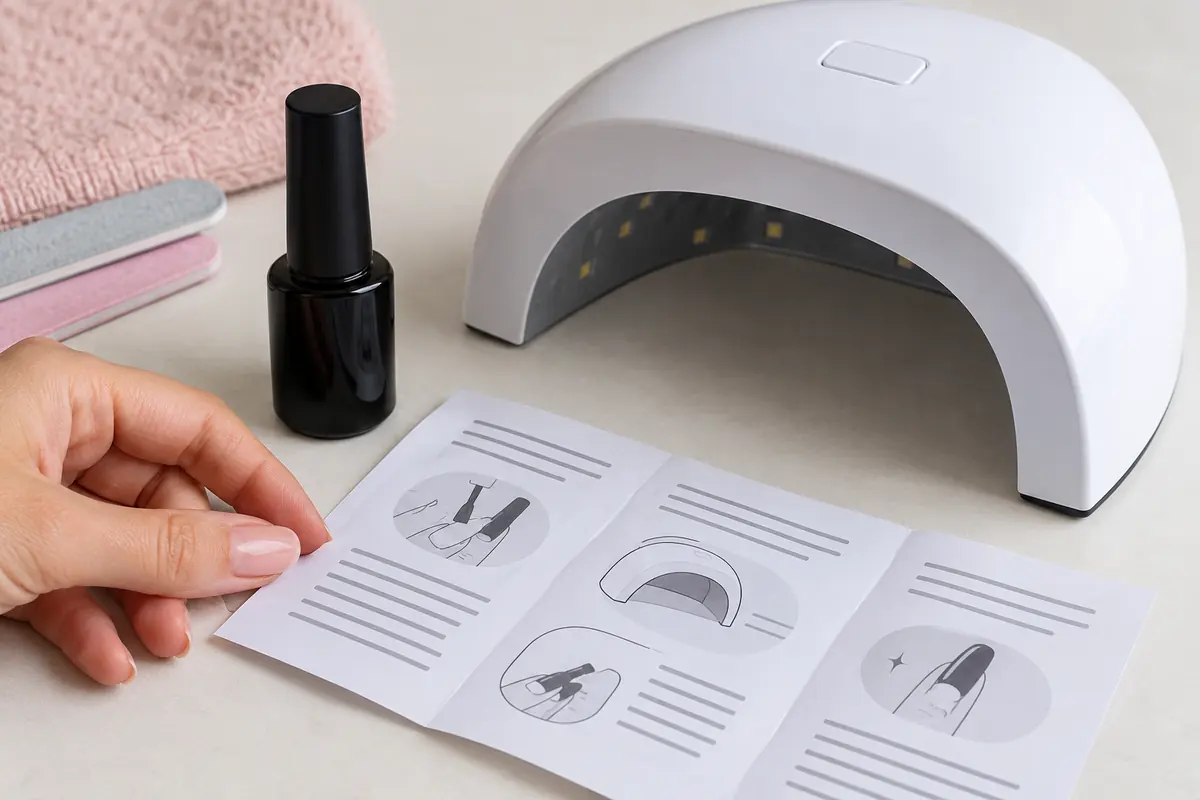
Avoid using the affected nail as a tool and reduce tasks that catch its edge. Keep hands clean and dry after washing, and use suitable gloves for wet household tasks. Do not soak a lifted pocket in a homemade remedy or apply glue into it. Protecting it from another knock is different from trying to repair the bond yourself.
Contact the salon with a short factual message: “The gel on my index finger lifted at the side on day three. I have not picked or glued it. Please tell me the product system used and the appropriate way to assess and remove or correct it.” Add symptoms if present. Ask for a clear plan, not an automatic top coat over the gap.
If the natural nail seems detached or the skin is sore, say so and arrange healthcare advice. Do not let a scheduling delay turn into repeated home experiments. An appointment can address the service problem; a clinician can assess the nail or skin problem.
Ask about the service process without diagnosing the cause
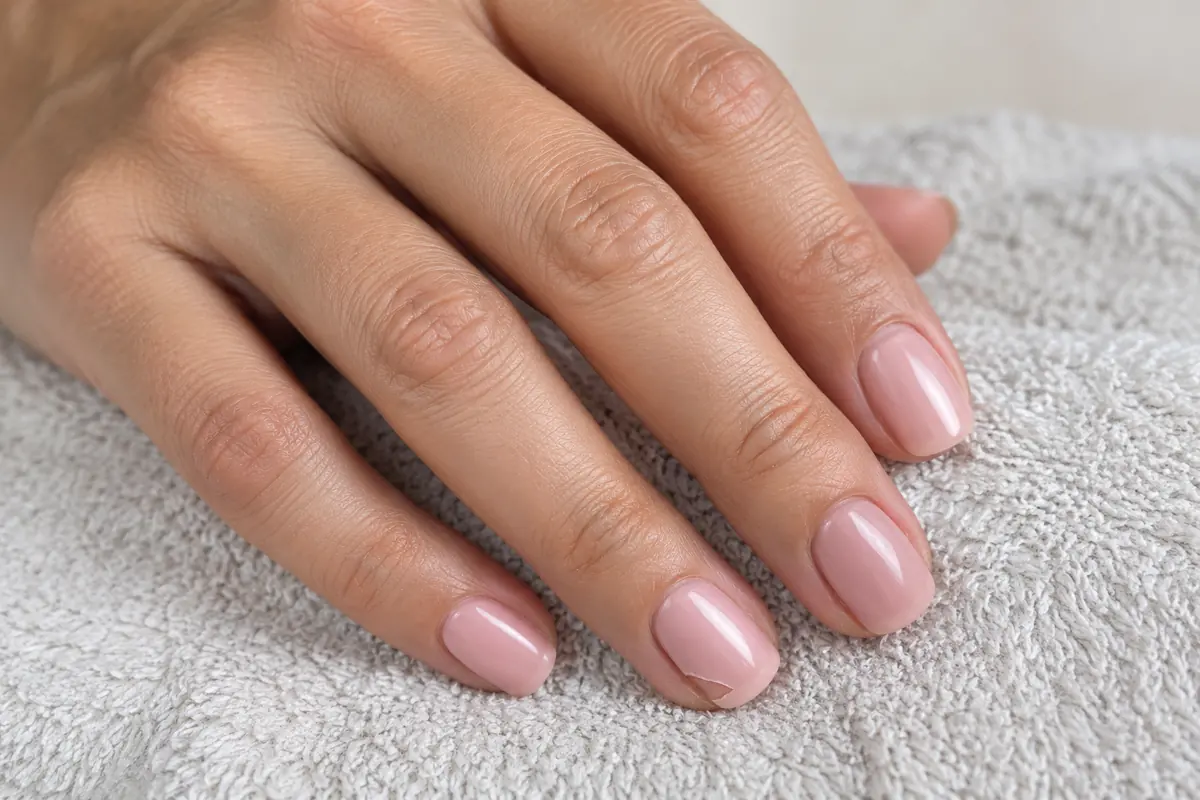
There are several sensible process questions: Was the product applied within its directions? Did any uncured product touch the skin? Was the lamp recommended for this particular system? Were layer thickness and curing time consistent with the manufacturer’s instructions? Was preparation gentle enough for the natural nail condition?
These are questions for the salon, not a checklist for proving fault from one photograph. Lifting location and timing may inform a review, but they do not uniquely identify the cause. More aggressive filing or a stronger primer should not be the automatic answer to every failure, especially on already thin nails.
Ask whether the proposed correction involves removal, whether the existing natural surface will be filed again and how the technician will avoid covering a questionable area. You should understand the practical tradeoff before agreeing. “It will last longer” is incomplete if the method and removal consequences are not discussed.
Curing compatibility matters; lamp wattage is not a diagnosis
The British Association of Dermatologists warns that insufficient curing and contact with uncured product can increase allergy risk, and recommends the product’s specified lamp. BAD artificial-nail warning.
Do not assume a lamp with a bigger wattage number is compatible with every bottle. Do not combine unrelated products and a lamp merely because an online demonstration looked shiny. A surface that feels hard does not give a consumer a reliable way to verify that the whole system was cured as intended.
If you reacted before, ask a healthcare professional what assessment and future precautions you need. “HEMA-free,” “sensitive” and “professional” on a label do not guarantee a reaction-free service. Do not use an irritated finger as the place to trial a supposedly safer product.
What is not worth doing
Do not glue a lifting enhancement back down, push dirt out with a metal tool or put another layer over an unexplained colour change. Do not peel loose product off because it is tempting to remove the snag. The AAD advises against picking gel polish. AAD gel-manicure guidance.
Do not apply bleach, essential oils or an antifungal product simply because an online photograph resembles yours. Colour and lifting have more than one possible cause. A photograph is useful documentation, not a substitute for examination and any investigation a clinician considers appropriate.
Do not accept “your nails are oily” as the end of the discussion if lifting repeats. Ask what was reviewed and what will change. If the proposed solution repeats the same service over a persistently uncomfortable nail, pause and reassess whether a cosmetic appointment is appropriate at all.
A hypothetical example: one lifted side, then a changed decision
Imagine Samira notices a lifted side on one nail after several days. There is no itching, pain or natural nail change she can see. She photographs it without pulling, contacts the salon and asks for assessment of the product and a removal plan. She avoids using that finger to open packaging.
Now imagine the same appointment was followed by itchy fingertips and tiny blisters. The route changes: she keeps product names and seeks medical advice instead of booking a stronger refill. This example demonstrates how a symptom changes an action. It is not a case study or a claim that lifting without itch is always harmless.
Use the next appointment to prevent a repeat
Bring the chronology, affected fingers and your daily tasks. Ask how the technician would handle a recurring lift, what manufacturer instructions they follow and whether a different type of service or a pause is appropriate. Ask for no cuticle cutting; if skin snags are part of the problem, read cuticle care and hangnails.
New white patches deserve their own description rather than the assumption that all whitening comes from a gap. White spots on nails separates little isolated marks from more widespread change. Use how to talk to your stylist for stating a constraint and getting an explanation before work begins.
- Record timing, location and any symptoms.
- Avoid picking, gluing, sealing and probing.
- Obtain the product system and appropriate removal plan.
- Ask about compatible curing instructions and gentle preparation.
- Reassess recurring problems rather than repeating automatic refills.
- Seek healthcare advice for reactions or natural nail changes.
Mademoizelle is in early access. These guides support better care questions and appointment planning. A preview or generated illustration cannot establish whether your natural nail is separating or identify a product allergy. A useful outcome is knowing who can resolve the problem and what information to bring.
Frequently asked
Why does my gel polish lift after a few days?
Several service and wear factors may be involved, including preparation, product compatibility, curing instructions and repeated knocks. A photo cannot establish which one caused the lifting. Record where and when it happened and ask the salon to review the process.
Can I glue down a lifting gel nail?
Do not glue or seal a lifted pocket. It hides the area and complicates review or removal. Avoid picking it and ask the salon for an appropriate correction or removal plan, especially if the natural nail is uncomfortable or changing.
How do I tell gel lifting from the nail lifting?
A coating can come away from the nail surface, while the natural nail can separate from the tissue underneath. Do not probe to test the difference. If you cannot tell, or see unusual colour, pain or separation, arrange professional assessment.
Will a stronger lamp prevent allergy?
No lamp guarantees freedom from allergy. Follow the specific product system's recommended lamp and curing instructions; wattage alone does not establish compatibility. Itching or blisters require healthcare advice, not a longer home curing experiment.
Is HEMA-free gel safe if I reacted before?
HEMA-free does not mean allergy-free or safe for every person with a previous reaction. Do not trial another gel on irritated skin. Ask a healthcare professional about assessment and suitable future options.