

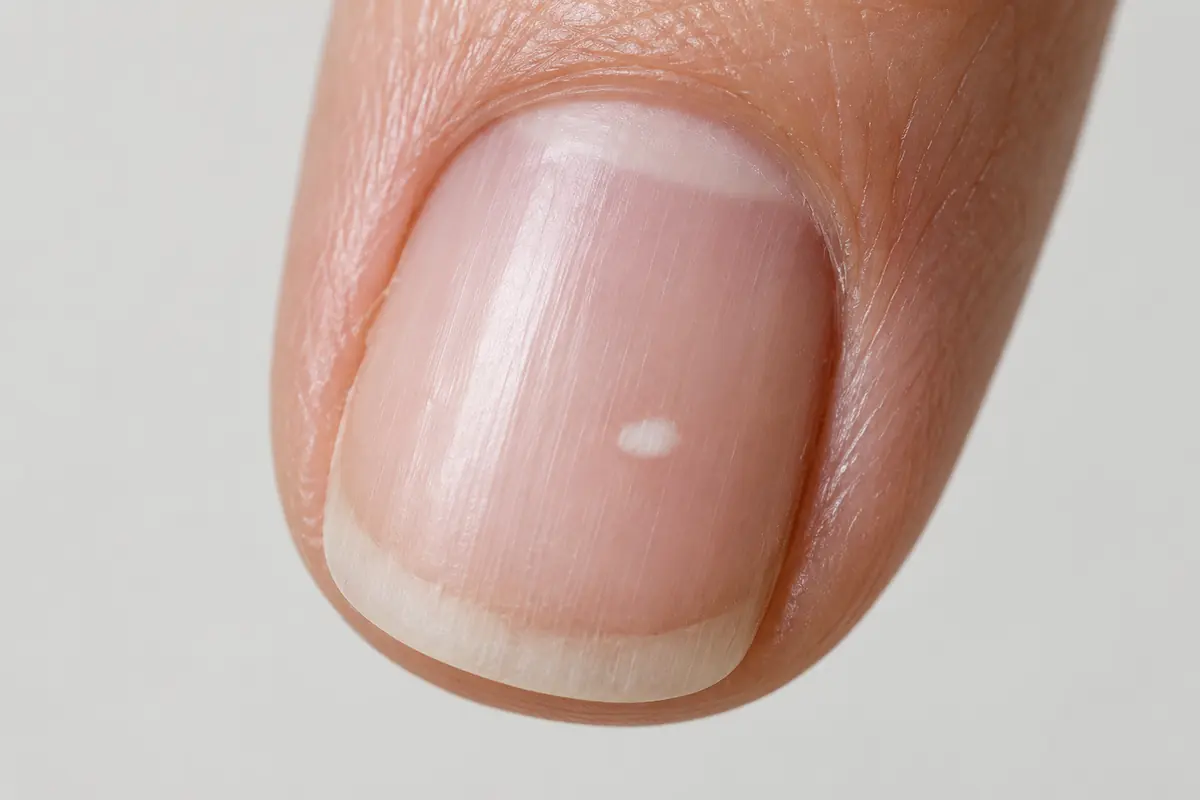
Small white nail spots are not a reliable sign that you need calcium. Start by describing the pattern, checking for other changes and avoiding attempts to scrape or bleach it away. A few isolated dots and most of a nail turning white call for different decisions.
This guide helps you decide what to record and when to seek assessment. It does not diagnose a nail from its colour. If the nail is painful, thickening, separating or changing rapidly, make professional assessment the next action. Use the nail-care hub to choose related guidance when the main problem is damage or skin discomfort instead.
First: name the observation without naming a disease
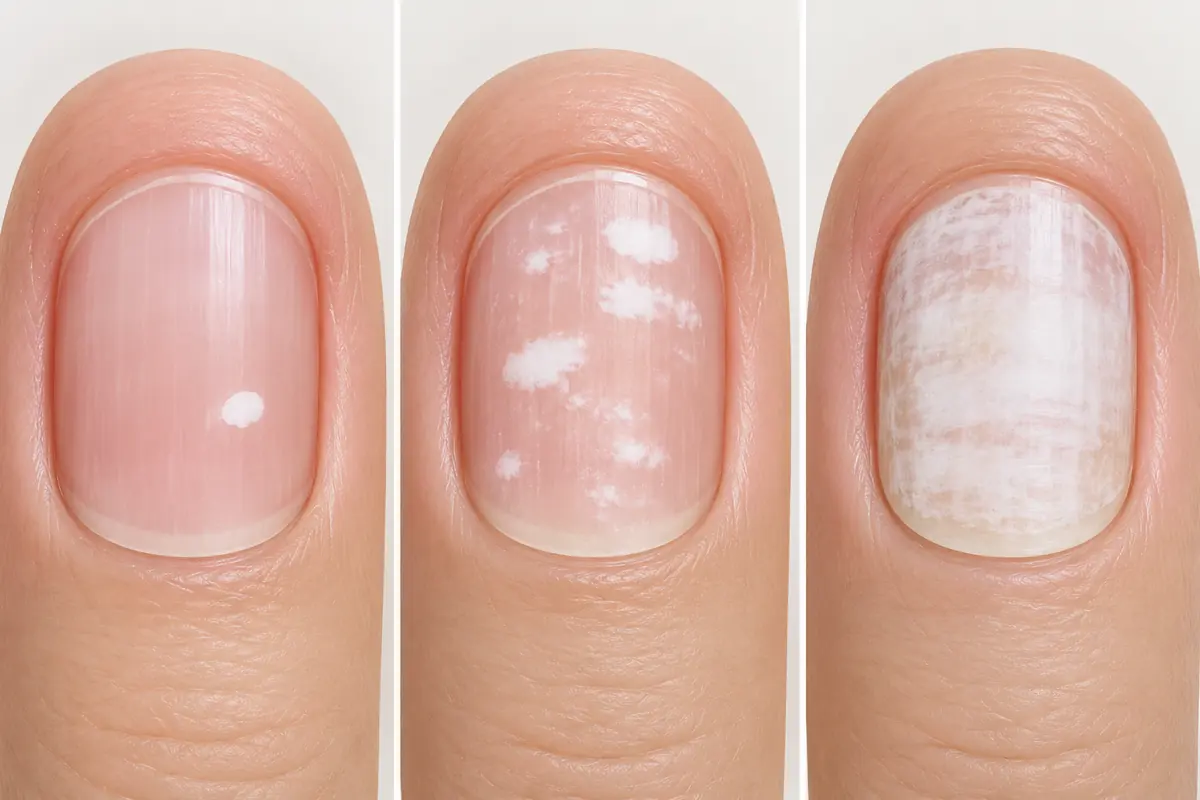
Look in daylight without a coloured coating if it has already been removed appropriately. Count affected nails. Is the change a small dot, several patches, a line across the width, a rough surface area or whitening beneath the free edge? Does the nail otherwise look and feel like it usually does?
Note when you first saw it, not when you assume it began. Nails grow slowly, so a mark can become visible after the activity that caused it. A manicure, knock, biting habit or forceful removal is useful history. It is not proof. If you cannot remember a trigger, record “no known trigger” rather than inventing one.
Take a simple photo at the same angle and in similar light if you want to track change. A close crop plus a wider view of the fingers gives better context than one heavily edited image. Do not press, scrape or lift the nail to make the mark more visible.
Why the calcium shortcut is unhelpful
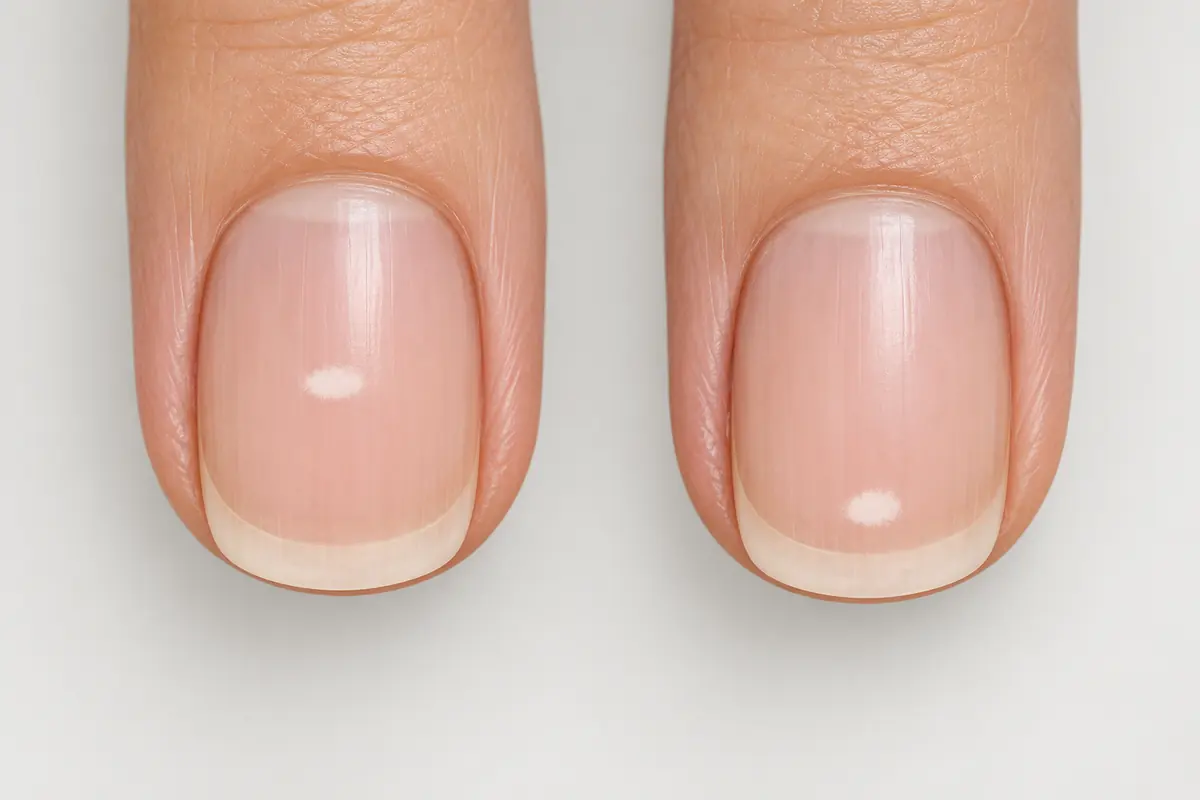
Small white spots can follow minor trauma, including manicure handling or knocks. DermNet white-nail overview. This is one reason a dot is not a nutritional diagnosis. A supplement chosen from an appearance guess can distract from the mechanical habit or nail condition that actually needs attention.
If you are concerned about nutrition, describe your diet, symptoms and health history to a healthcare professional. Do not buy calcium, zinc or biotin because a beauty post assigns each nail mark to a deficiency. Do not stop or change a prescribed medicine because a search result includes it among possible causes of nail changes.
The useful question is not “Which supplement erases this dot?” It is “Is this a small stable mark I can document, or a new pattern that needs assessment?” That question leads to an action without pretending that colour alone measures a nutrient. Deficiency cannot be established from the appearance of spots. Cleveland Clinic white-spot explanation.
A table for the next decision
| Pattern you notice | Practical next step | Common mistake |
|---|---|---|
| One or a few small dots, nail otherwise comfortable | Record them and avoid further trauma | Assuming low calcium |
| New whitening across most of a nail or across several nails | Arrange healthcare assessment | Treating it like the same problem as a tiny dot |
| Thickened, crumbly or spreading white patch | Ask a clinician to assess the cause | Diagnosing fungus from a photo |
| Opaque whitening with possible separation underneath | Seek assessment of nail attachment | Digging below the edge |
| Spot plus pain, swelling or discharge | Seek prompt healthcare advice | Covering it to get through an event |
These routes are intentionally about action, not diagnosis. A mark can have more than one explanation, and examination may reveal details a photo cannot. If the concern is attachment, gel polish lifting explains the difference between a product lifting and the natural nail separating.
Give the nail a less damaging environment
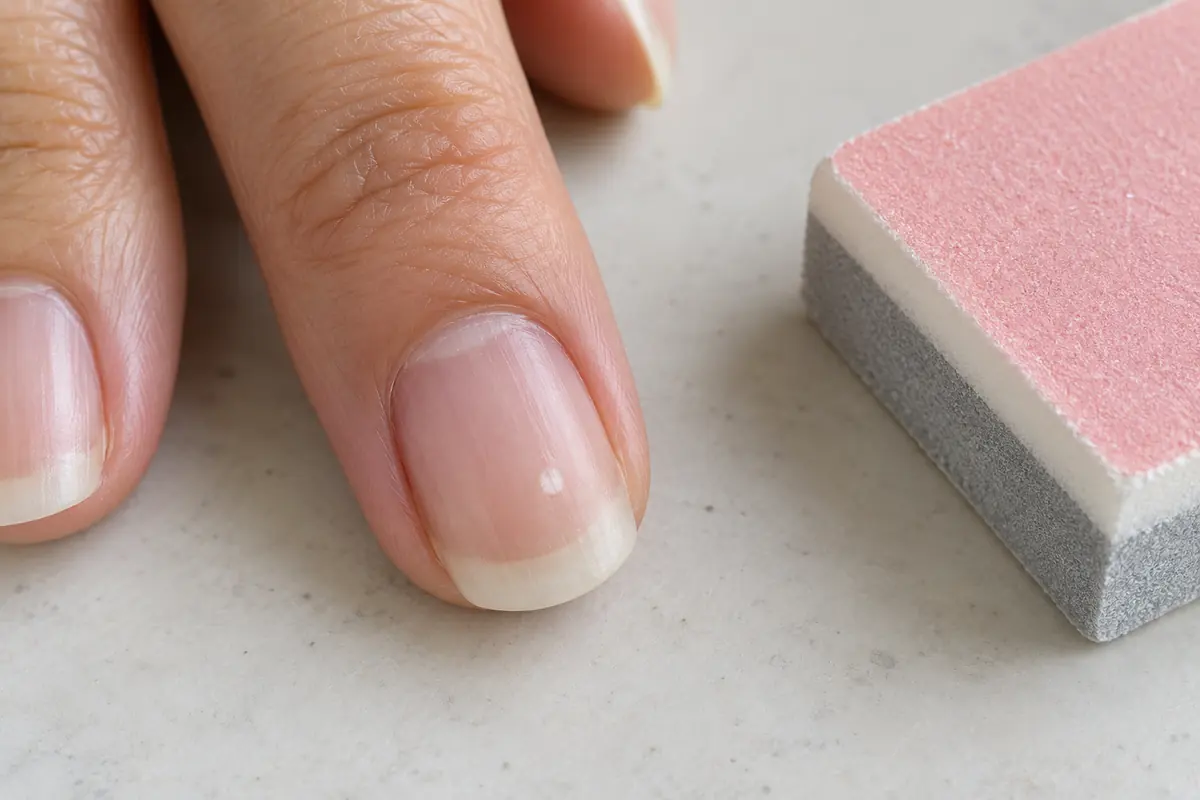
Keep a comfortable length and smooth only a snag at the free edge. Use something other than your nails to lift packaging, scratch labels or open a can. If you pick or bite when concentrating, move a replacement object to that particular location: desk, sofa or bedside table. Changing the setting can be more useful than a general promise to stop.
For dishes and cleaning, use task-appropriate gloves and keep their interiors dry. Dry hands after washing and apply a moisturizer you tolerate to the nail area. This is basic protection, not a treatment claimed to erase every white mark.
If your nails are also splitting in layers, use brittle and peeling nails for the routine and activity audit. If the change appeared after a removal, nails after gel removal helps you review the process and avoid additional filing.
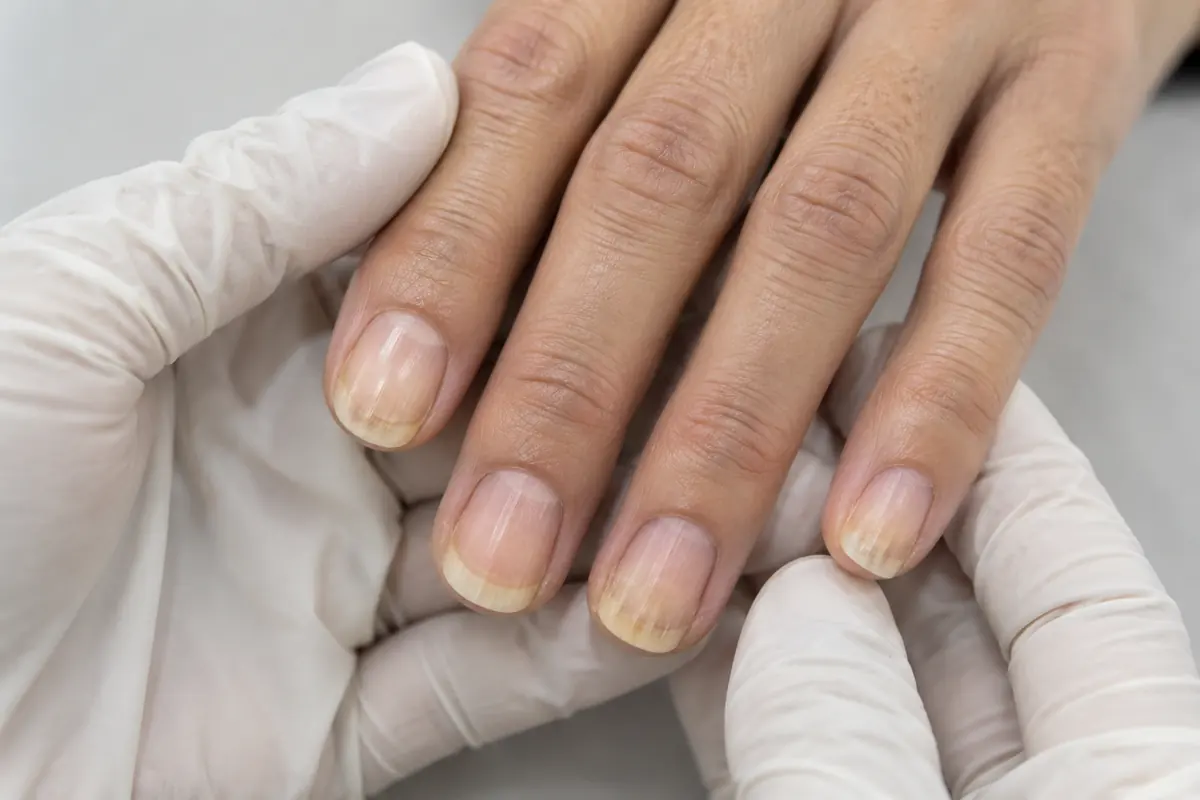
What not to apply to a white patch
Do not use household bleach, lemon juice, abrasive paste or a sharp tool to “clean” whiteness. A mark within or beneath the natural nail is not necessarily a surface stain. Removing surface layers to improve the colour can introduce a second problem: a thinner, more easily damaged nail.
Do not choose a fungal treatment based solely on a similar online picture. Fungal nail infection may require testing before some treatments are prescribed. NHS fungal-nail information. A clinician should decide what investigation or treatment is appropriate; a salon is not the place to diagnose it.
Do not accept the claim that every white area is harmless because there is no pain. An unexplained pattern affecting much of a nail, multiple nails or changing nail shape still deserves assessment. Conversely, do not jump from one tiny dot to a frightening list of diseases. Record the pattern and choose proportionate help.
Prepare for a healthcare appointment
Bring your timeline, photographs and a list of medicines, supplements and nail products. Include whether you have had a recent manicure, removal, injury or skin rash. Say whether the change is on fingernails, toenails or both, and whether it is spreading, becoming thick or interfering with daily tasks.
Ask what the clinician thinks needs evaluation, whether a nail sample or other investigation is appropriate and what cosmetic services you should pause while the cause is being assessed. You do not need to demand a particular test based on a search result. The point of the visit is to connect the observation with your overall situation.
The NHS advises review for unexplained changes in nail colour or shape. NHS nail-problem guidance. Arrange earlier advice when pain, swelling, warmth or discharge appears, rather than waiting for the mark to grow out.
Prepare for a manicure conversation
If a clinician has advised that a cosmetic service is appropriate, explain that you want gentle handling rather than spot removal by buffing. Ask the technician to leave the natural surface intact, avoid cuticle cutting and discuss the required preparation and removal for any proposed coating.
Ask how tools are cleaned between clients and whether the service can be limited to a short comfortable shape. Use how to talk to your stylist for setting a clear constraint and confirming the plan. If rough skin around the nail is the part you keep picking, read cuticle care and hangnails.
A hypothetical example: two dots after a manicure
Imagine Maya notices two small white dots on comfortable nails after several manicures. She records their position, stops picking at the area and asks for gentler preparation at the next appropriate visit. She checks ordinary changes over time without filing the dots away or starting calcium supplements.
Imagine instead that several nails develop widespread whitening and one becomes thick and crumbly. The action changes to healthcare assessment, with her timeline and product details. Neither scenario identifies a diagnosis. They demonstrate why similar-looking search terms can lead to very different next steps.
Track useful change, not a guaranteed deadline
At a periodic check, note whether the mark has moved toward the free edge, whether new marks appear and whether the nail’s thickness, attachment or comfort changes. Use similar lighting. Do not photograph it repeatedly through the day; tiny differences in angle can create unnecessary uncertainty.
- Describe the shape and number of affected nails.
- Record possible triggers without treating them as proof.
- Avoid scraping, bleaching and supplements chosen by appearance.
- Preserve the natural nail and reduce avoidable knocks.
- Ask for assessment of widespread, unexplained or symptomatic change.
- Keep enough information to explain the change clearly.
Mademoizelle is in early access. The guides can help prepare questions and style appointments. A beauty preview or AI illustration cannot measure calcium, confirm fungus or diagnose a white nail. The useful result is choosing an appropriate next step with better information.
Frequently asked
Do white spots mean I need calcium?
Small white spots are not proof of low calcium, so they are not a reason to start a supplement. Minor trauma is one possible explanation, but a nail pattern alone cannot diagnose the cause or your nutritional status.
Can I buff a white spot off?
Do not file or scrape the natural nail until a spot disappears. That may thin or damage the nail without addressing the cause. A changing or rough patch should be described and assessed rather than treated as a stain to remove.
Are white spots always fungus?
No. White appearance has several explanations. Thickening, crumbling, spreading change or separation should be assessed; a clinician may need more than a photograph. Do not choose an antifungal treatment simply from an online image.
Will a small white spot grow out?
A mark within the nail plate after minor trauma may move outward with growth. That pattern is useful to record, but it does not prove the cause. If it persists, spreads or comes with other changes, seek advice.
Can I cover a white spot with polish?
First decide whether the change needs assessment. Do not cover a painful, separating or unexplained changing nail to postpone review. If an otherwise healthy nail has a stable cosmetic mark, discuss a gentle option and preserve a record before covering it.