

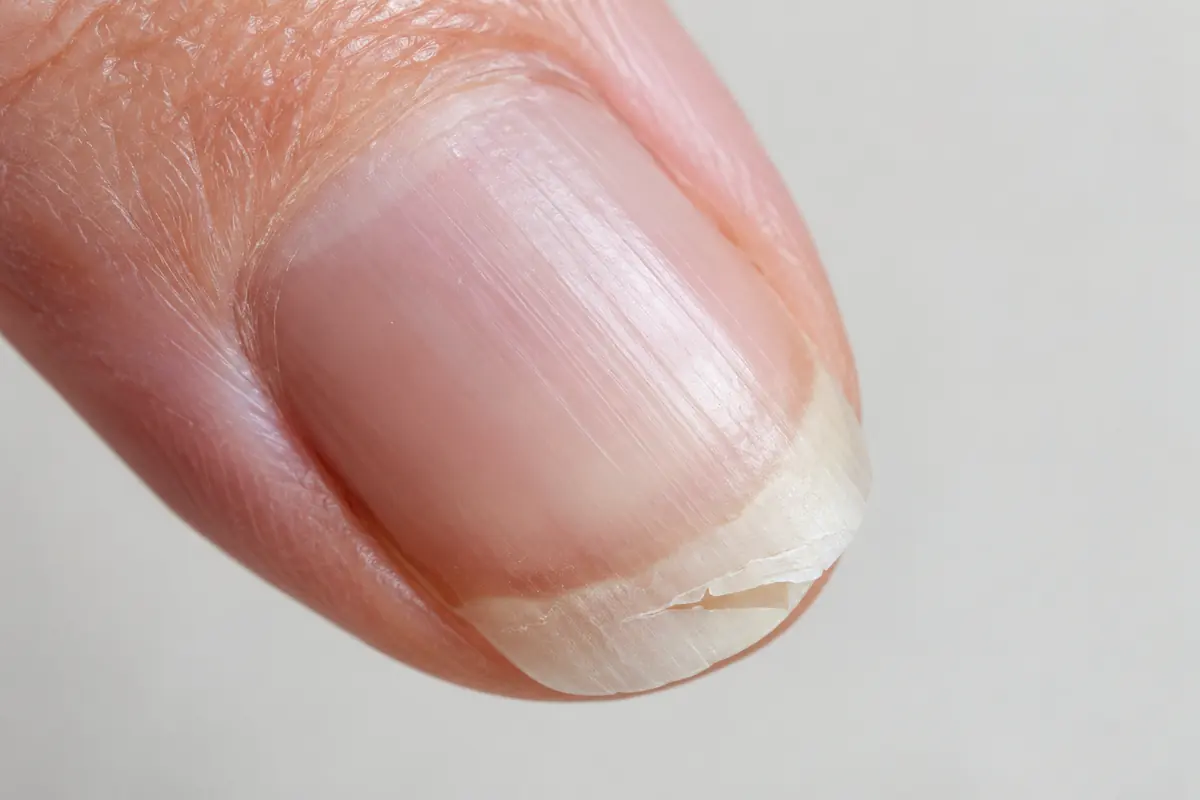
If your nails split at the tips or peel in thin layers, first reduce the damage happening between manicures: keep a manageable length, protect hands during wet work and moisturize after washing. Do not keep bending a nail to test whether it has become stronger. That test creates another stress on the edge you are trying to preserve.
This routine is for a practical care decision, not a diagnosis. A nail that is painful, changing colour without an explanation, lifting from the finger or surrounded by swollen skin needs a different next step. The nail-care problem hub helps you choose the guide that matches what you can actually observe.
Start by describing the break
Look at unpolished nails in ordinary daylight. Is the problem a thin layer flaking from the free edge, a crack through one nail, or a change across several nails? Write down which fingers are affected and whether it began after a removal, cleaning job or new product. “My nails are weak” is much less useful than “The index and middle fingers peel at the ends after washing dishes.”
You do not need to scrape a patch or prise open a split. A photograph can help document change, but neither a beauty app nor a comparison with an online picture can establish the cause. Use white spots on nails if the main concern is colour rather than an edge breaking.
Repeated water and detergent exposure can contribute to peeling or splitting. The American Academy of Dermatology recommends protection during wet work. AAD nail-care guidance.
Choose the next step from the pattern
| What you notice | Useful first decision | Avoid this shortcut |
|---|---|---|
| Thin layers separating at the free edge; no pain | Reduce catches and review wet work | Peeling the layer farther back |
| Roughness started after gel removal | Pause another enhancement and review the removal | Buffing every nail until the surface is uniformly thin |
| One crack extending into attached nail | Protect it from catching and ask for professional advice | Glue, digging or trimming into painful tissue |
| Nail is lifting from the finger | Seek assessment of the natural nail change | Treating it as ordinary chipped polish |
| Several nails change without an obvious trigger | Arrange a healthcare review | Diagnosing a vitamin deficiency from appearance |
If gel removal is the trigger, the after-gel care plan is more specific. If only the coating is coming away, use gel polish lifting to separate a product problem from a natural nail problem.
Set up a routine you can repeat
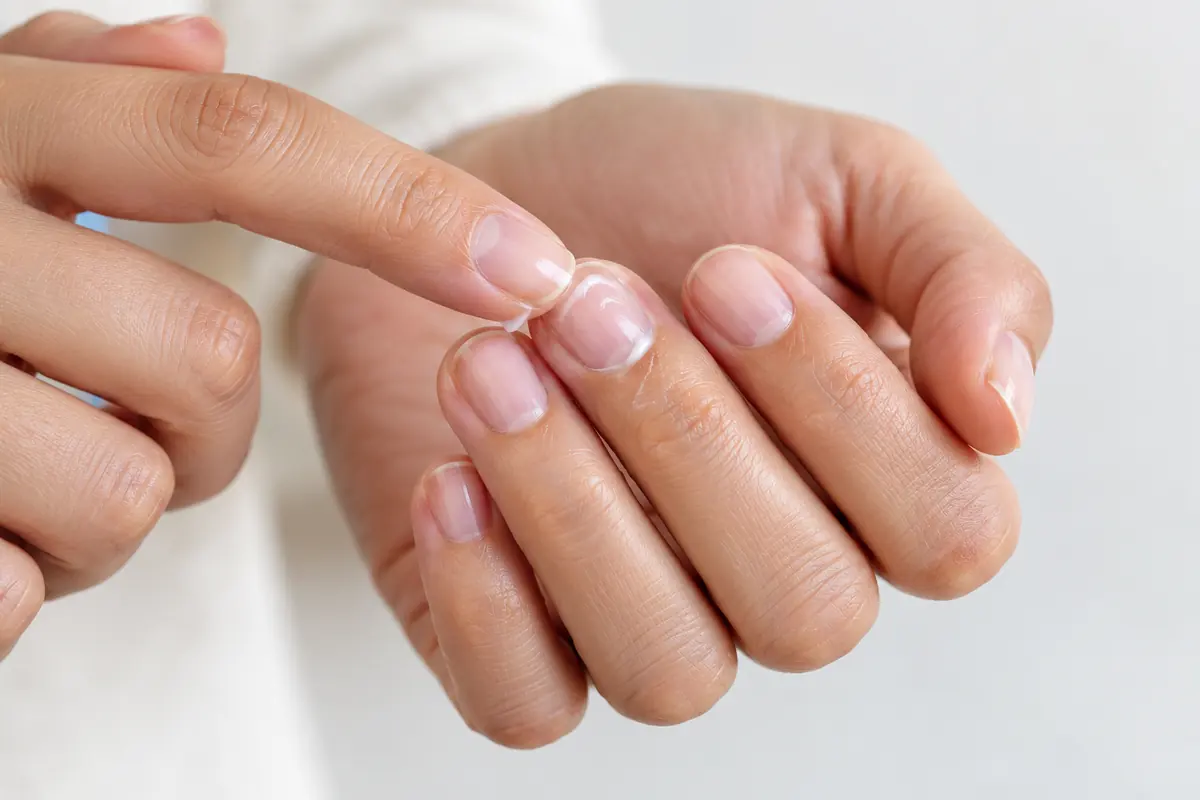
Put a mild moisturizer beside the place where you wash your hands and another where you get ready for bed. Use a product you already tolerate; you do not need a fragranced oil collection. Apply it to the fingertips and nail area after drying your hands. If a product stings or causes a rash, stop and record its name rather than layering a second product over it.
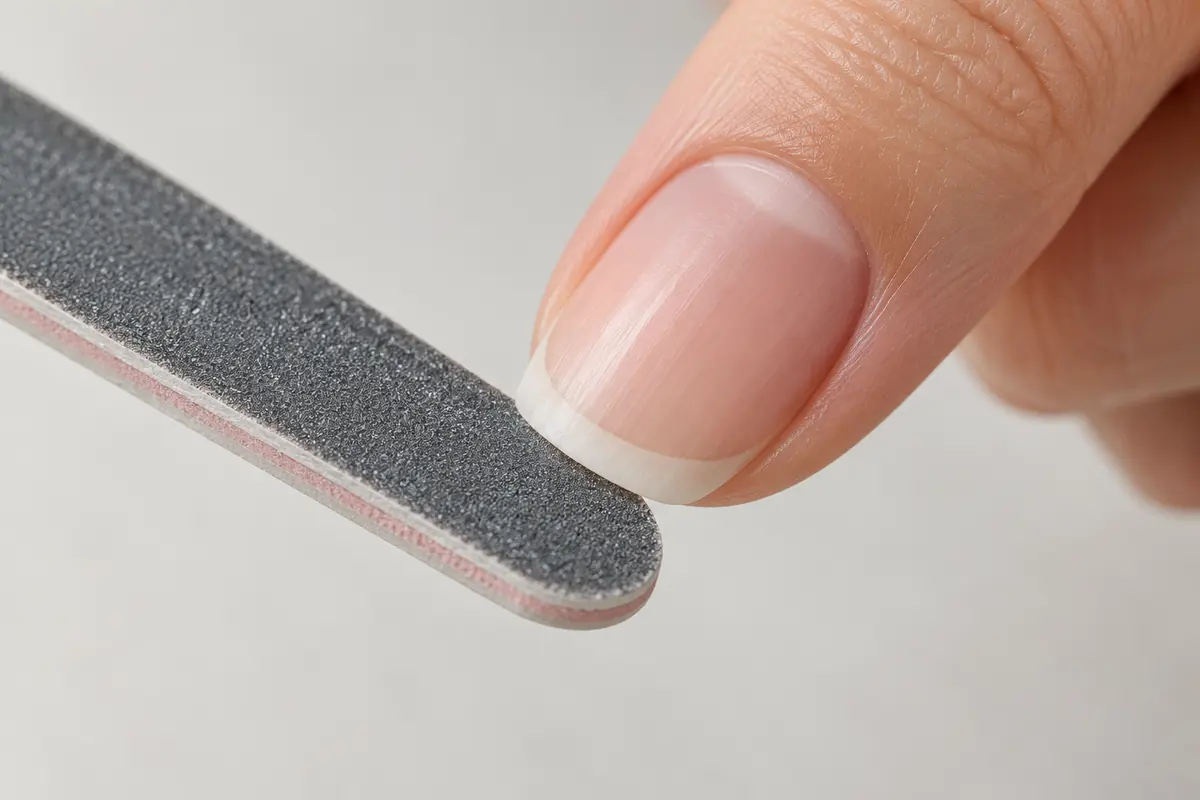
Keep a personal fine file available for a catch. Smooth the protruding edge gently without filing back and forth aggressively over the entire nail. Choose a short, comfortable length that lets you type, fasten clothing and lift objects without the edge repeatedly striking things. “Short” does not mean clipping into the pink attached portion or leaving skin sore.
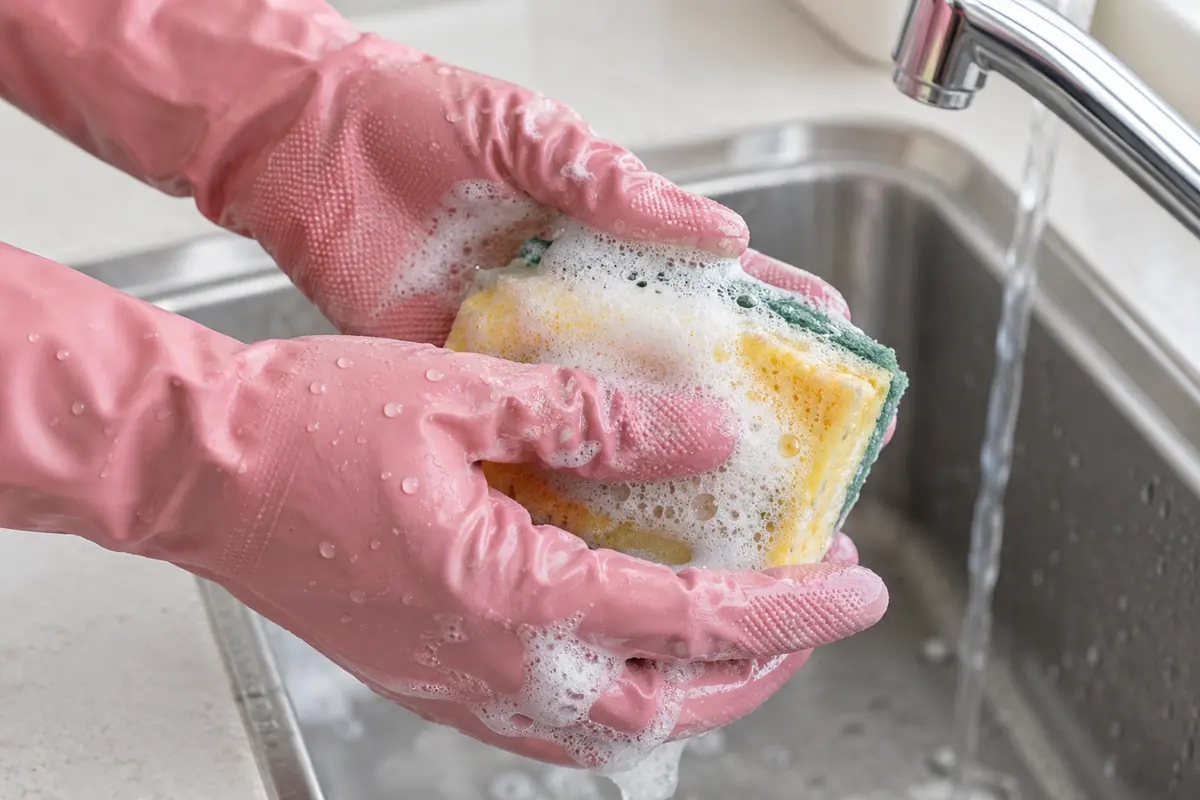
For dishes and household cleaning, choose gloves suitable for the job and the cleaning product. Keep their interiors dry; replace or dry them when water gets inside. If a task involves repeated washing for hygiene, continue the required washing and add the drying and moisturizing step. The goal is less unnecessary exposure, not avoiding hygiene.
Use another tool to lift a can tab, open packaging or scrape a sticker. Move those tools where the task happens. A routine succeeds more easily when the alternative is within reach, rather than relying on remembering that your nails are “on a break.”
Audit a normal day, not just the salon visit
List the moments when your hands get soaked, rubbed or used as tools. A cleaner, parent, cook and office worker may need different solutions. Someone who repeatedly catches a thumbnail on a tight phone case needs a different adjustment from someone whose gloves leak during dishwashing.
Try an activity log with four headings: task, affected finger, contact with water or products, and change you can make. Change one avoidable stress at a time. This is an editorial way to organize observations; it does not prove that a particular activity caused the nail change. Keep the log short enough to maintain for a week without turning nail care into a second job.
Also note manicure habits: how often polish is removed, whether gel is picked off, whether a drill is used on the natural surface and whether every appointment includes cuticle cutting. Skin catching beside the nail needs the hangnail and cuticle guide, not more surface filing.
What a cream, oil or hardener can realistically do
A moisturizing product belongs in the routine because you want a comfortable nail area and less dry, rough skin. It is not a biological repair of a missing layer. Judge whether you tolerate it and can use it regularly, rather than whether the packaging promises “reconstruction.”
Some hardeners contain ingredients that can irritate skin or cause allergic reactions, including formaldehyde. FDA nail-product information. Read the actual label. Stop if discomfort develops; “it tingles because it is working” is not a reason to continue. Do not combine several hardening systems hoping they will add up to strength.
Avoid treating a supplement as the default fix. Brittle appearance cannot tell you which nutrient, if any, is low. If you have other symptoms or a restrictive diet, discuss them with a healthcare professional who can decide whether investigation is appropriate. Record supplements and medicines for that visit; do not change prescribed medicine yourself. Biotin can interfere with some blood tests. FDA biotin information.
Ask for a manicure that respects the problem
You can request a tidy, comfortable finish without asking the technician to conceal the entire situation. Send this brief before booking: “The tips peel and catch. I want a short shape, minimal handling of the natural surface, no cuticle cutting and no enhancement over damaged nails. Please explain any product you propose before applying it.”
Ask how instruments are cleaned between clients, whether the proposed service requires surface filing, and how its removal would work. Ask whether a simple shaping appointment is possible. If the answer to discomfort is to add a stronger layer immediately, pause and decide whether that service meets your goal.
Use the conversation structure in how to talk to your stylist for stating a constraint, asking for an explanation and confirming the plan. A manicurist can discuss technique and shape; they cannot establish a deficiency, diagnose an infection or replace a medical review.
A hypothetical example: repeated peeling after kitchen work
Imagine Lina notices peeling on two fingertips after frequent cooking and dishwashing. She has no pain, swelling or new discoloration. Her first plan is short nails, a fine file for catches, dry task gloves and moisturizer beside the sink. She takes a simple baseline photo and notes which tasks still cause snags.
At reassessment, she looks for fewer new breaks and less interference with everyday tasks. She does not expect the old peeled section to look brand new. If changes spread, persist despite gentler care or become uncomfortable, she arranges assessment. This example illustrates a decision process; it is not a patient story, measured result or proof that every peeling nail is caused by housework.
A checklist for the next week
- Make the nail length comfortable for your actual daily tasks.
- Place gloves and a non-nail opening tool where you need them.
- Dry hands and apply a tolerated moisturizer after washing.
- Smooth catches gently; do not peel, bite or buff off attached layers.
- Note new cracks, pain, colour change or separation.
- Review the pattern rather than repeatedly testing by bending.
Do not set a seven-day deadline for complete regrowth. Your weekly check is for whether the routine is manageable and whether new damage or concerning symptoms are appearing. Arrange medical advice for unexplained or persistent change, and seek prompt advice for swelling, discharge or significant pain. The NHS recommends review for unexplained nail colour or shape changes. NHS nail guidance.
Mademoizelle is in early access. These guides can help you prepare care questions and an appointment brief; a style preview or photo is not a nail-health diagnosis. Keep the checklist, choose your next action and return to the nail-care hub if your observation changes.
Frequently asked
Why are my nails peeling in layers?
Repeated water exposure, cleaning products and mechanical damage are possible contributors. A peeling edge alone cannot identify a nutritional deficiency or medical condition. Review your routine, protect the edge and seek assessment if the change is unexplained or persistent.
Should I take biotin for brittle nails?
Do not choose supplements by nail appearance alone. Discuss a suspected deficiency with a healthcare professional, and tell them about supplements before blood tests. Protection and gentler handling are useful starting points that do not require guessing a deficiency.
Can nail strengthener repair a split?
A cosmetic coating may change how a nail feels, but it cannot undo an existing split. Read ingredients and directions; stop if it irritates. A very hard feeling nail is not proof that the cause of repeated breakage has been fixed.
Should I buff away peeling layers?
Do not thin the whole surface to make a peeled patch look smooth. Gently tidy a catch at the free edge, preserve attached nail and avoid pulling layers. A painful split or crack extending into the attached portion needs professional advice.
How long until brittle nails improve?
There is no universal recovery deadline. Comfort and fewer new snags can improve before old damage grows out. Nail growth is slow and varies; persistent or worsening changes should be assessed rather than hidden under repeated coatings.