

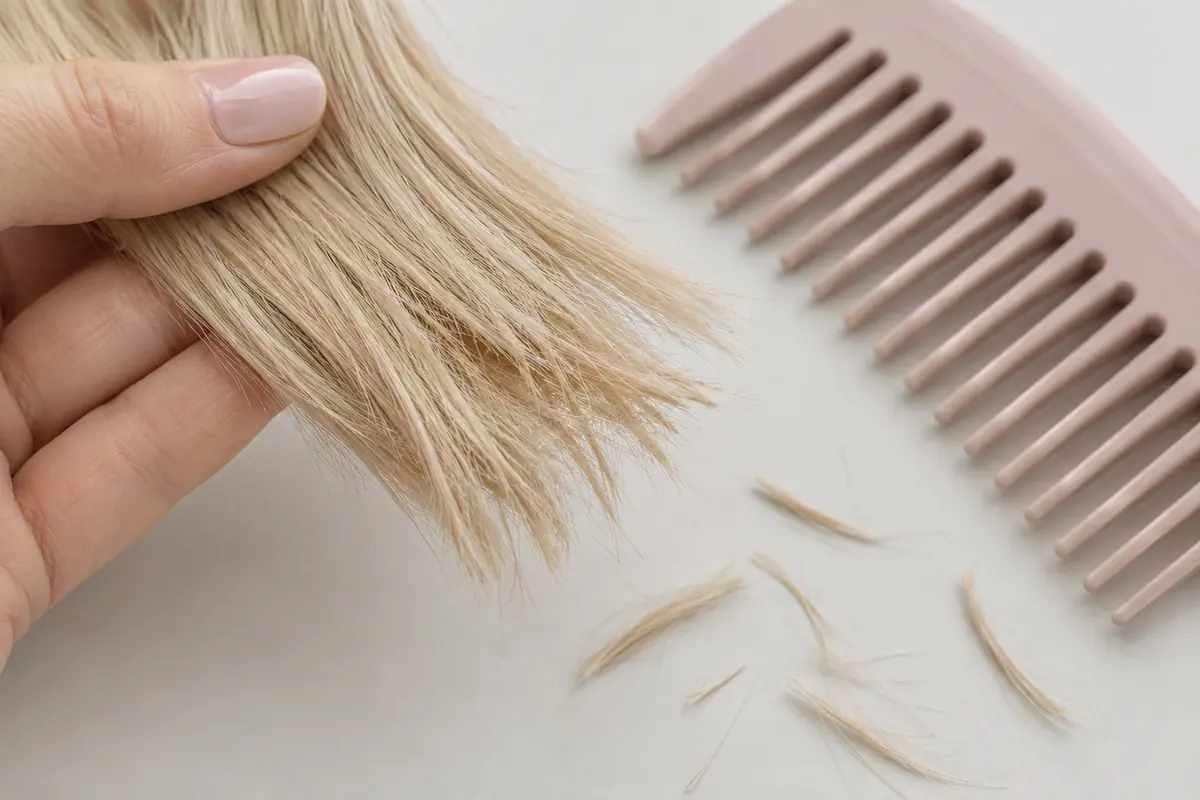
First action: postpone the next home color correction. If your lengths are snapping after lightening, another bleach, relaxer or repeated hot-tool session can complicate an already fragile situation. Put the color goal on paper and stop trying to solve it in the bathroom today.
If a product is still on your hair or scalp and causes burning or a suspected reaction, stop the application and rinse it off promptly according to its safety directions; do not continue processing to finish the color. Burning, blistering or swelling needs healthcare advice. Sudden breathing difficulty or mouth, tongue or throat swelling needs emergency help. The NHS hair-dye reaction guidance advises immediate washing with mild shampoo for a suspected dye reaction. This does not diagnose every bleach reaction.
Separate color dissatisfaction, damaged length and skin symptoms
An orange band, a rough end and a sore scalp are three different problems. Tonal dissatisfaction is a color-planning issue. Snapping is a fiber-handling issue. Pain or inflamed skin needs healthcare judgment. Do not accept a single “repair package” as an answer to all three without understanding which outcome it addresses.
Fragile hair needs reduced chemical and heat stress. AAD recommends stopping home chemical processing when hair is already fragile and using gentler care. AAD: managing damaged and thinning hair. This does not mean every product sold for bleached hair is harmful, nor that one coating can erase all damage.
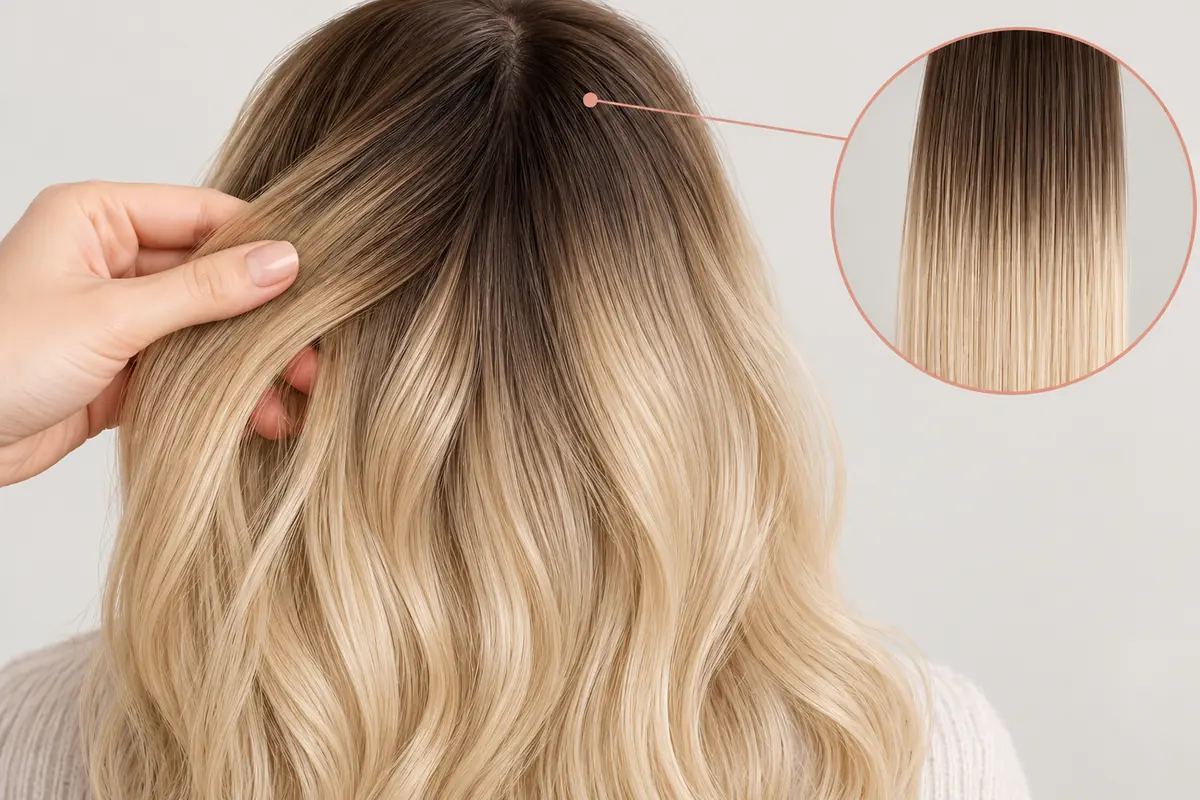
Lightening changes color through chemical processing; it is not a removable cosmetic coating. The same service can leave existing fibers more vulnerable to damage. AAD notes that greater lightening can require more peroxide and cause more damage. AAD: coloring and perming. A smoother surface after conditioning does not reverse the earlier color process or reattach a snapped fiber. This is why appearance and permission for another service are separate questions.
The practical question is: what can you stop doing while a professional examines the remaining hair? You can act on that without proving exactly which appointment caused the breakage. Avoid turning a search result into certainty about a specific chemical mechanism in your own strands.
Sort the next action
| Observation | Priority | Next step |
|---|---|---|
| Short fragments mainly from lightened lengths, no scalp symptoms | Minimize further handling stress | Pause processing and book a qualified stylist assessment |
| Hair tangles severely during normal washing | Avoid pulling the knots through | Condition, support small sections and stop when force is needed |
| Uneven color plus snapping | Preserve what remains before chasing tone | Ask for a temporary styling plan and whether any color work should wait |
| Burning, blisters, swelling or painful skin | Skin safety | Seek healthcare advice; use emergency help for airway symptoms |
| Sudden or patchy loss, widening part or changing hairline | Clarify scalp and density changes | Arrange a clinician assessment, even if bleaching happened recently |
A recent service is important history, not proof that every later loss is breakage. Use breakage versus shedding to describe observations without performing pull tests.
Write a color history that prevents a guessing game
Record the approximate dates of permanent color, highlights, bleach, toner, henna, relaxer and straightening services. Include home products and whether a previous application covered roots only or overlapped old lightened lengths. If you do not know the formula, say so. Do not guess a developer strength from how a bottle looked.
Bring product names or packaging photos if available, but do not infer safety from words such as natural, ammonia-free or salon quality. A prior uneventful use does not guarantee no later reaction. FDA recommends following package instructions and not coloring an irritated or damaged scalp. FDA hair-dye safety.
Tell the stylist your real constraint: “I want a wearable appearance for work, and preserving the remaining length matters more than reaching the lightest result this week.” Ask them to show which zones would be involved in any proposed service, what they would leave untouched and what would make them stop.
A gentle wash day for fragile lengths
- Prepare the handling. Remove catching clips and make sections small enough to support. Do not dry-brush an entire tangled head aggressively before starting.
- Clean the scalp without grinding the lengths. Use a tolerated shampoo and rinse carefully. Avoid rough circular rubbing of the hair into a pile.
- Condition according to the label. Give the product its intended use rather than doubling the time because damage feels severe. More applications are not automatically a better plan.
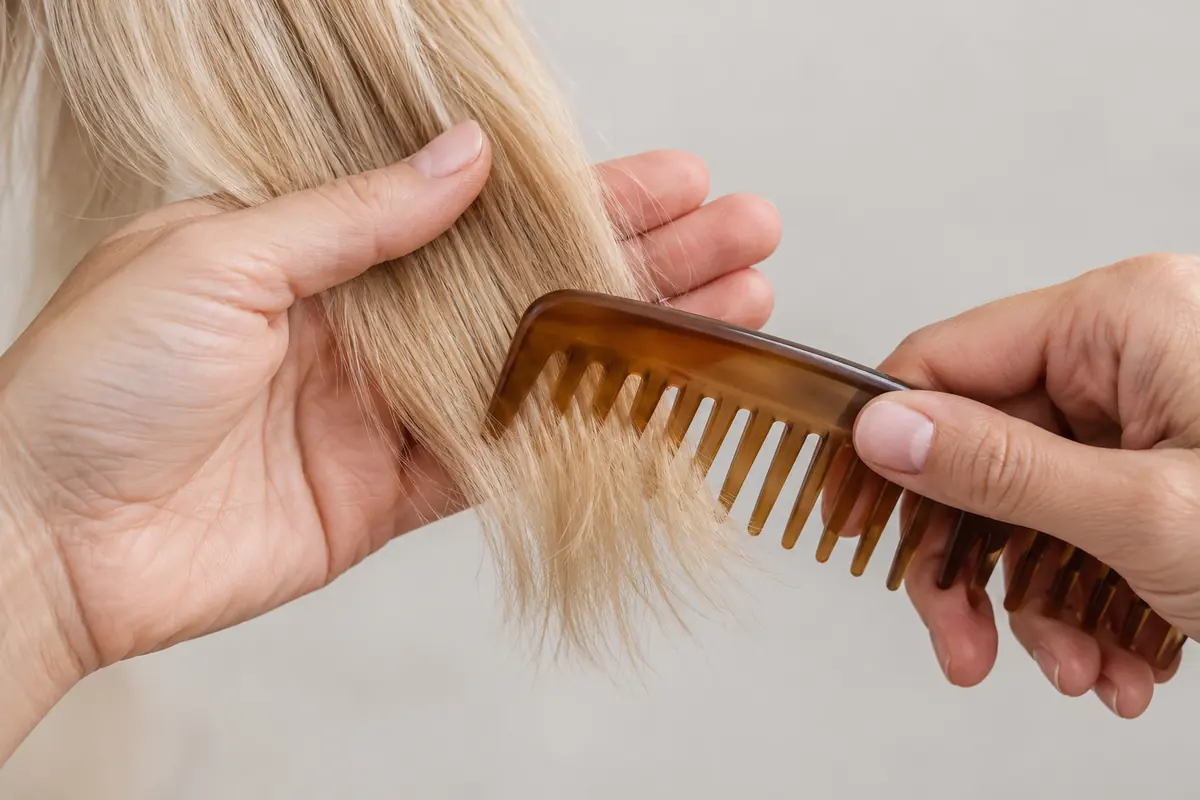
- Release knots progressively. Hold above the knot, work at the ends and move upward only when that section is clear. If it resists, pause and reassess rather than pulling harder. Adapt the timing to texture.
- Absorb water gently. Blot or wrap without rough friction. Skip hot-oil treatments and reduce hot-tool exposure; do not repeatedly straighten fragile ends to make them look repaired.
- Use a comfortable style. Choose an attachment that can be removed without catching. Avoid tight ponytails or extensions added merely to hide missing length.
Conditioning and texture-aware gentle detangling follow AAD healthy-hair principles. The sequence here is a practical plan, not a prescription for a branded repair system.
Understand the product promises before spending
A conditioner or leave-in can help the feel and handling of remaining hair. A product marketed around “bonds” may have formulation-specific claims; the category name alone does not tell you what outcome your particular hair will achieve. We do not rank these products or claim a universal repair percentage.
Ask four useful questions: what is the intended use; where should it be applied; what result can be observed without a microscope; and does the label make it appropriate for my scalp and hair? If the only evidence you can see is a smoother photo, do not convert that into a guarantee of safe future processing.
Avoid stacking a protein mask, acidic rinse, strong cleansing product and bond treatment on the same day. You will have difficulty identifying which helped or irritated. Keep the routine small and tolerated while the service plan is clarified. Stop an optional product if it causes discomfort and seek advice when symptoms warrant it.
Decide on a cut without a panic purchase
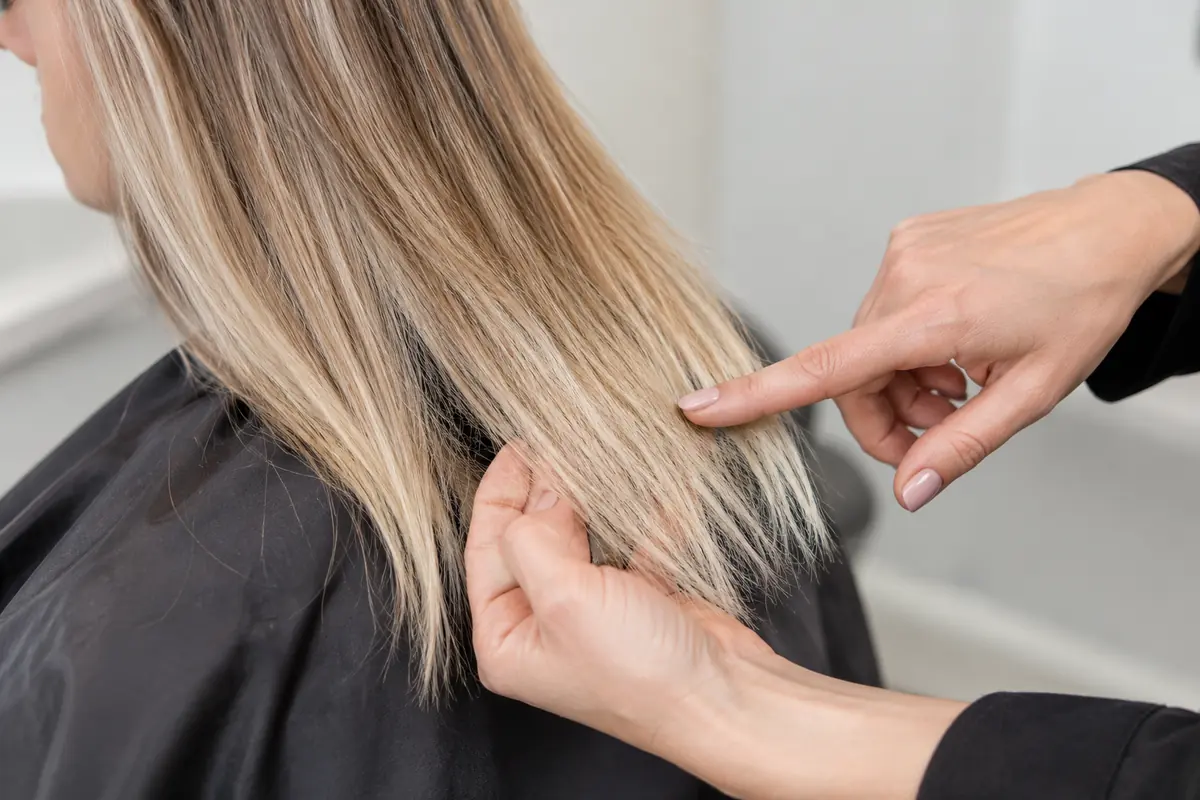
A trim can remove damaged lengths and simplify detangling. It cannot restore a broken strand or treat a skin injury. Ask the stylist to show damage at the perimeter and higher up before proposing a shape. Agree a visible cutting boundary, and discuss what a smaller cut would leave behind.
You may choose to transition gradually, but do not mistake a neat bottom edge for absence of damage elsewhere. The split-end guide explains the difference between removing an end and reducing new wear. For consultation wording, use talking to your stylist.
If you have an event soon, plan an appearance that uses less manipulation: a comfortable loose style, a cut you can manage, or a color discussion that includes postponement. A deadline should influence the temporary look, not force a chemical service that the stylist cannot reasonably recommend.
Keep an observation log and review the right outcome
| Entry | Useful note |
|---|---|
| Service | Date, product if known, treated zones, home or salon |
| Normal handling | Where it snags, where fragments appear, whether force was needed |
| Skin | Pain, redness, swelling or other symptoms and onset |
| Routine | Steps paused and tolerated products kept |
| Review | Comparable wash day; handling comfort and remaining concern |
Hypothetical example: “Front pieces were lightened twice; they catch during normal detangling. I stopped repeated ironing and a planned home correction. I will show the stylist those pieces and ask for a shape that avoids daily pulling.” No improvement is invented here; this is an example of useful preparation.
Easier detangling is a meaningful cosmetic outcome. It is not proof that internal structure is restored, that follicles are healthy, or that the next bleach is safe. There is no universal number of weeks after which snapping hair becomes suitable for processing. A label's minimum interval is not personal clearance for damaged hair.
If snapping remains difficult to manage, return to the stylist's plan. If loss is sudden or patchy, density changes, or the scalp hurts or looks inflamed, seek clinical care without waiting for a mask course to finish.
Stop these failed fixes
- Another home bleach because the current tone feels urgent.
- Repeated wet stretch tests to decide whether hair is “strong again.”
- A hotter iron to disguise roughness.
- Multiple new repair products without a clear use and observation plan.
- Tight attachments that hide damage while pulling the same area.
- Assuming a dark dye undoes previous lightening damage.
Continue with the color consultation checklist, oily scalp and dry ends, your texture and the hair-care hub. Save or copy the checklist on this page for your appointment. Mademoizelle remains in early access: a future style plan can support a consultation, while this care guidance does not diagnose chemical injury or predict treatment results.
Frequently asked
Can a mask repair hair that broke after bleach?
Conditioning may improve manageability, but cannot reattach a snapped strand or make damaged hair new. Reducing additional stress and discussing the remaining lengths with a qualified stylist are the practical priorities.
Should I bleach again to fix an uneven color?
Do not attempt another home correction on snapping hair. Tell the stylist about all previous services and ask whether processing should be postponed. Cosmetic color urgency does not overrule scalp symptoms or fragile lengths.
Does a bond-building product make the next bleach safe?
A product label or softer feel does not establish that your hair will tolerate another chemical service. Claims and instructions differ by formulation. Avoid adding several treatments at once and let a qualified stylist assess service feasibility.
Is stretchy wet hair a reliable damage test?
No home stretching test establishes a safe chemical-processing threshold. Repeatedly pulling a fragile strand can add stress. Describe what happens in normal washing and detangling instead.
Is scalp burning just a normal part of bleaching?
Do not ignore pain, swelling or blistering. If you have a reaction, stop the exposure, follow product safety instructions and seek healthcare advice. Sudden breathing difficulty or throat, tongue or mouth swelling requires emergency help.