

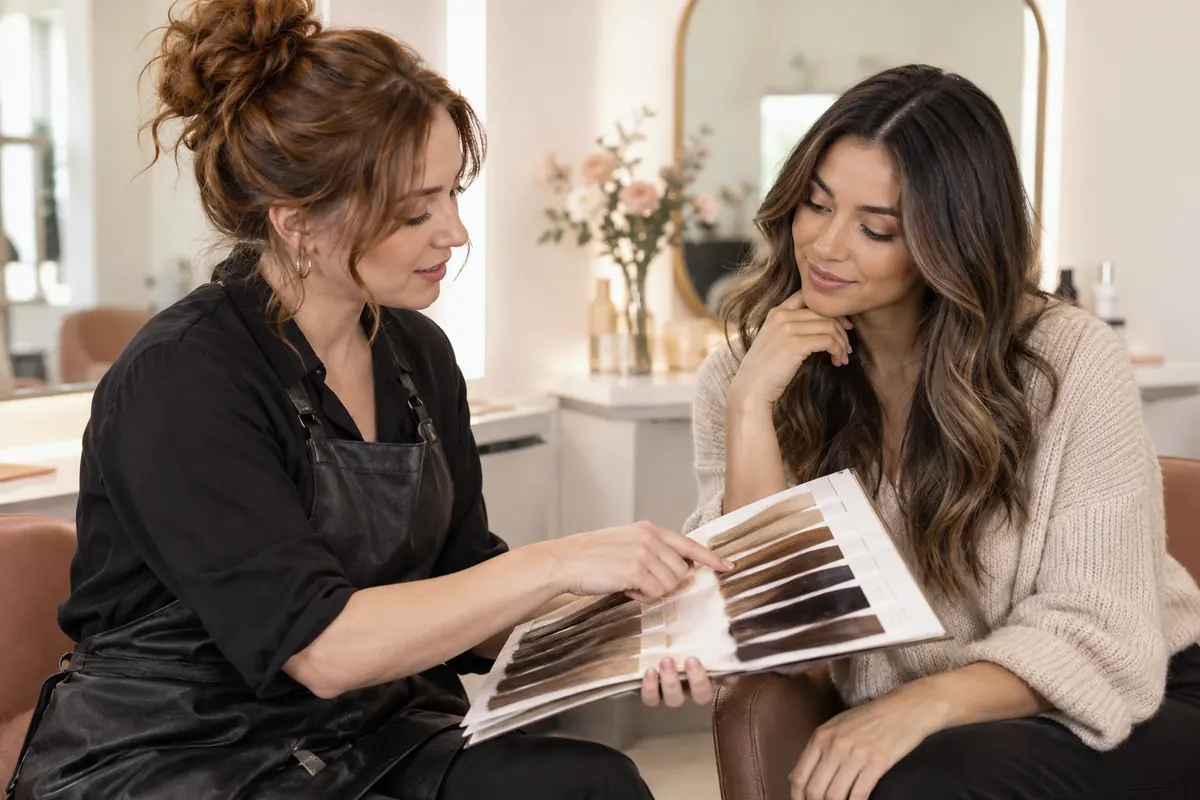
Start your hair colour consultation with four things: your current hair, its treatment history, the result you want, and the upkeep you can manage. Before booking the service, agree on the first-session goal, any testing, the total quote and the next maintenance step.
You do not need to choose a formula or impress anyone with salon vocabulary. Your job is to make the important constraints visible. The colourist can then explain which approach fits your actual hair, rather than a photograph of somebody else's finished result.
Build a colour brief before choosing a service
Write one sentence describing the change you want. “I want a lighter frame around my face while keeping a brunette overall impression” gives a clearer direction than a list of fashionable colour names. Add the boundary: “I want to preserve my length and avoid a strong regrowth line.”
Separate brightness, tone and placement. You might like the lightness of one photo, the softer warmth of another, and neither person's root colour. Label these details rather than expecting the colourist to guess. Our balayage versus highlights comparison helps with service differences, but you can bring the desired result without deciding the technique yourself.
If your complexion is part of the decision, hair colours for olive skin offers colour-family questions to discuss. A skin-tone label should not override your preference or the condition of your hair.
Bring references that answer a question
Choose two or three images rather than a large saved folder. Use an overall result, a close view of the face frame, and, if useful, an example of something you do not want. Explain the feature in each one: “This degree of contrast; this softness at the root; no pale stripe at the front.”
Include current photos of your own hair from the front and back in ordinary daylight. Show it in the texture you usually wear. A salon blow-dry, warm bathroom lighting and a smoothing filter can conceal details the consultation needs.
An edited photo or virtual preview may help communicate a preference. It cannot inspect previous dye, predict a chemical result or replace the colourist's assessment. The important comparison is between the requested look and your real starting point.
Give the history of the lengths, not just the roots
Recent root growth may be untreated while older colour remains farther down. Tell the colourist what you remember, even if the application happened a long time ago. Uncertainty is useful information; “I do not know the product” is a better answer than assuming it was harmless.
| Information to bring | Useful detail |
|---|---|
| Salon and home colour | Approximate dates, darker or lighter changes, packaging if available |
| Bleach and highlights | Where they were placed and whether the ends were repeatedly treated |
| Henna or other colour products | Product name or ingredients if known; say when they are unknown |
| Texture treatments | Straightening, relaxing, perming or smoothing history |
| Current concerns | Breakage you have noticed, unusually rough lengths or scalp discomfort |
| Previous reactions | What happened with a product and any professional advice already received |
Do not hide home colour because you feel embarrassed. This is a practical record, not a judgment. Ask whether old sections affect today's options and whether the proposed change needs further assessment first.
Ask separately about patch tests and strand tests
Ask the salon what allergy-testing requirements apply to the specific colour product and when they must be completed. The FDA's hair-dye precautions recommend a patch test before each use, including salon colouring. Follow the product instructions and the salon's process rather than improvising a test from an online description.
A strand test answers a different question: how a colour result looks on a small section of hair. Wella describes strand testing as a preview of colour. Ask whether your history or requested change makes that preview useful. It is not a substitute for skin-reaction precautions or a promise about every strand.
If you have previously reacted to dye, disclose it before booking. The American Academy of Dermatology advises stopping colouring and seeking dermatology advice when a colour test causes a reaction. A consultation should clarify the next step, not turn a reaction into something to work around.
Agree on the first session and the stopping point
Ask: “What is a realistic result today, and what would make you change that plan?” The answer should describe the intended overall colour, the contrast you can expect and any parts of the reference that may remain out of reach.
For a staged change, ask what the intermediate colour might look like. You need to like the appearance you will actually leave with. A future target does not make every temporary result acceptable.
Agree on a fallback before the service begins. That could mean keeping more depth, reducing the amount of lightness or rescheduling the colour service after assessment. Ask the colourist to explain a proposed change and obtain your agreement before extending the scope. Avoid demanding an exact number of sessions from a photo alone.
Make the maintenance plan fit your life
Tell the salon how often you are willing to return, what you spend between visits and how you normally style your hair. Ask what happens when the colour fades and the roots grow, not just how it will look in the final salon photo.
Is the next appointment about roots, tone, placement or a combination? Our root touch-up versus gloss guide explains why those needs can differ. Ask for a personalised plan rather than adopting a fixed interval from social media.
Mention swimming, outdoor time and styling habits if they are part of your routine. Ask which changes matter for your proposed colour and which products are optional. A workable plan should not depend on buying an unexplained collection of treatments.
Confirm the quote before accepting the appointment
Ask for the expected total and its components: colour, any separate tone service, cut, drying or styling, and possible length or density supplements. Clarify whether consultation and testing are charged separately.
For a staged plan, distinguish today's price from the possible cost of later visits. Ask how the salon handles changes discovered during the appointment, and agree that extra paid work requires your approval. Check deposits, cancellation terms and what to do if the result differs from the agreed brief.
Save this consultation note
My current colour and texture: ___. Previous colour and treatments: ___. Products or dates I cannot identify: ___. My reference shows the brightness, tone and placement I like: ___. I want to preserve: ___. I want to avoid: ___. My first-session budget: ___. My realistic upkeep: ___. Before proceeding, please confirm the achievable result, testing requirements, included services, total price and next step.
Use what to wear to a hair appointment to make the visual assessment easier. If the same visit includes a fringe change, compare curtain and bottleneck bangs separately. Bring the finished note to the consultation and leave with the salon's agreed plan written alongside it.
Frequently asked
What should I bring to a hair colour consultation?
Bring current daylight photos, two useful colour references, your previous colour and treatment history, any past reactions, and your maintenance budget. Explain what you want from the first session and what you want to preserve.
Is a patch test the same as a strand test?
No. A patch test concerns possible skin reactions; a strand test previews a colour result on hair. Ask the salon to explain its product-specific requirements and whether both are needed. One does not replace the other.
Can the colourist guarantee my reference photo?
A reference can clarify brightness, tone and placement. It cannot guarantee the same result on different hair. Ask for an achievable first-session goal and the reasons your starting point may change it.
Should I tell the salon about old box dye or henna?
Yes. Disclose previous colour, henna, bleach, colour-removing products and texture treatments still relevant to the lengths. If you cannot identify a product, say so and bring packaging or an old booking record if available.
What should be included in a colour quote?
Ask which services, finishing, length or density supplements and products are included. Clarify consultation or testing charges, possible extra sessions, deposit terms and the likely cost of the next maintenance visit.