


To recognise an olive undertone, look for a repeatable colour pattern across comparisons, rather than one telltale sign. In makeup language, olive often describes a beige complexion with a greenish or greyish cast. The term can explain why some foundations seem too pink, peach or yellow. It does not identify ancestry, diagnose skin health or predict a response to sunlight.
Start with three foundation samples at a similar depth: neutral, olive and the shade that usually disappoints you. Compare them along your lower cheek and jaw, against your neck, after they have settled. If olive blends better on repeated attempts, you have a useful shopping direction. If the result changes with the lighting, keep it provisional.
Our general undertone guide introduces the usual vocabulary. This guide tackles the harder case: a complexion that never seems to fit those broad labels.
Separate depth, colour and surface variation
Depth means how light or deep your skin looks. Colour nuance is the hue you are comparing at that depth. Surface variation includes features such as cheeks that look redder than the neck or areas of different pigmentation. These observations can coexist.
For example, someone can have a fair complexion, a slightly grey-beige neck and pink cheeks. Matching the cheeks automatically to a pink foundation may leave a rosy stripe along the jaw. Someone with deep skin might find that a foundation has the right depth but looks too red. Buying a lighter version does not necessarily solve that colour mismatch.
| What you notice | What it helps you examine | What it does not prove |
|---|---|---|
| Foundation looks chalky | Depth and coverage | A cool or olive undertone |
| The depth fits but the stripe looks peach | The product's colour nuance | That every warm shade will fail |
| Cheeks are pinker than the neck | Differences between facial areas | That the whole face needs a pink base |
| Olive blends better than nearby shades | A direction to test again | A permanent match across every brand |
Words such as tan, golden and medium can describe different things in different ranges. Write a specific observation instead: “light, with a subtle olive cast” or “deep, needs less red.” You are trying to improve the next comparison, not name a fixed identity.
Set up conditions you can repeat
Stand near a window in indirect daylight. Avoid a sunbeam across one cheek, a brightly coloured wall beside your face and a yellow lamp directly above the mirror. The purpose is consistency; no home lighting arrangement turns this into a precise colour measurement.
Remove makeup from the area without vigorous rubbing. If cleansing leaves temporary redness, wait until the skin looks as it usually does. Keep skincare consistent between trials because it can affect the finish and how a sample spreads.
Look at the lower cheek, jaw and neck together. They do not have to be identical. You are checking whether a foundation introduces a pink, orange, yellow, grey or overly pale band between visible areas. Your hand can help you understand texture, but should not decide a facial shade on its own.
A white sheet or a piece of jewellery can prompt a comparison. Neither provides a verdict. Liking both silver and gold does not compel you to choose one undertone category.
Compare shades at the same depth
Choose samples close in depth. Comparing a very pale neutral with a much deeper olive changes two variables at once. You will not know whether a better result comes from depth or hue.
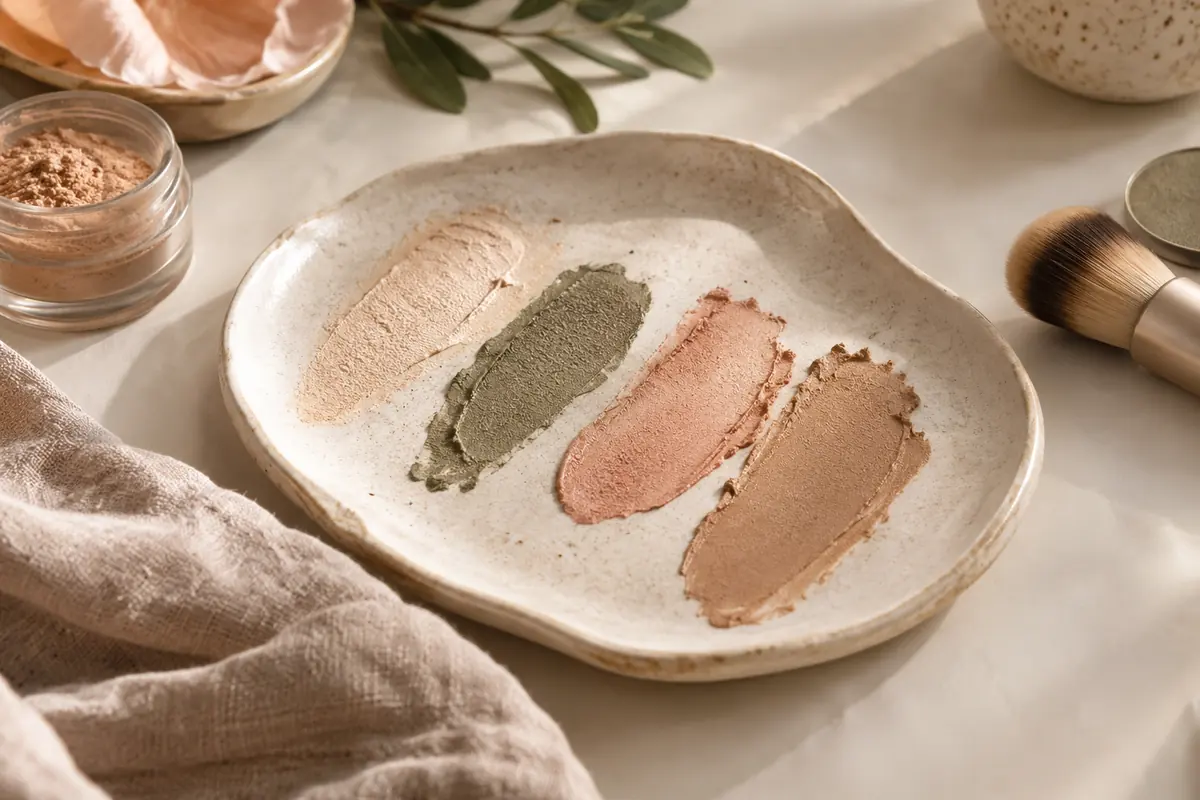
- Apply three small, separate stripes along the jaw.
- Leave a visible section for observing colour, and blend an edge to assess the transition.
- Let each formula settle as its instructions suggest, then look again.
- Check depth first and colour nuance second.
- Retest the strongest two candidates on another day before committing to a purchase.
Brand codes are not universal. MAC's shade guide separates depth from undertone and explains that its warm/cool naming convention differs from other brands. Read the description for the actual range instead of transferring a familiar letter automatically.
The olive foundation guide shows what to change when none of the stripes fits and how to check a candidate beyond the first application.
Golden, neutral or cool olive: use a working hypothesis
Cosmetic ranges use different olive descriptions: Lisa Eldridge's olive guide distinguishes balanced, cooler muted and warmer saturated versions. Treat such descriptions as ways to organise samples rather than permanent categories.
If a slightly golden olive blends better than a strongly greyish olive, record “olive with some yellow.” If both look too colourful, try a more neutral or less saturated option. If yellow shades repeatedly stand out, a less golden candidate is worth comparing.
You do not need to see a literally green face in the mirror. A subtle difference between products is enough to guide shopping. “My best match is a beige that is not very peach” is already a useful finding, even without an olive label.
Clothing colours answer another question: how you like the overall effect. They cannot establish an undertone. Use colours for olive skin to organise that comparison separately.
What creates misleading conclusions
One foundation looks orange. It might be too peach from the start, too deep, applied too thickly or different once dry. The result alone proves neither an olive undertone nor a particular chemical process.
A phone photograph looks green. White balance, image processing and the screen can shift colours. A consistent photo series helps you remember comparisons, but does not replace checking the real samples.
A family background suggests olive skin. Ancestry does not establish your makeup match. Members of the same family can need different shades. Geographic labels and cosmetic undertone labels are not interchangeable shopping instructions.
Veins, tanning or burning seem decisive. None is a reliable cosmetic undertone test. If skin depth changes, compare the depth again rather than deliberately seeking sun exposure as evidence.
Turn the result into an easier next decision
Keep a three-line note: current depth, the colour of rejected samples and the strongest match. For example: “light to medium; peach stays visible; neutral-olive blends better once settled.” Include the formula and the lighting used.
That note gives you a practical starting point at a makeup counter. Our general foundation matching guide expands the buying process. For lips, lipstick for your skin tone handles a different aim: choosing a colour you intend people to see.
For a salon colour decision, go to hair colour for olive skin. A foundation match does not automatically decide which blonde or brunette direction you will enjoy.
An uncertain result is still useful. If two samples work, keep both on your shortlist. If nothing fits, compare another range or a lighter coverage. The goal is a better choice, not forcing your face into a category.

Frequently asked
How can I tell whether I have an olive undertone?
Compare several foundation shades of similar depth in indirect daylight. Olive is worth testing if pink, peach or strongly yellow shades repeatedly look separate from your neck. Look for a pattern across more than one attempt; a single photograph or failed shade is not enough.
Can fair skin have an olive undertone?
Yes. Olive describes a colour nuance in makeup language, not how deep the skin is. Fair, medium and deep complexions can all need an olive shade. Find the right depth first, then compare undertones within that depth.
Is olive skin always warm?
No. Cosmetic descriptions include golden, neutral and cooler olive options. These are useful sampling labels, not a universal classification system. The shade that blends into your skin matters more than the category name.
Do green veins prove that my skin is olive?
No. How veins look varies with lighting and the area you examine. Veins alone cannot reliably separate an olive undertone from a warm one. Repeated comparisons on the face and neck are more useful for choosing makeup.
Does tanning easily mean I have olive skin?
No. Tanning and burning are not cosmetic undertone tests. Do not expose yourself to the sun to decide. Compare your skin as it is now and reassess foundation depth if its colour changes.