

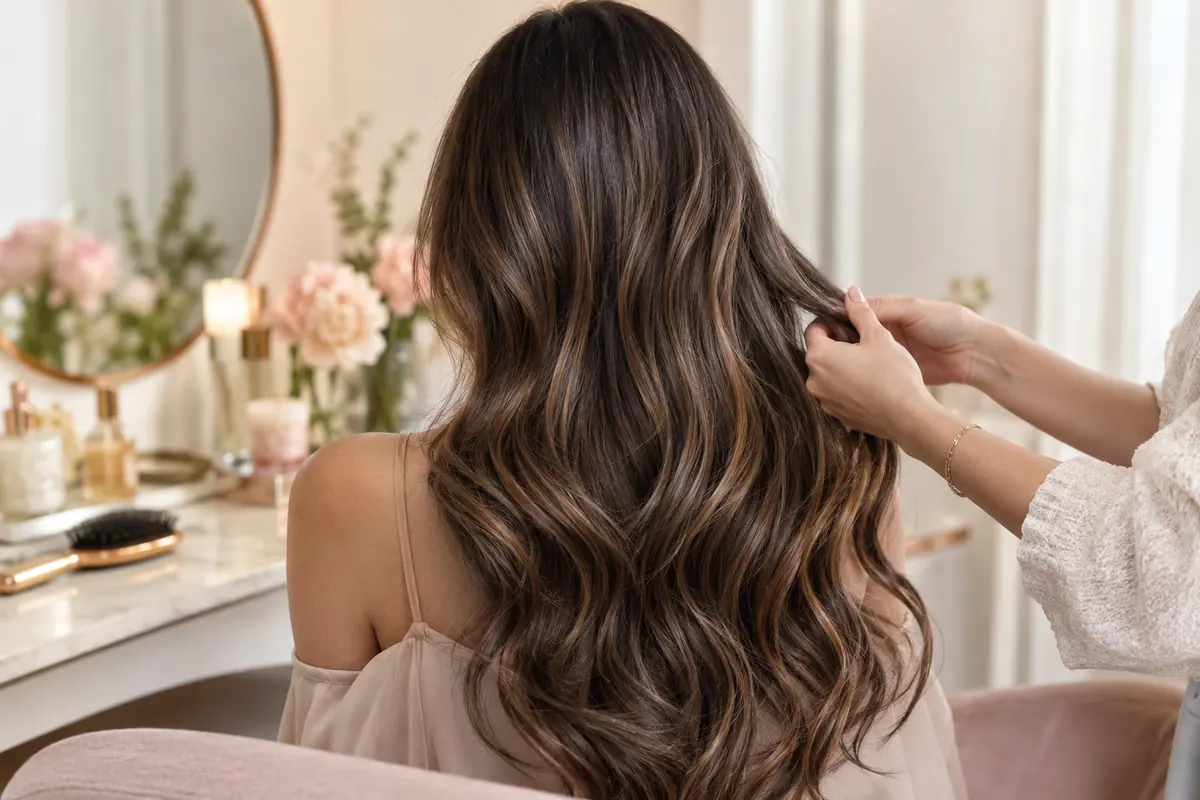
Most colour regrets begin before the colourist mixes anything. They begin at booking, when someone asks for "balayage" because the word sounds soft and expensive, but what she actually wants is bright face-framing blonde. Or she books "highlights" when what she wants is a low-maintenance brunette melt that will still look good in four months.
Colour services are not interchangeable. They are different tools for different outcomes. The salon can adjust once you arrive, but the calendar has already been built around the service you chose. A balayage slot, a full foil, a gloss, and a root touch-up are not the same amount of time, chemistry, or risk.
This is the plain-language guide to choosing the right appointment before you sit down.
Before another lightening service, review any snapping or fragile lengths with your colourist. The bleach-breakage guide explains what to pause, what conditioning can realistically change and which symptoms need healthcare rather than another salon treatment.
The simplest difference
Balayage is painted by hand. The colourist places lightness where the hair would naturally catch sun: mid-lengths, ends, surface pieces, and selected face-framing sections. It usually starts away from the root and grows out softly.
Highlights are usually placed in foils. The foil isolates each section, traps heat, and gives the colourist more control over lift. Highlights can start close to the scalp, create more brightness, and produce a more even blonde or dimensional result.
In salon language:
| You want | Book |
|---|---|
| soft, sunlit dimension | balayage |
| brighter blonde | full or half highlights |
| low-maintenance brunette lift | balayage or foilayage |
| grey blending | highlights or lowlights |
| a bright front frame | money piece plus toner |
| shine without major colour change | gloss |
| covering regrowth | root touch-up |
The problem is that social media uses "balayage" to mean almost any expensive-looking colour. Your colourist uses it to mean a placement technique. The gap between those meanings is where disappointment lives.
Balayage: what it is good at
Balayage is best when the goal is softness. It creates dimension without a hard root line, which is why it works beautifully for women who do not want to be in the salon every six weeks.
It is especially good for:
- brunette hair that needs warmth and movement
- long hair where the ends can carry the lightness
- wavy or curly hair, where painted placement follows movement
- clients who want the grow-out to look intentional
- first-time colour clients who are nervous about maintenance
Balayage is not magic. It does not always lift dark hair to pale blonde in one session. It does not replace toner. It does not hide every grey. And if the hair is very short, there may not be enough length for the gradient to show.
Studio prompt:
"Soft brunette balayage on my hair, warm caramel dimension through the mid-lengths and ends, natural root, subtle face-framing brightness, no harsh stripe, daylight."
Highlights: what they are good at
Highlights are best when the goal is brightness or precision. Foils let the colourist control the lift in individual sections. That matters when the desired result is lighter, cleaner, cooler, or more evenly distributed than a hand-painted placement can produce.
Highlights are especially good for:
- going visibly blonder
- blending grey through the top and hairline
- creating controlled brightness around the face
- correcting patchy old colour
- adding dimension to fine hair without painting only the ends
The maintenance is usually higher because the lightness begins closer to the root. The regrowth line appears sooner. Some colourists soften this with a root shadow or gloss at the end, which gives a highlight the grow-out manners of balayage.
Studio prompt:
"Fine foil highlights on my hair, soft beige brightness from root to ends, blended root shadow, natural dimension, no chunky stripes, salon daylight."
What about foilayage?
Foilayage is the middle child with excellent manners. The colourist paints balayage-style sections, then wraps them in foil to get more lift. It is useful when you want the softness of balayage but your hair needs the extra lifting power of foils.
Book or ask about foilayage if:
- your hair is naturally dark and you want visible lightness
- previous balayage looked too subtle
- you want blonde ends but a soft root
- your colourist says open-air painting will not lift enough
Foilayage is common in MENA salons because many clients have naturally dark, dense hair that needs controlled lift without creating a harsh root line.
The money piece question
A money piece is brightness around the face. It can be subtle or dramatic. It is not a full colour strategy by itself unless the rest of the hair already supports it.
Get a money piece if you want:
- the face to look brighter in photos
- a visible change without colouring the whole head
- dimension that shows when the hair is tied back
- a lower-cost refresh between bigger appointments
Avoid a strong money piece if you wear your hair covered most of the day and mainly see it down at home. In that case, the front section gets less public value and more maintenance pressure. A softer face frame may serve you better.
Gloss, toner, and root touch-up: not the same thing
These are often treated as small services, but they solve different problems.
Gloss adds shine and adjusts tone lightly. It is excellent when the colour is basically right but looks dull.
Toner corrects the tone after lightening. It turns raw lift into beige, ash, copper, honey, or champagne. Almost every lightening service needs toner.
Root touch-up covers or blends new growth at the scalp. It does not refresh the ends unless paired with gloss.
If you book a gloss when you need a root touch-up, the greys will still be there. If you book a root touch-up when the ends are brassy, the ends will still be brassy. The service has to match the problem.
Use AI try-on the right way
The AI hair colour try-on guide explains the mechanics, but the short version is this: use AI to choose direction, not chemistry.
Run three renders:
- balayage: soft placement, natural root
- highlights: brighter, more even lift
- gloss-only: same depth, better tone and shine
Then compare them against your maintenance tolerance. If you love the highlight render but know you will not return for root work, ask the colourist for a root-smudged version. If you love the balayage render but want to be much brighter around the face, add a money piece.
The best colour brief is usually a hybrid: "soft brunette balayage, but with more brightness around the face and a gloss that keeps it warm beige, not orange."
The booking cheat sheet
Use this before calling the salon. If the date is fixed, a wedding, an engagement, the bride's hair colour timeline tells you which service is still safe at which week.
| Starting point | Desired result | Ask for |
|---|---|---|
| dark brunette | soft caramel dimension | balayage or foilayage |
| dark brunette | very bright blonde | consultation plus full highlights, likely multiple sessions |
| medium brunette | sunlit ends | balayage |
| blonde | brighter all over | half or full highlights plus toner |
| visible greys | soft blend | highlights/lowlights, not balayage alone |
| old brassy colour | better tone | gloss or toner consultation |
| roots showing | coverage | root touch-up plus gloss |
| bored but cautious | visible front change | money piece plus gloss |
What to say in the chair
Bring the render and say:
"I like this level of brightness, but I care more about a soft grow-out than being as blonde as possible today."
Or:
"I want the face-frame brightness from this render, but I do not want chunky stripes or a hard root line."
Those sentences help the colourist choose technique. "Balayage" alone does not.
The quiet rule
If you want softness, book balayage. If you want brightness, book highlights. If you want both, ask for the hybrid and give the colourist enough time.
The appointment you book is the first colour decision. Make it with the same care as the shade itself.
Frequently asked
Is balayage better than highlights?
Neither is better. Balayage is better for soft, grown-in, lower-maintenance colour. Foil highlights are better for brightness, precision, grey blending, and lifting dark hair more evenly. The right appointment depends on your starting colour, desired contrast, and maintenance tolerance.
What is lower maintenance, balayage or highlights?
Balayage is usually lower maintenance because the colour is painted away from the root and grows out softly. Traditional foil highlights start closer to the scalp, so the regrowth line appears sooner. That said, a subtle foilayage or root-smudged highlight can also grow out gently.
Should I get balayage on dark hair?
Yes, if you want dimension rather than a dramatic blonde result. Very dark hair often needs multiple sessions to lift safely. Balayage on dark hair is best when the target is caramel, bronze, soft brunette dimension, or sunlit ends, not icy blonde in one appointment.
Can AI hair colour try-on help choose between balayage and highlights?
Yes. Render balayage for placement and softness, then render highlights for brightness and contrast. Use the AI output to decide direction, but rely on the colourist for lift limits, toner choice, and whether your hair history can safely reach the target.