
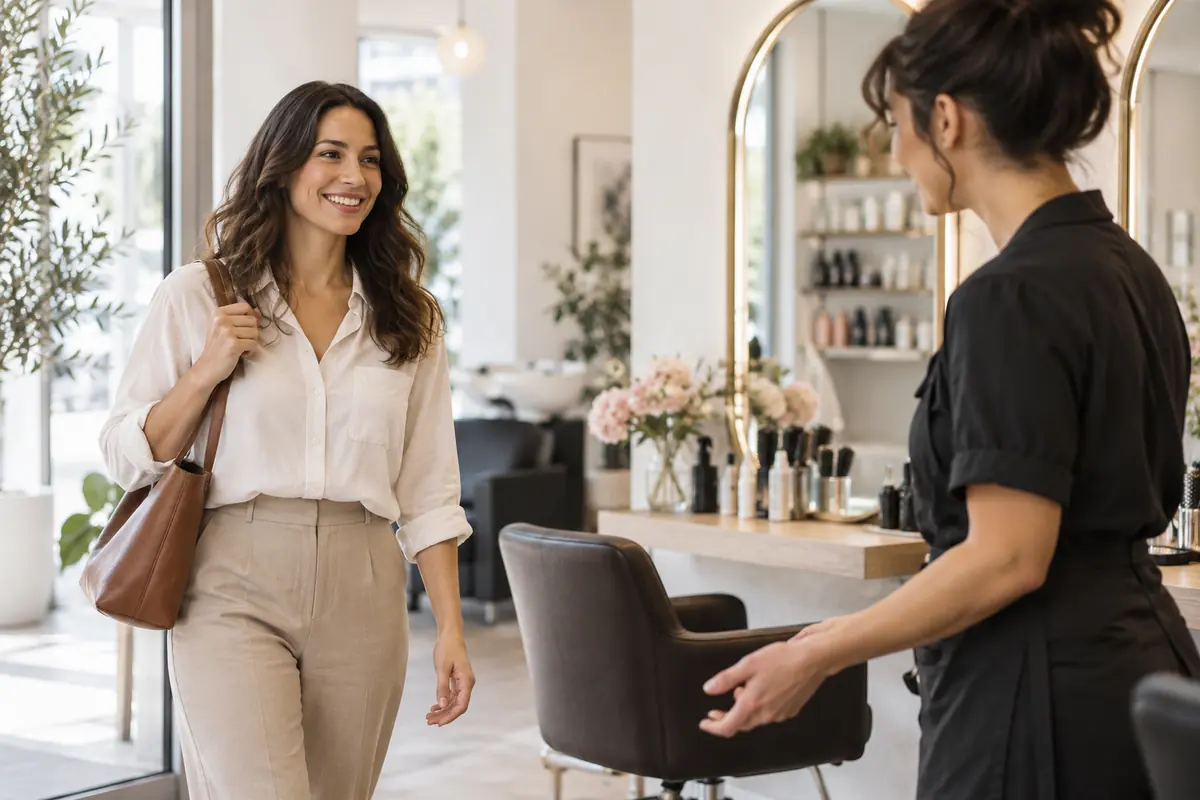
Wear a comfortable, washable top with a neckline that lies flat under the salon cape. For colour, choose an older top you would not mind marking. For a blow-dry or updo, a button-front or zip-front top is useful because you can remove it without pulling it over the finished hair.
You do not need a new outfit. Choose for the service, your comfort and the coverage you prefer.
Choose clothes for the service you booked
| Appointment | Useful clothing choice | Check before leaving |
|---|---|---|
| Haircut | A simple T-shirt, thin top or button-front shirt | Does the collar lie flat? Can you see the intended length against the cape or your clothes? |
| Colour, highlights or bleach | An older washable top; a removable outer layer | Would you be comfortable with a possible mark? Leave precious or dry-clean-only clothes at home. |
| Blow-dry or everyday styling | A button-front or zip-front top | Can you change afterwards without lifting clothing over your head? |
| Updo or event-hair trial | An easy-remove top, plus a photo of the event neckline | Will the finished hair meet the collar, straps, jewellery or covering where you expect? |
For colour, use the colour-consultation checklist to prepare the service questions as well as your clothes. Ask the salon about clothing protection when booking if you are unsure.
Check the cape and basin before the service starts
Sit down and check whether a hood, stiff collar, scarf knot or thick necklace bunches at your neck. At the basin, tell the stylist if the position or clothing feels uncomfortable so you can adjust before washing starts. Ask for help with the cape fastening if it feels tight or leaves clothing exposed.
A thin layer under a cardigan or jacket gives you options during a longer appointment. Keep the layer you remove somewhere away from the working area.
A plain neckline can make a bob or collarbone length easier for you to compare. You can also ask to see the length against a plain cape. You do not need to lower a neckline or change your coverage to make a haircut decision.
Bring glasses; put catching accessories in a pouch
If you wear glasses regularly, put them on during the consultation and final dry check. Look forward, turn your head and glance down: do the fringe or side pieces touch the lenses or catch the frame arms? The hairstyles for glasses guide has more checks to discuss.
Ask when the glasses need to come off for washing, cutting or colour application. Keep a case nearby.
Before the cape goes on, check:
- Dangling earrings or ear cuffs that may catch a comb or brush.
- Necklaces that sit at the cape fastening.
- Hair clips, pins or decorative accessories that need removing.
- Event accessories that you want the stylist to position during a trial.
Put removed pieces straight into a pouch. For a trial, bring the actual accessory where possible and ask when to place it.
Keep your familiar makeup and clothing preferences
Wear your usual makeup if you want to; arriving without makeup is equally fine. Choose a top you are comfortable seeing beside the finished hair. If you find the top distracting during a colour check, ask to compare the hair against the plain cape as well.
You do not have to dress for the stylist's taste. The useful question is whether you like the result with the clothes and accessories you actually wear.
Arrange privacy and covering details when booking
If you want a private room, women-only service or another privacy arrangement, confirm what the salon can provide before the appointment. Explain which parts of your covering you want to keep in place and ask how washing, cutting and the final check will work.
If your hair is covered for part of the day, describe how you usually secure it and which front or nape pieces need to tuck away. Bring your usual under-cap or a reference photo if helpful. The hairstyles under hijab guide offers cut-planning questions; the salon should confirm the appointment arrangements directly.
Bring a small, useful reference set
Save a current photo of your hair in its usual texture, one or two desired results, and a photo of the event outfit if relevant. Label what you like: the length, front pieces, colour placement or shape.
For wedding guest hair or a bridal trial, include the neckline, jewellery and any covering you plan to wear. An outfit photo can do this job without wearing the event garment to a colour service.
A generated image can illustrate an idea, but it cannot confirm how your real hair will cut, colour or hold a style. Mademoizelle is in early access; you can prepare this brief now using ordinary photos and the stylist communication guide.
The last check at the door
Washable top; stain-tolerant clothes for colour; easy removal after styling; comfortable collar; glasses and case; accessory pouch; references ready.
At the salon, agree on cape comfort and the final length check before the service begins.
Frequently asked
What should I wear to a haircut appointment?
Choose a comfortable, washable top with a neckline that lies flat under the cape. A simple T-shirt or button-front shirt is useful. If you want to keep a higher neckline or head covering, ask the stylist to show the length against a plain cape or fabric.
What should I wear for a colour appointment?
Wear an older washable top you would not mind marking. Ask the salon how it protects clothing; do not rely on a cape to make a favourite or dry-clean-only garment a good choice. A button-front top is also easy to remove after styling.
Can I wear a hoodie or turtleneck to the salon?
You can, but check whether the hood or collar bunches under the cape or feels uncomfortable at the basin. A removable outer layer over a thinner top gives you another option without changing your preferred coverage.
Should I wear glasses or remove earrings at the salon?
Bring everyday glasses for the consultation and final dry check. Ask when they need to come off during the service. Remove earrings, necklaces or accessories that catch the cape, comb or brush, and keep them in a small pouch.
Should I wear makeup to a hair appointment?
Wear it if you want to. Your usual makeup, or no makeup if that is your preference, gives you a familiar way to judge the result. There is no need to apply makeup for the stylist or change your routine for the appointment.