

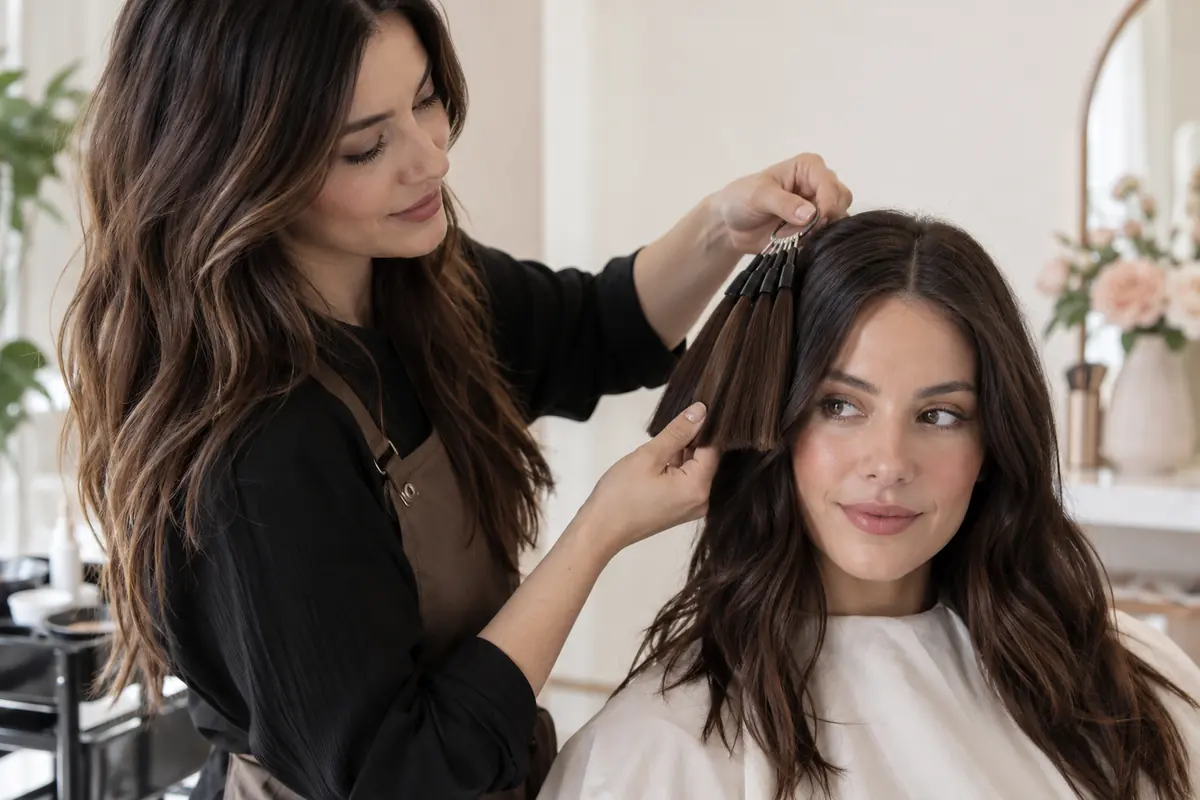
A root touch-up and a gloss solve different problems. They are often discussed in the same breath because both live in the colour menu, but they do not do the same job.
Booking the wrong one is how you leave shiny but still annoyed.
If the roots are the problem, gloss will not make them disappear. If the ends are dull, a root touch-up will not make the whole head look expensive. If the blonde is brassy, the answer may be toner. If the colour is flat, the answer may be dimension.
Start with the problem, then book the service.
The simple difference
Root touch-up: colour applied to new growth at the scalp. Used for grey coverage, matching regrowth, or maintaining an all-over colour.
Gloss: semi-permanent shine and tone refresh through the lengths. Used for dullness, faded colour, subtle warmth or coolness shifts, and a healthier-looking finish.
Toner: tone correction after lightening. Used to move raw lift toward beige, ash, honey, champagne, copper, or another target tone.
Grey blending: a strategy, not one service. Often uses highlights, lowlights, gloss, or root shadow to soften the contrast between grey and coloured hair.
What problem are you seeing?
| What you notice | Likely service |
|---|---|
| grey roots | root touch-up |
| dark regrowth on coloured hair | root touch-up or root melt |
| dull ends | gloss |
| brassy blonde | toner or gloss |
| flat brunette | gloss or lowlights |
| harsh highlight line | root shadow or colour correction |
| scattered greys | grey blending consultation |
| faded copper | gloss or demi colour refresh |
If two problems are present, you may need two services. "My roots are grey and my ends are dull" is not one problem. It is roots plus gloss.
When to book a root touch-up
Book a root touch-up when the scalp area is the issue.
Good reasons:
- grey coverage
- visible regrowth
- maintaining all-over brunette, black, copper, or red
- matching roots to existing colour
- covering a line from previous colour
Bring a photo of the colour when it looked right. Roots are matched to the target, not to your memory.
Root touch-ups are maintenance services. They are not usually where major colour dreams happen. If you want to change the whole colour direction, book a consultation or a longer colour appointment.
When to book a gloss
Book a gloss when the colour is basically right but lacks finish. A gloss is also the only colour service that belongs in the final week before a wedding; the bride's colour timeline maps the rest of the countdown.
Good reasons:
- faded brunette
- dull ends
- copper losing richness
- blonde looking dry
- tone slightly too warm or too cool
- hair looking matte after sun, heat, or hard water
A gloss can make hair look healthier because shine changes how colour reads. It does not repair split ends, but it can make the surface look smoother.
Studio prompt:
"Same hair colour depth, refreshed gloss finish, richer tone, healthy shine, no major colour change, natural daylight."
When toner is the better word
If hair has been lightened, toner may be the service you need. Lightener exposes underlying warmth. Toner refines that warmth into the chosen shade.
Ask about toner if:
- blonde looks yellow
- highlights look orange
- balayage ends look raw
- beige has turned too warm
- ash has washed out
The balayage vs highlights guide explains how lightening services relate to toner.
Grey coverage vs grey blending
Grey coverage aims to hide grey. Grey blending aims to make grey less obvious as it grows.
Coverage is cleaner at first and higher maintenance later. Blending is softer at first and often easier over time.
Choose coverage if:
- you want an even solid colour
- you dislike seeing any grey
- you are willing to maintain roots regularly
Choose blending if:
- you are comfortable seeing some grey
- you want softer grow-out
- you are tired of a hard root line
This is a lifestyle decision as much as a colour decision.
Use AI colour try-on carefully
AI can help you decide whether the overall direction should be warmer, cooler, darker, glossier, or more blended. It cannot tell the colourist exactly what formula to mix.
Render:
- current colour with roots fixed
- current colour with gloss only
- warmer gloss
- cooler gloss
- grey blending version
Then bring the best render and say:
"I like this finish, but I need you to tell me whether the issue is roots, gloss, toner, or blending."
That sentence gives the colourist room to choose the correct service.
The quiet rule
Book roots for the scalp. Book gloss for the finish. Book toner for lightened hair that needs tone correction. Book a consultation when the problem is more than one thing.
A good colour appointment starts with the right noun.
Frequently asked
What is the difference between a root touch-up and a gloss?
A root touch-up colours new growth at the scalp. A gloss refreshes shine and tone through the lengths. If roots are showing, gloss alone will not cover them. If the ends are dull or brassy, a root touch-up alone will not fix them.
Do I need toner or gloss?
Toner corrects the tone after lightening, especially blonde or highlighted hair. Gloss adds shine and can shift tone more gently. Salons sometimes use the terms loosely, so describe the problem: brassiness, dullness, grey roots, faded ends, or uneven colour.
Can gloss cover grey hair?
A gloss may soften or stain a few greys, but it usually will not cover grey roots fully. For reliable coverage, book a root touch-up or ask about grey blending with highlights or lowlights.
How often should I gloss my hair?
Many people refresh gloss every 6 to 10 weeks, depending on colour, wash routine, sun exposure, and heat styling. Root touch-ups may be needed sooner if grey coverage or strong regrowth is the issue.