


Put on your neckline and bag before choosing the final drape. A sheila arrangement that looks balanced alone can feel crowded over a high collar or slip when a bag strap moves across it. Start with the whole outfit, change one fold, then repeat the movement that causes the problem.
“Sheila” is used for scarf styles in Gulf contexts, but names, coverage and ways of wearing them vary. This guide offers arrangements to test, not a single correct cultural wrapping method. Your coverage preference remains the starting point; fashion advice should not turn it into a rule for someone else.
Choose tail lengths with a task in mind
Lay the scarf out and identify which side you want to carry the longer decorative tail, if any. Try an even arrangement first, then an uneven one. Keep the neckline and upper garment unchanged so you are comparing the drape rather than several variables at once.
Equal tails can give a deliberate balanced arrangement. One shorter tail can reduce material in a particular contact area. Neither option is inherently better for a face shape or more appropriate for every Gulf occasion. Look at what you enjoy and what the fabric does.
Check where each end lands when standing and seated. A tail that looks neat in front may fall into your lap or catch near a bag fitting. Before cutting, altering or buying a shorter scarf, try moving one fold and testing again. A useful length is one you can keep comfortably in the position you choose.
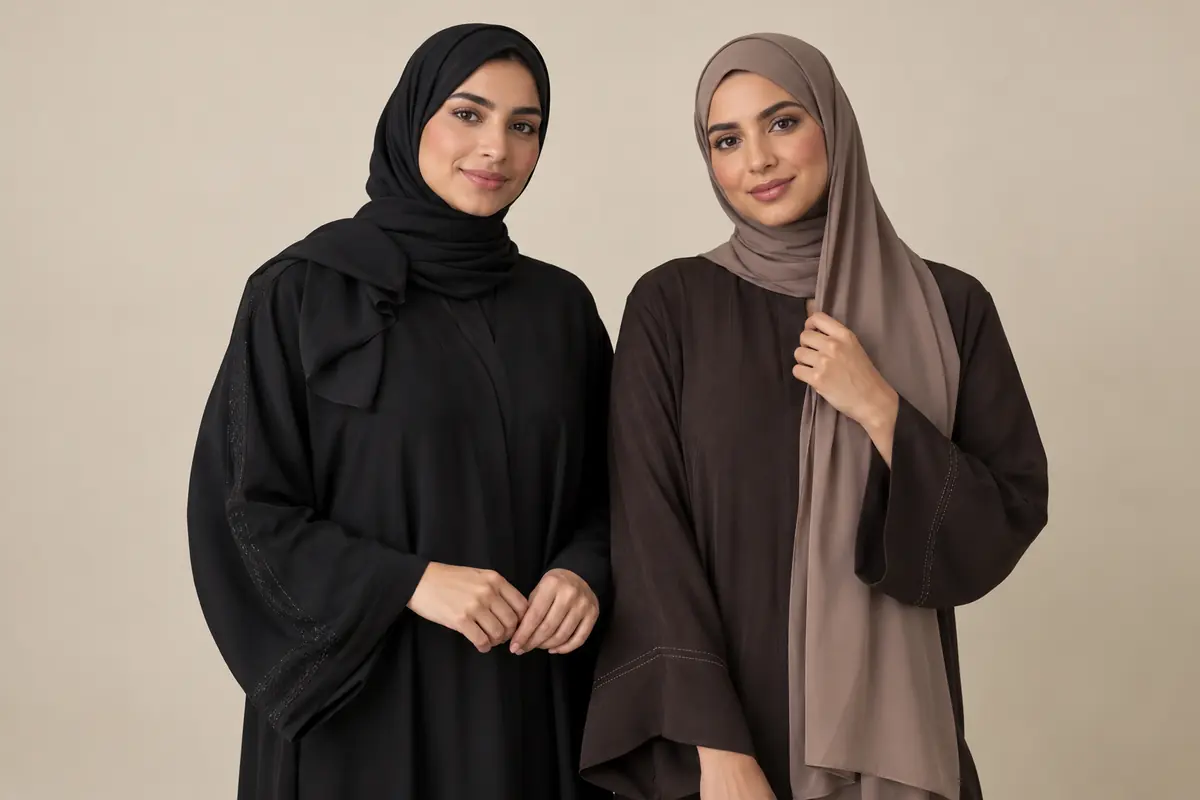
Check the actual fabric, light and layers
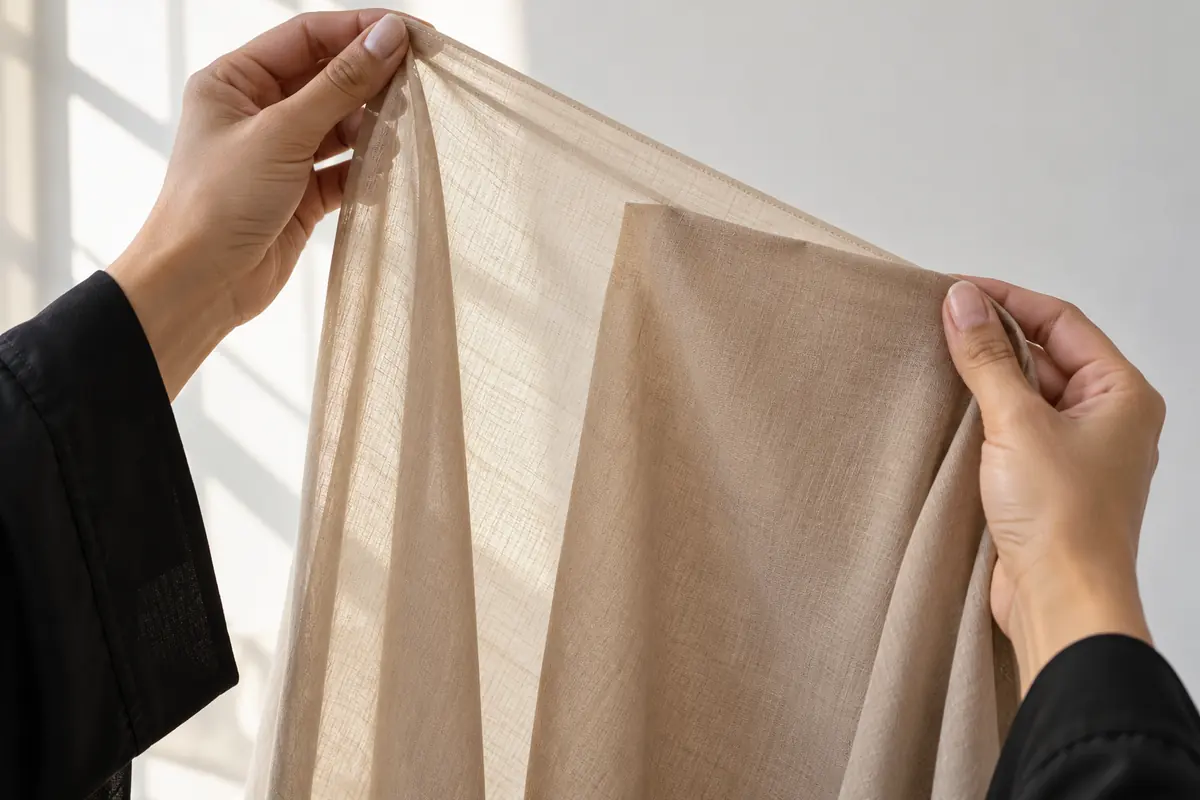
Place the scarf over the intended underlayer, where used, and examine the result near a window and in room light. Observe the areas with one layer, folds and overlaps. Thin fabric may look different over a contrasting underlayer, so check the combination rather than its color alone.
This is a visual comparison, not a certified opacity test. Your chosen coverage, the available light and the way the scarf moves all matter. If you dislike what you see, try a different layer arrangement or another scarf you already own instead of piling on folds without checking comfort.
Touch and movement also help compare surfaces. Does the scarf slide across the garment underneath? Does it feel bulky at the collar? Does the edge hold the fold you want? Descriptions such as chiffon, jersey or satin do not guarantee the behavior of every item sold under that name.
Scarf still slips with an undercap: which layer moved?
Set the arrangement comfortably, then turn your head, look down and walk several steps. Observe the first change before adjusting everything. If you use an undercap, compare its front edge with the scarf edge. A base that stays in place and an outer scarf that slides need a different trial from both layers shifting together.
| First movement you see | Try one change | Check the outcome |
|---|---|---|
| Base and outer scarf move together | Reset the base comfortably or compare another existing base | Repeat the same turn without tightening |
| Base stays, outer fabric moves | Change one fold or rebalance an exposed tail | Check the slipping point again with coverage preserved |
| Only a tail moves under the bag | Move it outside the strap contact | Lift and replace the bag |
| Front edge moves toward the face | Reset that fold and compare the same scarf without a heavy optional ornament | Turn, look down and sit |
| Arrangement feels tight or uncomfortable | Release it and choose another setup | Comfort matters before calling it stable |
A slipping fold does not diagnose a jaw or face-shape problem. Buying another undercap will not necessarily change an outer layer that moves while the current base stays still. For a pin-free preference, test a different existing scarf or simpler drape before shopping; no fabric name guarantees a full day of hold. Do not substitute craft tape or a fabric adhesive for a skin product.
Prepare fastenings away from the face and neck
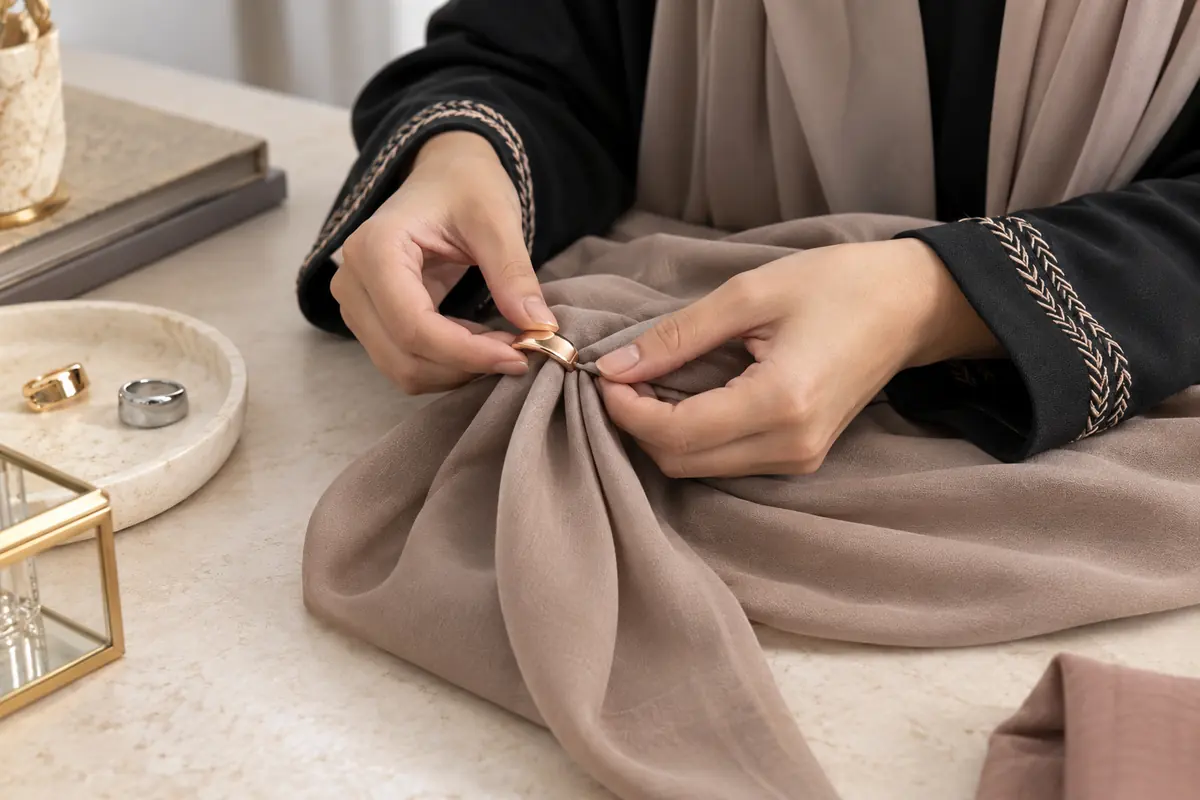
If your arrangement uses a pin, brooch or other fastening, consider its suitability for the fabric and the place it will sit. A heavy ornament may distort a light section, and a sharp or rough edge may catch the scarf. Test the accessory on spare fabric where available before using it on a delicate piece.
Prepare sharp fastenings off the body, with the fabric supported and hands clear of the point. Do not push a pin toward the skin while looking in a mirror. If the fastening cannot be placed comfortably and securely, choose a different method or arrangement.
An optional fabric-safe fastening should reduce a specific movement, not pull the scarf tight around the neck. Magnets and other closures also need the appropriate product instructions and handling; no accessory is automatically suitable for every person or material.
Run the bag-strap movement check
Wear the bag at its realistic weight. Walk, turn your head, sit and lift the bag from the shoulder. Find the first contact point where a strap or fitting traps the scarf. This tells you more than repeatedly repairing the front after the whole drape has shifted.
Move one tail outside that contact path or choose a shorter exposed arrangement. Retest without tightening the neck. Check that an accessory is not sitting beneath the strap or digging into the shoulder.
If the bag itself pulls the upper garment, fix that arrangement too. A scarf cannot solve a shoulder seam being dragged by a heavy or awkwardly positioned strap. Test the same drape with the bag in its alternate usable position before adding more fastenings.

Let the neckline and scarf share the space
| Garment detail | Arrangement to test | What to observe |
|---|---|---|
| High or standing collar | Fewer optional folds immediately over the collar | Comfortable head turn and seated fit |
| Decorative front closure | A tail placed beside rather than over the detail | Whether the closure remains usable |
| Plain neckline | One visible fold or tail as the chosen detail | Coverage and stability in movement |
| Textured shoulder or cuff | A quieter nearby scarf surface | Catching where the materials meet |
| Open outer garment | Scarf plus the intended inner neckline | The full coverage arrangement seated |
These are options, not instructions to expose or cover a specific area. First decide what you want from the outfit, then see whether the drape and garment can provide it together.
Build a repeatable morning test
Keep a brief note of a successful arrangement: scarf, underlayer if used, neckline, fold direction, tail placement and bag. A photograph can help you remember the result; avoid filters that hide the actual fabric. Do not include other people without permission.
On the next wear, begin with the same pieces. If something changes, name it: a different collar, heavier bag or smoother scarf. Adjust one element and retest. This is more useful than deciding that your face shape has suddenly stopped suiting a familiar arrangement.
Before cleaning or pressing, check the scarf's label: GINETEX care reference. Store fastenings separately so rough edges do not remain against delicate fabric.
A hypothetical solution to a crowded collar
Hypothetical example: Sara likes a long tail but finds her high collar crowded when sitting at a desk. She removes one optional folded layer at the neck and moves the decorative tail toward the side, preserving the coverage she wants. She tests turning her head, typing and lifting the work bag.
If the change becomes unstable, she returns to the previous arrangement and tests another scarf rather than forcing this one tighter. Her useful result is a specific comfortable setup, not a universal “secret” wrap.
Avoid fixes that create another problem
Do not treat extra tension as proof of a secure drape. An arrangement that feels tight or uncomfortable needs changing. Do not add several heavy ornaments to a section already pulling, or hide a fastener beneath a strap that presses it against you.
Do not judge the finished result from the front alone. Look at the side and back, then move. A beauty image can inspire a fold, but it cannot confirm fabric behavior, comfort or the outcome of every fastening.
Complete the outfit with the next useful guide
Check abaya fit, black abaya textures, colour palettes and Gulf workwear formulas. Compare modest outfit ideas and a capsule wardrobe from your closet, or return to the Gulf style hub.
Frequently asked
Must both sheila tails be the same length?
No. Equal or unequal tails are styling choices. Test the length against your neckline, intended coverage and the way you move or carry a bag.
Why does my scarf still slip with an undercap?
First observe whether the base moves too or the outer scarf slides on a stable base. Compare one fold, tail or contact arrangement at a time, keeping your preferred coverage and comfort. More tension or another undercap is not automatically the answer.
How can I reduce bulk around a high neckline?
Try removing an optional fold or moving a decorative tail away from the collar, while keeping the coverage you want. Check seated movement rather than tightening the arrangement.
Should I pin a slipping scarf near my face?
Avoid handling sharp fastenings against the face or neck. Prepare a suitable fastening off the body, protect delicate fabric, and choose another arrangement if it is uncomfortable or unstable.
Can a draping photograph confirm coverage?
No. A still photograph can show an idea but cannot confirm what happens when you turn, sit or carry a bag. Check the real scarf with your planned layers and light.