

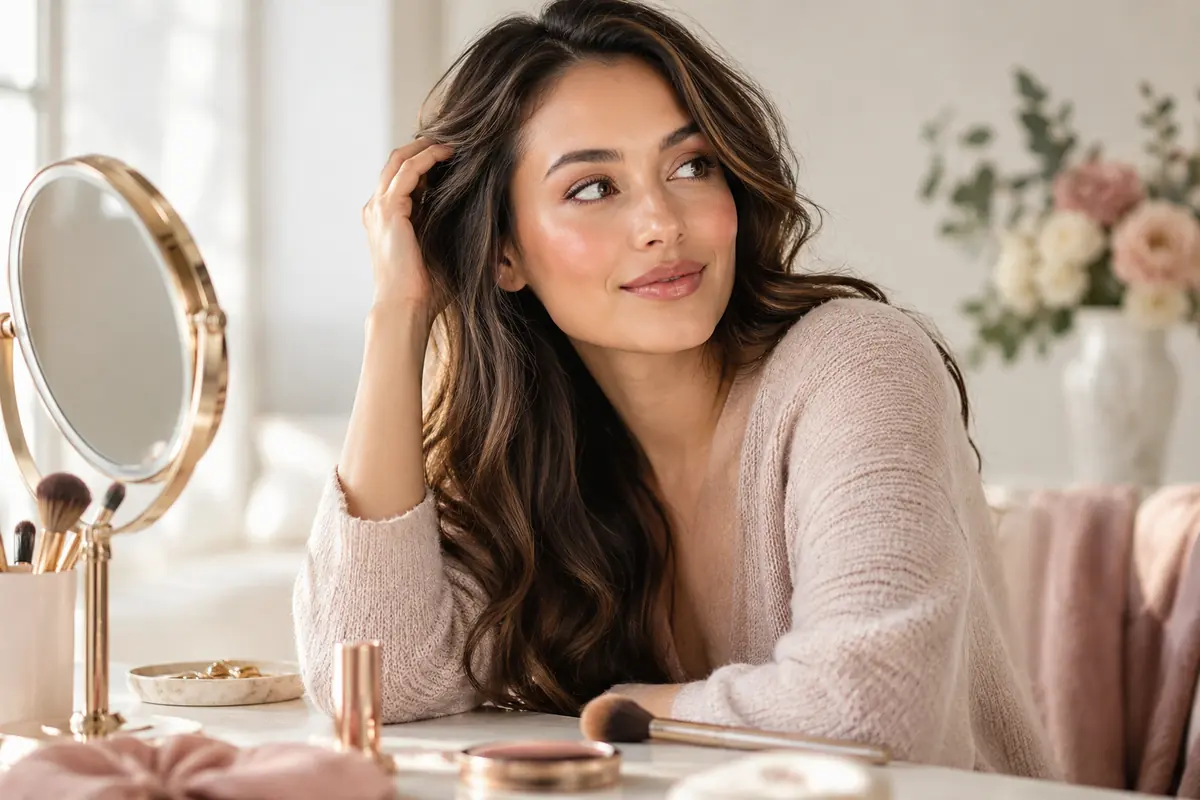
No-makeup makeup is the most-requested look and the most misunderstood. It does not mean no makeup, and it does not mean no effort. It means effort you can't see, the products are doing real work, but the result reads as good skin, good sleep, and enough water, rather than "she's wearing makeup."
It's the everyday end of the same dial as soft glam vs full glam, every setting turned almost all the way down. And it's the most useful face to master, because it's the one you'll wear most: school runs, the office, errands, a coffee, a 40°C afternoon when full coverage would slide off by noon.
The secret: shade-matching and restraint, not technique
Here's the part tutorials underplay. A natural look is mostly two things, and neither is skill:
- Shades that disappear. A base one shade off looks like makeup; a base matched exactly looks like skin. This is why the look starts with finding your undertone and matching your base, get those right and you're most of the way there.
- Restraint. Apply less than you think you need, then stop. The failure mode of natural makeup is always more, never less.
Technique matters far less here than in full glam. If you can match a shade and resist piling on, you can do this.
The five-product, five-minute routine
| Step | Product | The move |
|---|---|---|
| 1 | Sheer base | Tinted moisturiser, skin tint, or light foundation, matched exactly. Press on with fingers or a sponge; less is more. |
| 2 | Concealer, targeted | Only where you need it, under-eye, a blemish, around the nose. Not all over. |
| 3 | Cream blush | On the apples, blended back. Cream over powder reads like a real flush. Placement by face shape. |
| 4 | Brow gel | Brush up and set. Groomed brows do more for a natural face than anything else. |
| 5 | Tinted lip balm | Your lip, slightly better. A sheer wash, not a defined lip. |
Optional sixth: a touch of cream highlighter on the tops of the cheekbones and the inner corners of the eyes for lit-from-within skin.
That's it. Cream and liquid textures throughout, because they melt into skin where powder sits on top of it.
What to skip
The natural look is defined as much by what you leave off:
- Heavy full-coverage foundation, reads as a mask; sheer it out.
- Sharp contour, save it for photographed events; for everyday, blush placement does the shaping.
- A defined lip line, a wash of colour, not an outline.
- Setting powder all over, set only where you actually get shiny (usually the T-zone), so the rest of your skin keeps its natural light.
- A graphic liner or false lash, a coat of mascara is the natural ceiling.
The MENA heat note
In Gulf and Mediterranean summers, "natural" and "long-wearing" pull against each other, sheer bases can slide in the heat. Two adjustments keep the look intact: choose a lightweight long-wear skin tint rather than a rich moisturiser base, and set only the T-zone with a thin veil of powder, leaving the cheeks dewy. You keep the skin-like finish where it shows and the staying power where you sweat. The same climate logic runs through our summer humidity hair plan, heat changes the brief for hair and face alike.
See it on your own skin
Because the whole point of this look is subtlety, it's the hardest to judge from a tutorial on someone else's face, the differences are tiny and personal. A render on your own face shows the two things that decide it: whether the base shade truly disappears, and whether the blush sits right for your face shape. Mademoiselle's Studio holds your real skin constant and changes only the makeup, so a "no-makeup" render is an honest preview, if it still looks like makeup on the render, it'll look like makeup in the mirror, and you can dial it back before buying a thing.
After the everyday face
- Find your undertone, the input that makes the base disappear.
- Soft glam vs full glam, escalate the same face when the night calls for it.
- Makeup by face shape, place the blush precisely.
And the pillar: virtual makeup try-on.
A note on accuracy and authority
A skin-first look rests on skin, so the American Academy of Dermatology at aad.org is the reference worth keeping, especially on non-comedogenic formulas for oily and acne-prone skin, where the right product choice matters more than any application trick. For the shade logic that makes a base vanish, the Pantone Color Institute at pantone.com underpins the colour theory. The routine above is the one most artists reach for off-duty: five products, matched well, applied with restraint.
Frequently asked
What is no-makeup makeup?
A look that enhances your features so subtly it reads as good skin and a good night's sleep rather than 'makeup'. It uses sheer, skin-like products, tinted moisturiser or light foundation, cream blush, brow grooming, a little concealer where needed, and a tinted balm, placed precisely and blended fully, so the effect is visible but the products aren't.
What products do I need for a no-makeup look?
Five: a sheer base (tinted moisturiser, skin tint, or light foundation matched well), targeted concealer only where you need it, a cream blush for life, a brow gel to groom, and a tinted lip balm. Optional sixth: a cream highlighter on the high points. Cream and liquid textures read more like skin than powders for this look.
How do I make makeup look natural?
Match your base shade exactly so it disappears (the jaw-line daylight test), use sheer and cream textures over heavy powder, place colour where your face naturally flushes, blend until there are no edges, and apply less than you think you need, then stop. Natural makeup is mostly about correct shade-matching and restraint, not technique.
Is no-makeup makeup good for oily or acne-prone skin?
Yes, if you choose the right formulas, lightweight, non-comedogenic, and set only where you get shiny rather than all over. Heavy full-coverage foundation is more likely to look cakey and congest skin; a sheer base plus targeted concealer is usually kinder and more natural. For specific skin concerns, a dermatologist's guidance beats any makeup fix.
Can I preview a natural look before buying products?
Yes, render a no-makeup look on your own face and you'll see the most important thing immediately: whether the base shade disappears and whether the blush placement suits your face shape. Because the effect is so subtle, seeing it on your own skin (not a model's) is the only honest preview.