

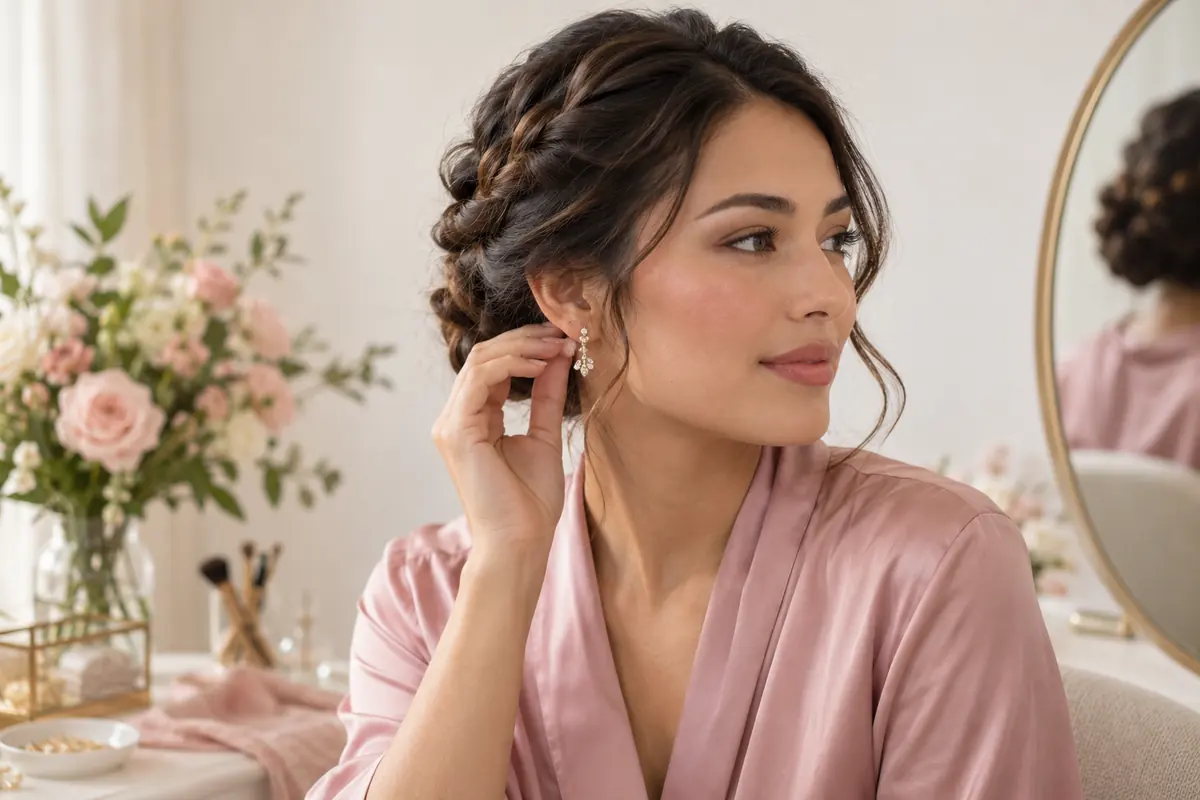
A henna night asks more of your hair than the wedding itself. The wedding is one dress, one entrance, one style defended for one evening. The henna night is two, three, sometimes four outfits in a single night, a traditional piece for the entrance, something lighter for the dancing, often a final change for the photographs, and each one carries its own register. Yet nearly everything published about henna night hair, in English or in Arabic, is a Pinterest board pretending to be a plan: a row of styles on other women's faces, with no mention of the one thing that defines the event.
You will not wear one look. So you should not plan one hairstyle.
This is the henna-night chapter of the wedding hair planner, which maps every decision from the first render to the big day. The scope here is a single night, but a night that behaves like three events in sequence, and rewards being planned that way.
The quick answer: one style per look, not one for the night
Plan a hairstyle for each outfit change, and plan them as conversions, not rebuilds. The first style should be engineered to become the second with pins and five minutes, because nobody restyles from zero mid-party with a hall full of guests and a photographer on the clock.
| Moment of the night | Typical outfit | Hair that works | Why it holds |
|---|---|---|---|
| The entrance | embroidered kaftan, jellabiya, or Gulf thobe al-nashal | glossy Hollywood waves or a soft volume half-up | carries a headpiece, photographs beautifully against embroidery |
| The dancing | a lighter party dress | sleek low bun or a braided updo | survives heat, hugging, and three hours of movement |
| The photographs | the final change | brushed-out soft waves or a jeweled low bun | refreshable in minutes at the end of the night |
If you take one thing from this table, take the order. Waves drop; buns do not. Schedule the wave-led look first and let the night end in the style that physics favours. The sequence of your outfits should respect what your hair will actually do at hour four, not what it looked like at hour one.
What actually happens at a henna night
A henna night is the pre-wedding celebration where the bride's hands, and often her guests', are decorated with henna, held in the final days before the wedding. That much is shared. The shape of the evening is not, and the hair plan changes with the region.
The Gulf. Laylat al-henna is usually a women-only gathering, which changes everything about hair: it can be fully down, fully visible, fully celebrated. The bride traditionally wears an embroidered thobe al-nashal, in many Gulf families, green is customary, and the styling language is the one documented in our khaleeji bridal hair guide: length displayed, sculpted volume, real shine. The 2026 movement toward khaleeji soft glam softens the silhouette but keeps the drama.
Egypt. Leilet el henna is the dancing night, candles, zaghareet, a bride who will not sit down. Whatever the entrance style, the working style for the night is the one that survives movement.
The Levant. Henna evenings lean on song and family ritual, often with the bride in an embroidered thobe. The pace is gentler than Cairo's, but the hugging quotient is the highest in the region, and hugging is harder on a hairstyle than dancing is.
The Maghreb. The outfit-change tradition is at its strongest here. Moroccan celebrations are famous for the bride moving through a sequence of kaftans, and the henna ceremony often calls for its own dedicated piece. If any version of this night demands the multi-look plan, it is this one.
If your family blends traditions, a Khaleeji henna with an Egyptian playlist is hardly rare, plan for the most demanding version of the night, not the calmest.
The three looks, built as one plan
Look one: the entrance. The traditional outfit is heavy, embroidered, and architectural, and it asks for hair with presence. Glossy Hollywood waves are the strongest opening: polished, deliberate, and luminous against metallic threadwork. A soft volume half-up is the alternative when there is a headpiece to anchor, the half-up gives pins something to hold. This is the look to spend your styling budget on, because it exists for the entrance and the first round of photographs, and it will not survive to midnight. It is not supposed to.
Studio prompt:
"Glossy Hollywood waves on my hair, deep side part, polished S-waves with mirror shine, soft volume framing the face, holds its shape, warm evening indoor light."
Look two: the dancing. This is where the sleek low bun earns its place as the most useful style of the entire wedding season. It converts directly from look one: waves brushed through, gathered low at the nape, pinned, done, five minutes in a side room while the outfit changes. A braided updo is the higher-security option for type 3 and type 4 textures, and rope-twisted variants hold even better than they photograph. Whatever you choose, this look's only job is to still exist at the end of the night.
Studio prompt:
"Sleek low bun at the nape on my hair, clean centre part, polished with no flyaways, one jeweled pin above the bun, evening light."
Look three: the photographs. The closing look benefits from the broader 2026 mood, It-girl simplicity, which is to say styles that look chosen rather than constructed. Brushed-out soft waves released from the bun, or the bun itself dressed up with a jeweled pin, both read as intentional in photographs taken at midnight. Resist the temptation to plan a third full style; the third look is a styling gesture, not a new architecture.
The thread through all three: each style is the previous one, converted. That is the entire trick, and it is the part no listicle mentions.
Hair that survives dancing, hugging, and humidity
The henna night is the highest-physical-load event in the wedding sequence, more movement than the wedding, more embraces than Eid, and in a Gulf or coastal summer, all of it in serious humidity. The styles that survive are the ones that do not depend on hold spray winning an argument with the weather: the sleek low bun, braids and rope twists, and defined natural texture worn as itself.
The honest physics: a heat-straightened blowout reverts at the hairline within an hour of real humidity, and the hairline is exactly where every photograph looks. Waves built on a good set last longer but still soften by hour two or three, which is why they open the night rather than close it. The full strategy, product layer included, lives in the summer humidity hair plan; the henna-night application of it is simply this: sweat at the hairline does more damage than the air does, so the dancing look must be a style that sweat cannot unravel.
Covered and reveal: hijabi brides and guests
Because many henna nights are women-only, this is often the night a hijabi bride wears her hair fully visible, which makes it, quietly, one of the most important hair moments of her wedding sequence, and one worth a real trial rather than an improvised blowout. If the gathering is mixed, or if photographs will circulate beyond the room, she may want a covered arrival look and a reveal style for the women-only portion: the same two-look logic, applied to covering instead of outfits.
Guests who wear hijab face the inverse question, a covered style that survives the night with the same dignity the uncovered styles get. Volume held under fabric for hours flattens; a low bun base with the hijab styled over it keeps its shape far better than loose hair pinned flat.
The useful preparation for both is seeing the two versions before deciding. Render the covered look and the reveal style from the same selfie and compare them honestly, which is also the answer to the question we hear most from hijabi readers, addressed directly in the FAQ below.
Studio prompt:
"My hair fully down with soft brushed waves and gentle volume, women-only celebration styling, jeweled accent at one temple, warm hall lighting."
The henna warning nobody gives until the colourist's chair
Henna on the hands is the point of the night. Henna in your hair history is a complication that surfaces months later, usually in front of a colourist who was never told. Pure henna binds to the keratin of the hair shaft and does not simply wash or fade out; bleach over it lifts patchily and tends to pull brassy or murky. Compound henna, often sold as "black henna", is the dangerous one: its metallic salts react with the peroxide in standard colour chemistry, and the textbook result is a greenish cast, sometimes with real damage alongside it.
This matters now because so many brides plan a post-wedding colour shift, a mocha mousse deepening, a cherry cola gloss, even a full cowgirl copper change once the wedding photographs are safely taken. The sequencing for all of it is laid out in the bride's hair colour timeline, and you can preview the tone direction on your own selfie with the AI hair colour try-on guide, but be clear about what a render can and cannot do. It can show you the target. It cannot model henna chemistry. Only a strand test in the salon can, so ask for one by name.
And if the henna night itself tempts you toward a henna hair treatment as part of the ritual: lovely, traditional, and a real commitment. Do it knowing it narrows your colour options for a year or more.
See the night on your own face before the night
Every style in this guide has been described in words, and words are how hair plans go wrong, "soft waves" means four different things to four stylists. The fix is to stop describing and start showing. Open Mademoiselle's Hair Studio, take one head-on selfie in daylight, and render the three looks: the entrance waves, the low bun, the photo look. The renders are identity-preserving, your face, your hairline, your colouring, so what you are judging is not a model wearing the style but you wearing it.
Then the renders become the brief. You walk into the salon with three photographs of yourself and one sentence: "Look one converts to look two at ten o'clock, build it so the conversion works." That single instruction, with images attached, replaces twenty minutes of mutual guessing. It is the same render-as-brief method the whole wedding planner is built on, scaled to one night.
A render will not tell you how long the waves survive your cousins' embraces. It will tell you, before you spend anything, whether the style belongs on your face, which is the question the Pinterest board never answers.
The outfit half of the equation
Hair is half the multi-look plan; the outfits are the other half, and they are decided first. For guests, the 2026 palette is generous, jewel tones photograph richly in hall lighting, and butter yellow has become the season's unexpected guest-wear favourite, while the standing rules still apply: nothing white, nothing that upstages the bride's entrance piece. The full decode of dress codes by ceremony type is in the wedding guest outfit you already own, and it starts from the same premise as this post: the answer is probably hanging in your wardrobe already.
That premise is testable. Photograph the candidates, the embellished kaftan, the jewel-tone dress, the pieces you half-remember owning, and try the combinations on your own body in Smart Closet before the panic-shopping reflex kicks in. The method, including how to build event shortlists, is in the Smart Closet event outfits guide. For the bride, the same tool earns its place on looks two and three, which come from her own wardrobe more often than anyone admits. Then pair each confirmed outfit with its hairstyle from the table above, and the night is planned as a whole rather than as separate emergencies.
The plan, compressed
Two to three weeks out: confirm the outfits, in order. Render the three looks on your own selfie and shortlist the conversions. One week out: brief the stylist with the renders and book the entrance style; rehearse the bun conversion once at home. The night itself: waves first, bun by mid-evening, one jeweled gesture for the photographs, and the small kit waiting in the outfit-change room.
The henna night is the warmest, loudest, most photographed rehearsal a bride gets before the wedding. Plan it look by look and the hair simply keeps up, which, at hour four, with the music still going, is the only review that matters.
Frequently asked
What do you wear to a henna night?
For the bride, tradition leads: an embroidered kaftan, jellabiya, or Gulf thobe al-nashal for the entrance, followed by one or two lighter party looks for dancing. Guests should reach for jewel tones, embellished kaftans, or modest-glam dresses, festive, but never white or anything that reads bridal. Many henna nights are women-only, so the dress code is often more glamorous than the mixed wedding itself.
When is the henna night held before the wedding?
Traditionally the night before the wedding or within the final three days, the name comes from the henna applied to the bride's hands, timed so the design is at its richest on the big day. Many families now hold it up to a week earlier to space out the ceremonies, which is kinder to your hair plan: it leaves recovery time between heavy styling sessions.
How do I keep my wedding hair from frizzing in humidity?
Choose a style that works with humidity instead of fighting it: a sleek low bun, a braided updo, or defined natural texture all outlast a heat-straightened blowout, which reverts within an hour outdoors in a Gulf summer. Seal the finish with an anti-humidity spray, schedule any wave-led look for the start of the night, and keep pins ready for a bun conversion.
Does henna in my hair history affect future colour?
Yes, significantly. Pure henna coats and binds to the hair shaft, so lightener lifts unevenly over it and the result can pull brassy or murky, and compound 'black henna' containing metallic salts reacts directly with peroxide, sometimes turning hair green. Always tell your colourist about any henna use, even from years ago, and insist on a strand test before booking a colour change.
Can I see a render with the hijab in the AI try-on?
Yes. Mademoiselle's Hair Studio renders on your own selfie, so you can generate a covered look and a reveal hairstyle from the same photo and compare them side by side. That matters for henna nights, where many gatherings are women-only and the covered-or-not question changes by the hour, and your selfies stay yours, private by design.