Here is the thing body-shape advice leaves out: two women can be the exact same shape, both textbook hourglasses, say, and look best in completely different clothes. One is 5'2" with a long torso; the other is 5'9" with long legs. Same shape, opposite needs. The missing variable is proportion: not how wide you are, but how long, and how that length is divided.
Shape tells you which lines flatter you. Proportion tells you where to put them, where a hemline should fall, where a waistband should sit, whether to lengthen or to break up the line. It's the second half of dressing well, and the half that explains why the trend everyone loves looks wrong on you specifically. This is the proportion companion to how to find your body shape, read that first if you haven't.
Reading your proportions
Two quick reads:
Height / scale. Roughly: petite is about 5'3" (160 cm) and under; tall is about 5'8" (173 cm) and up; in between is balanced. This is about scale, not size, a petite frame at any weight is dressing a smaller canvas.
Leg-to-torso ratio. Sit on a hard chair. Is your torso long relative to your thighs (long-waisted, comparatively shorter legs) or short relative to them (short-waisted, longer legs)? A balanced ratio sits in the middle. Your waist placement is the single biggest lever here.
Height plus ratio is your proportion profile. Now you know where the lines go.
Dressing by proportion
| Proportion | The aim | Key moves |
|---|---|---|
| Petite | One long line; don't cut yourself in half | Monochrome/tonal columns, higher rise, show ankle, scale pieces to your frame |
| Tall | Buy for length; play proportion freely | True-length hems/sleeves, maxi and wide cuts, horizontal breaks to balance if desired |
| Long-waisted | Lengthen the legs, raise the waist | Higher-rise bottoms, a waist defined higher, longer tops untucked carefully |
| Short-waisted | Lengthen the torso | Lower/mid-rise, avoid wide waistbands, tuck to show more torso |
Petite, protect the vertical line
The petite trap is being swamped, oversized volume and floor-dragging length cut a small frame into pieces and shorten it. The fixes all create one unbroken vertical: tonal or monochrome outfits, a higher rise to lengthen the leg, hems that show the slimmest part of the ankle, vertical detail, and, crucially, clothes scaled to your frame, not borrowed from a bigger one. Fit matters more for petite frames than for anyone else.
Tall, length is your superpower
Tall frames carry what overwhelms others: maxi lengths, wide legs, longline layers, bold proportion. The two real tasks are buying garments actually long enough (the perennial tall frustration) and, if you want to visually reduce height, breaking the line horizontally, contrast waistbands, tucks, separates over a single column. But proportion play is an advantage here, not a problem to fix.
Long- and short-waisted, move the waistline
The waist is the lever. Long-waisted (longer torso, shorter-looking legs): raise the apparent waist and lengthen the leg with a higher rise. Short-waisted (shorter torso, longer legs): avoid wide waistbands and very high rises that shorten the torso further; a lower or mid-rise and a tucked top that reveals more torso rebalance you.
Proportion meets shape, colour, and coverage
Proportion stacks with everything else in the cluster. Your body shape picks the lines; proportion places them; colour picks the palette; and for modest dressing, proportion is especially powerful, because where a longline layer ends and where a belt sits are pure proportion decisions, see modest outfit ideas.
See where the lines fall, on you
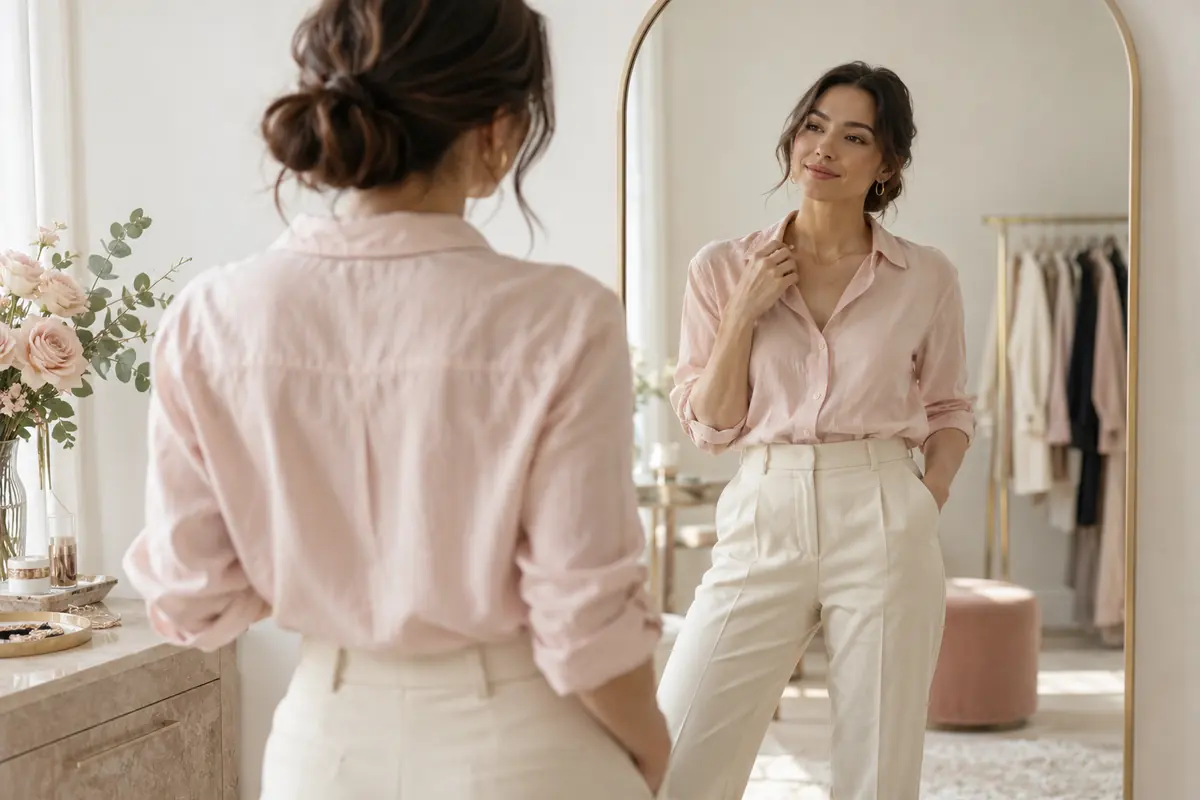
Proportion is the hardest thing to judge from a photo of someone else, because their height and ratio aren't yours, the midi that hits a model mid-calf hits you differently. Previewing on your own body profile is the only honest test: does this hemline lengthen or cut you, does this rise raise your waist or drop it. Photograph your wardrobe into a Smart Closet and check the lines on your real proportions before you commit. The method is in AI outfit try-on.
After proportions
- How to find your body shape, the lines that proportion then places.
- What colours suit you, the palette layer.
- What to wear to work, apply shape + proportion to the daily capsule.
A note on accuracy and authority
Proportion and scale are core to professional styling and to garment grading, the reason "petite", "regular", and "tall" lines exist at all is that height changes where seams, waists, and hems should fall. The body-dimension standards behind that grading are published by ASTM International at astm.org. The styling principles here, vertical lines lengthen, waist placement rebalances torso and leg, are the same ones tailors and stylists apply by eye; now you can read your own proportions and apply them yourself.
Frequently asked
What's the difference between body shape and proportion?
Body shape is about width, where you're widest and how defined your waist is (hourglass, pear, rectangle, etc.). Proportion is about length, your overall height and how it's divided between your torso and legs. Two people can be the same shape but different proportions, and need different hemlines, rises, and waist placements. You dress for both: shape decides which lines flatter, proportion decides where to put them.
How do I know if I'm petite, tall, or balanced?
Petite is generally a height of about 5'3" (160 cm) and under, regardless of weight, it's about scale, not size. Tall is roughly 5'8" (173 cm) and up. Between is 'average/balanced'. Then check your leg-to-torso ratio: sitting on a chair, is your torso long relative to your thighs (long-waisted) or short (short-waisted, longer legs)? Height plus that ratio is your proportion profile.
How should petite women dress to look taller?
Create one long vertical line and avoid breaking yourself in half. Monochrome or tonal outfits, a higher hemline that shows ankle, a higher rise to lengthen the legs, vertical details, and clothes scaled to a smaller frame (not oversized) all elongate. The biggest petite trap is volume and length that swamp the frame, fit and scale matter more than for anyone else.
How should tall women dress?
Tall frames can carry length, volume, and bold proportion that overwhelm others, maxi lengths, wide legs, longline layers, and statement pieces. The main adjustments are buying for length (sleeves and hems that are actually long enough) and, if you wish to balance height, using horizontal breaks like contrasting waistbands, tucks, and separates rather than one long column. Proportion play is a tall frame's advantage, not a problem.
What does long-waisted or short-waisted mean for dressing?
Long-waisted means a longer torso and comparatively shorter legs; short-waisted means a shorter torso and longer legs. Long-waisted frames are balanced by a higher-rise bottom and a defined waist sitting higher; short-waisted frames by a lower or mid-rise and avoiding wide waistbands that shorten the torso further. Where your waistline sits is the key lever for both.