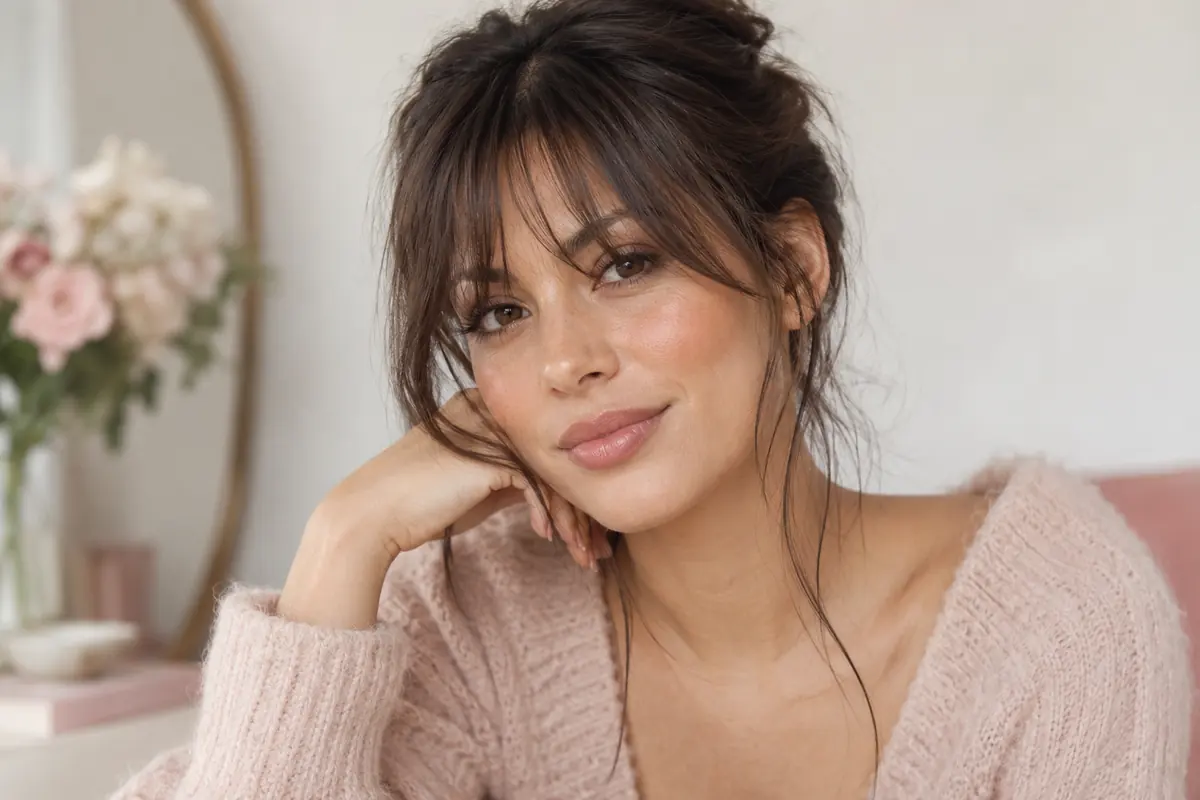
Get bangs if you want the shape and can fit its practical needs into your day. Choose “maybe” while a hairline, styling or clip-back question is unresolved. Choose “no for now” if the proposed cut conflicts with something you need.
Start with your real hair in its usual dry texture and part. This check identifies questions for a stylist; it cannot prove how shorter hair will fall.
Do the 60-second check
- First 15 seconds, watch the front roots. Gently brush the front forward, then release it. Where does it split, lift or return to a part? Note the place rather than trying to flatten it for the test.
- Next 15 seconds, add your everyday context. Put on your glasses if you wear them. Check where you would want the shortest piece to stop. If you wear a head covering, hat or helmet, note when you want the fringe visible and whether it must tuck away.
- Next 15 seconds, name your ordinary finish. Look at your dry hair now. Would you want bangs in this texture, or only after a finish you seldom do? Name the tool and time you would actually use on a normal morning.
- Last 15 seconds, test your non-negotiable. Put the front into your usual ponytail, bun or clip. Do you need that exact hold for work, sport or comfort? A shorter piece may need a different way to secure it, so write down the requirement.
Now choose the next step:
| Your result | What to do |
|---|---|
| Yes, ready for a consultation | You want the fringe in your usual texture, accept the upkeep, and can name the required dry length and backup style. Ask the stylist to check those needs before cutting. |
| Maybe, one question to resolve | A split, curl, glasses position or covered-day reset is uncertain. Show it at the consultation and ask for a demonstration or an alternative length. |
| No for now, the cut conflicts with a need | You need every front piece in the same tie-back, want no front styling, or simply prefer your current opening. Keep the length while you consider another shape. |
“Yes” means the idea is worth discussing. The stylist still needs to assess the real section before you agree to a cut.
Choose the detail you like, not a face-shape rule
Look at fringe references and name the attraction: less forehead visible, a narrow central opening, soft sides, a strong line or a sweep. There is no requirement to make your face appear longer, narrower or more oval.
Compare the shortest centre piece and the sides separately. You may like the sides of curtain bangs but prefer a different centre length. The curtain-versus-bottleneck comparison helps you describe that difference.
A mirror experiment with longer hair held forward can suggest an outline. It does not reproduce the weight, section or movement of a real fringe.
Ask for the cut in the texture you intend to wear
Straight, wavy, curly and coily hair each need an individual plan. Show a photo after your ordinary drying routine and point out any front pieces that behave differently from the rest.
If you wear curls, ask to agree on the shortest length in the dry curl pattern you want. If you alternate between natural and straightened finishes, discuss both. You do not need to rank your texture as easy or difficult to decide whether you like a fringe.
For a cowlick, ask: “Where could the part and shortest piece sit without needing a finish I will not repeat?” If the answer is uncertain, keep the decision at “maybe.”
Agree on upkeep and an exit
Before committing, ask how you would reset this particular fringe, what would trigger a trim, and whether fringe-only visits are available within your budget. The bangs maintenance guide covers the routine; you do not need to settle a universal wash or trim schedule here.
Then ask what happens if you stop trimming. Which pieces can tuck first? What would need clipping? Could the sides blend into your current cut? Ask for a plan based on the agreed starting length rather than a guaranteed grow-out date.
For a covered routine, use the hairstyles under hijab guide to prepare your own requirements. The relevant choice is the fringe you want for the times you wear it visible.
Compare previews after the real-hair check
If you use a virtual preview, compare only the details you are deciding between: a fuller front, a centre opening or a long side sweep. Check that the image still resembles you before treating it as a useful visual reference.
A generated image cannot reveal the physical behaviour of your roots, demonstrate styling effort or guarantee a salon result. Mademoizelle is in early access; a preview is not required to make this decision. Real photos and a written brief work now. The AI hairstyle try-on guide explains how to judge a preview's limits.
Take one clear brief to the stylist
I am considering bangs because I like ___. I normally wear my hair ___. The front splits or lifts here: ___. I wear glasses / a covering / neither, and the front must ___. I can spend ___ on an ordinary morning. Please show me the proposed shortest dry length, side shape and backup before we agree to cut.
Bring one desired result and a current photo of your own hair. Use the stylist communication guide to keep the discussion focused. A useful consultation ends with an agreed shape and routine, or a clear decision to keep your current length.
Frequently asked
How do I know if I should get bangs?
Check your dry front hairline, the glasses or covering you wear, how much styling you want to do, and whether the front must tuck or tie back. If those needs fit the proposed cut, discuss a conservative first fringe. If one is unresolved, use the consultation to answer it before cutting.
Do bangs work for round faces?
A round face does not rule out a fringe. Compare the forehead opening, shortest piece and side shape you prefer rather than treating a face-shape category as permission. Your real texture, growth pattern and preferred appearance make the consultation more useful.
Can I get bangs if I have a front cowlick?
Possibly. Show the stylist where the dry hair splits or lifts and ask which part, length and shape could work with it. A generated image cannot establish whether a fringe will sit that way on your hair.
How long will bangs take to grow out?
There is no single useful deadline without knowing the starting length and your goal. Ask when the shortest piece may reach a length you can tuck, clip or blend, based on your own growth. Agree on an interim shape rather than relying on a fixed month count.
Can an AI preview tell me whether bangs will suit me?
It can help you compare a visual preference, such as a fuller front or a wider opening. It cannot test your cowlick, curl behaviour, density, comfort or ability to style the cut. Confirm those with your real hair and a stylist.
Should I cut my own bangs for the first time?
A consultation lets you agree on the section, shortest dry length and side pieces before cutting. If you are unsure how to establish those, book the first cut rather than experimenting during this decision check. Ask separately how future trims will be handled.